Dog Treat Packaging Ideas: 10 Ways to Nail Pet Food Packaging in 2026
Your treats might taste amazing, but if the bag looks cheap or lets air in, most shoppers will never find out. Good pet food packaging is the difference between a treat that sells itself on the shelf and one that gets passed over for a competitor with a nicer bag.
Quick Answer:
The best pet food packaging combines a moisture barrier, a resealable closure, and clear labeling so treats stay fresh and customers know exactly what they are feeding their dog. Stand-up pouches, kraft paper bags, and mason jars are the three most popular formats for small and mid-sized treat brands in 2026, each suited to a different budget and shelf life need.
Here is what most guides miss: packaging is not just about looking pretty. It is a food safety system, a marketing tool, and a shipping strategy all rolled into one decision.
Why Dog Treat Packaging Is Important
Packaging does more work than people assume, especially for a product that sits on a shelf for weeks before it reaches a dog’s bowl.
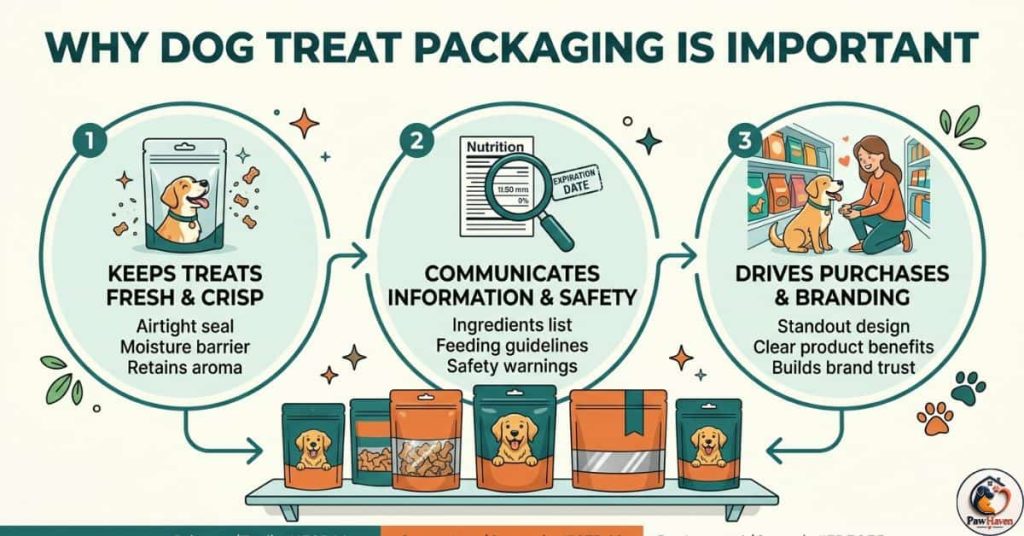
Protects Freshness and Flavor
An oxygen barrier and a proper moisture barrier keep fats from turning rancid. Treats with high fat content, like liver or salmon-based recipes, go stale within days without one.
Keeps Treats Safe from Moisture and Contamination
Humidity is the enemy of crunchy treats. Airtight storage paired with a solid resealable closure stops mold before it starts.
Builds Brand Recognition
Consistent branded packaging with a recognizable logo placement builds brand recognition faster than any ad campaign for a small pet business.
Encourages Repeat Purchases
A zip-lock closure that actually reseals well makes customers trust the bag will still be fresh on day twelve, not just day one.
Supports Retail and Online Sales
Shipping durability matters as much as retail shelf appeal. A pouch that survives a delivery truck and still looks good on a boutique shelf is doing double duty.
Best Dog Treat Packaging Ideas for Every Brand
Choosing a format is really about matching the treat’s texture and shelf life to a container built for it.
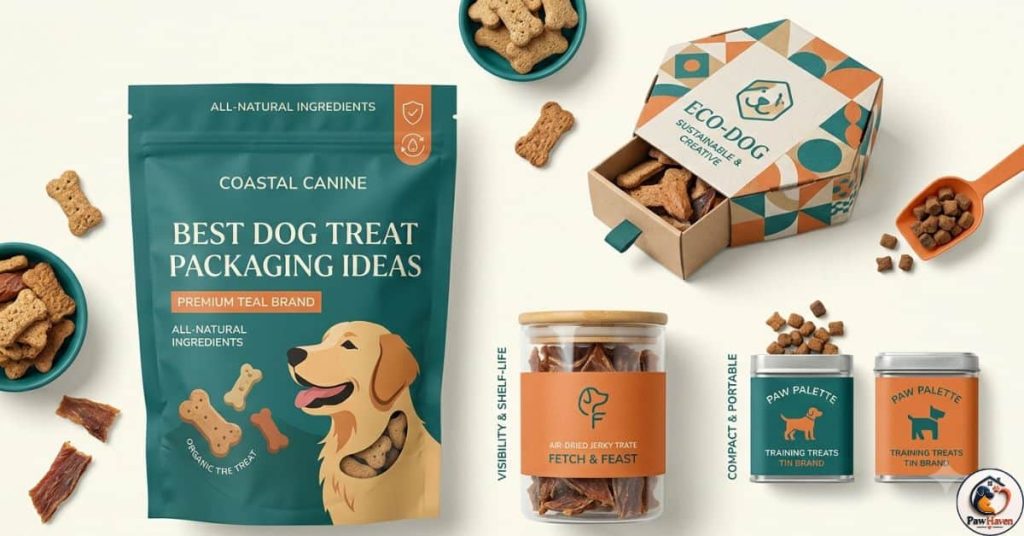
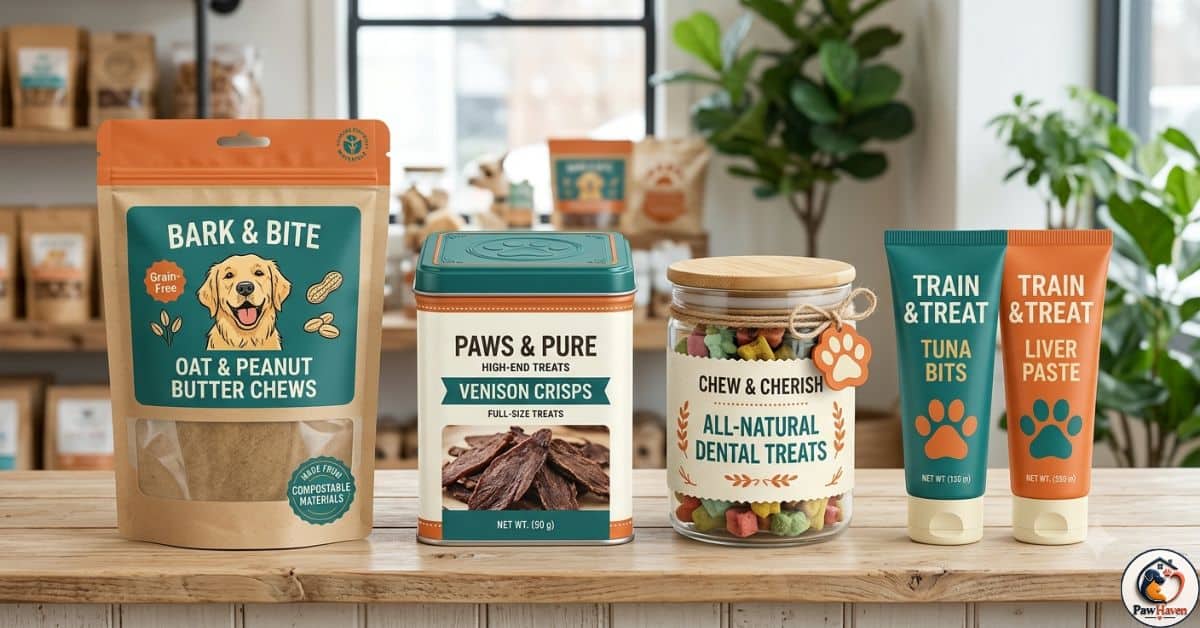
- Stand-up pouches: the workhorse of the industry, offering a strong moisture barrier and room for full nutritional information.
- Resealable zip lock bags: budget-friendly, ideal for single-serve packaging or trial sizes.
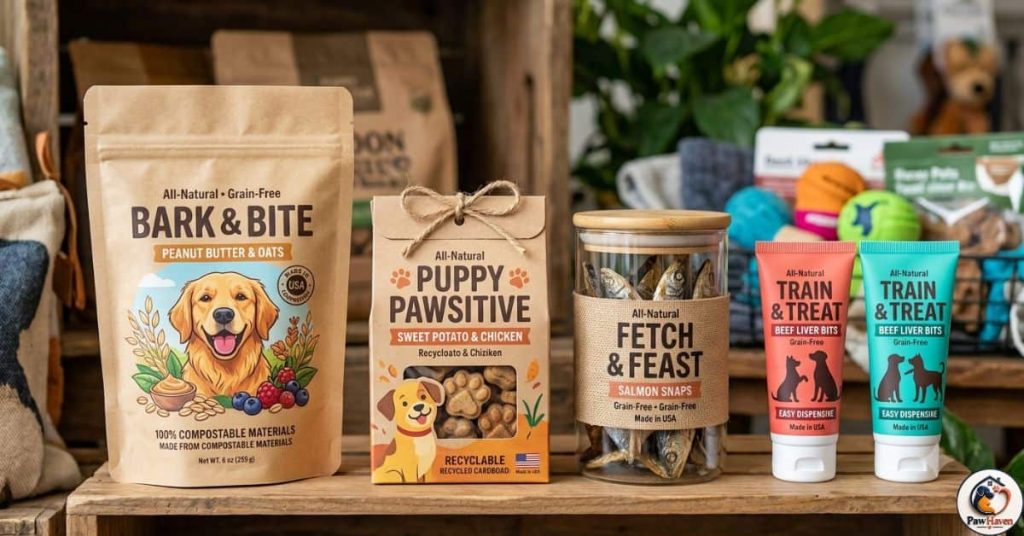
- Kraft paper bags: rustic-looking and compostable, though they need an inner liner for real freshness protection.
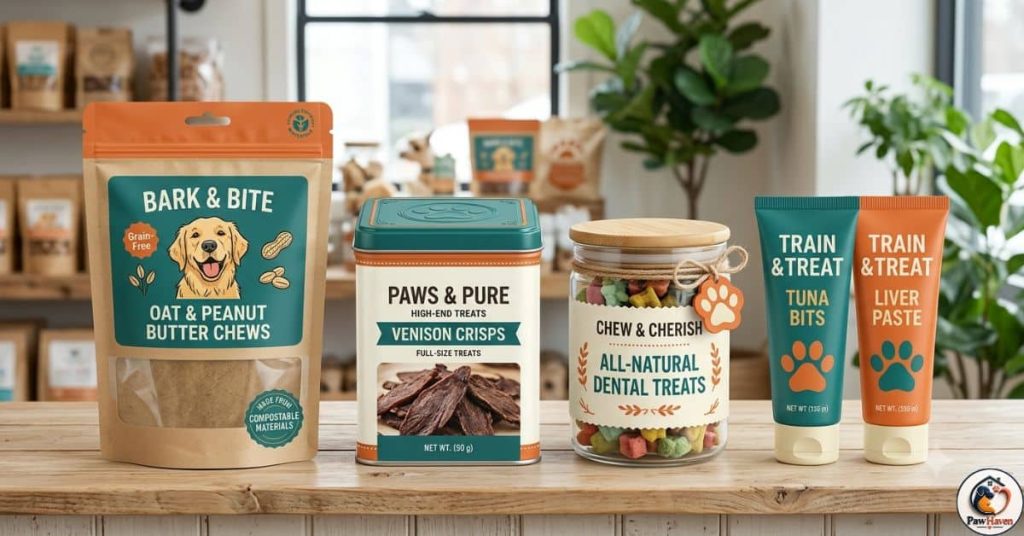
- Window packaging: a transparent window builds trust by letting shoppers see the actual product.
- Flat-bottom pouches: stand upright on shelves and offer better retail display than a standard gusseted bag.
- Mason jars: reusable and premium looking, best for small batch homemade treats sold locally.
- Tin containers: excellent UV protection and a long shelf life, popular for holiday-themed packaging.
- Compostable packaging: made from biodegradable materials, appealing to eco-conscious buyers.
- Gift boxes: gift-ready packaging with ribbon or twine embellishment for premium product lines.
- Subscription box packaging: built around a pet food subscription model, where the unboxing experience matters as much as the treats themselves.
How to Choose the Right Packaging for Your Dog Treats
Match the container to the product, not the other way around. Soft, semi-moist treats need a stronger moisture barrier than dry biscuits. Shelf-stable treats sold in stores need six to twelve months of shelf life preservation, while frozen or refrigerated treats need entirely different materials. Also weigh bulk packaging against individual packs: farmers market vendors often prefer bulk bins, while online sellers do better with portion control pouches that ship without crushing.
What Should Be Included on Dog Treat Packaging?
Every package, regardless of format, needs the same core information: brand name and logo, product name, full ingredient declaration, feeding instructions, storage instructions, expiration date, batch identification, and nutritional information. Skipping any of these is a fast way to lose customer trust, and in some states, it is simply not legal for a commercial product.
How to Design Dog Treat Packaging That Sells
Color psychology plays a bigger role than most new brands expect. Earthy tones and rustic textures signal “natural,” while bright colors signal “fun” or “puppy.” Pair that with pet-friendly typography, real product photography instead of stock illustrations, and a QR code integration that links to a recipe story or feeding chart. Custom labels with clean label readability consistently outperform cluttered designs in shelf tests, based on what I have seen across dozens of small treat brand launches.
Sustainable Dog Treat Packaging Options
Eco-conscious shoppers now actively check for recyclable packaging and compostable materials before buying, especially in the premium treat segment. Options worth testing include recycled content pouches, plant-based inks, and corrugated cardboard mailers instead of plastic bubble mailers. The honest tradeoff: sustainable materials often cost 15 to 30 percent more per unit, so smaller brands need to build that into pricing rather than absorbing it quietly.
Common Dog Treat Packaging Mistakes to Avoid
The most common failure is choosing a thin film that cannot handle transportation efficiency demands, leading to torn bags in transit. Close behind that: poor label design that buries the ingredient list, ignoring food safety certifications, and using low-quality printing that fades within weeks. Overcomplicated packaging with too many opening steps also frustrates customers more than brands realize.
How to Package Dog Treats Step by Step
- Cool treats completely before sealing to avoid trapped condensation.
- Select food-safe materials rated for direct food contact.
- Remove excess air to slow oxidation.
- Seal properly using heat sealing or a verified tamper-evident seal.
- Apply labels with accurate batch and expiration data.
- Store finished product away from heat and light.
- Prepare for retail or shipping with extra leak resistance for wet or semi-moist recipes.
Dog Treat Packaging Ideas for Different Business Types
| Business Type | Best Packaging Fit |
| Homemade treat sellers | Mason jars, kraft paper bags |
| Small pet brands | Stand-up pouches, flat-bottom pouches |
| Boutique pet shops | Window packaging, gift boxes |
| Subscription companies | Custom branded boxes tied to a pet food subscription |
| Commercial manufacturers | High volume gusseted bags with full barrier properties |
| Farmers markets | Bulk kraft bags with simple custom printing |
Picking the right lane here often comes down to order volume more than aesthetics. A brand shipping fifty orders a month does not need the same tooling as one shipping five thousand.
Frequently Asked Questions
What is the best packaging for homemade dog treats?
Mason jars or lined kraft paper bags work well for small batches sold within a few weeks.
How do you keep dog treats fresh for longer?
Combine an oxygen barrier with a tight resealable closure and store treats away from heat.
Is Kraft paper packaging safe for dog treats?
Yes, as long as it includes a food-safe inner liner rather than raw paper touching the treats.
What information should legally appear on dog treat packaging?
Ingredients, feeding guidelines, expiration date, batch number, and manufacturer contact information.
Are compostable dog treat bags worth using?
For brands targeting eco-conscious buyers, yes, though they typically cost more and have a shorter effective shelf life.
What packaging works best for shipping dog treats?
Stand up pouches with strong seals and a protective outer mailer built for shipping durability.
Good pet food packaging is really a pet food solution to three problems at once: freshness, trust, and sales. Balance food safety, branding, and customer convenience, and choose a format that matches your product type and business size rather than copying whatever looks trendy. Start with one packaging change this month, whether that is upgrading your seal or adding a clear window, and measure how it affects repeat orders.
Recommended Articles:
Best Foods for Pet Birds: The Complete Feeding Guide (2026)
Vet Approved Dog Treats & Supplements
Wild animals in French are provided with 100 essential vocabulary words