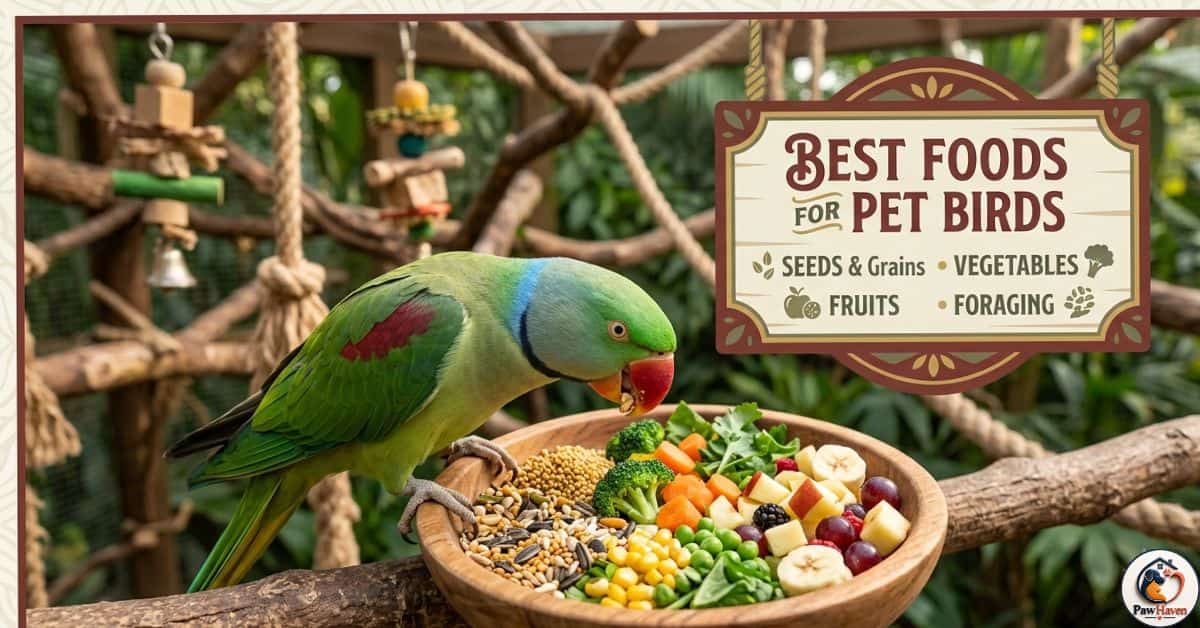
Best Foods for Pet Birds: The Complete Feeding Guide (2026)
Most pet birds eat every single day and still end up malnourished. That sounds backward until you realize the culprit: a bowl full of seeds that looks like a meal but functions more like candy. Feathers dull, energy dips, and owners assume it’s just “how birds get” as they age. It usually isn’t.
Pet bird food has to do more than fill a dish. It shapes lifespan, feather quality, bone density, and even behavior, since a nutrient-poor diet is one of the most common hidden causes of feather plucking and lethargy in companion birds. This guide covers what a balanced diet actually looks like, which foods are safe, how much to feed, and how to fix a seed-heavy diet without a fight. Whether you’ve had your bird for years or just brought one home, the same nutritional rules apply.
Quick Answer
A healthy pet bird food diet is built around a high-quality pelleted diet as the base, roughly 60 to 70 percent of daily intake, supplemented with fresh vegetables, limited fruit, and a small portion of seeds or nuts as treats. Seeds alone are not a complete diet for any parrot species. Fresh water should be changed daily, not just topped off.
Why a Balanced Diet Matters More Than Owners Realize
A parrot fed only seeds is running on roughly 15 percent of the vitamin A it needs, according to veterinary nutrition data cited by multiple avian specialty clinics, and vitamin A deficiency is directly linked to respiratory infections and poor feather condition. Wild birds forage across dozens of plant species in a single day, something a caged bird eating from one seed mix simply cannot replicate.
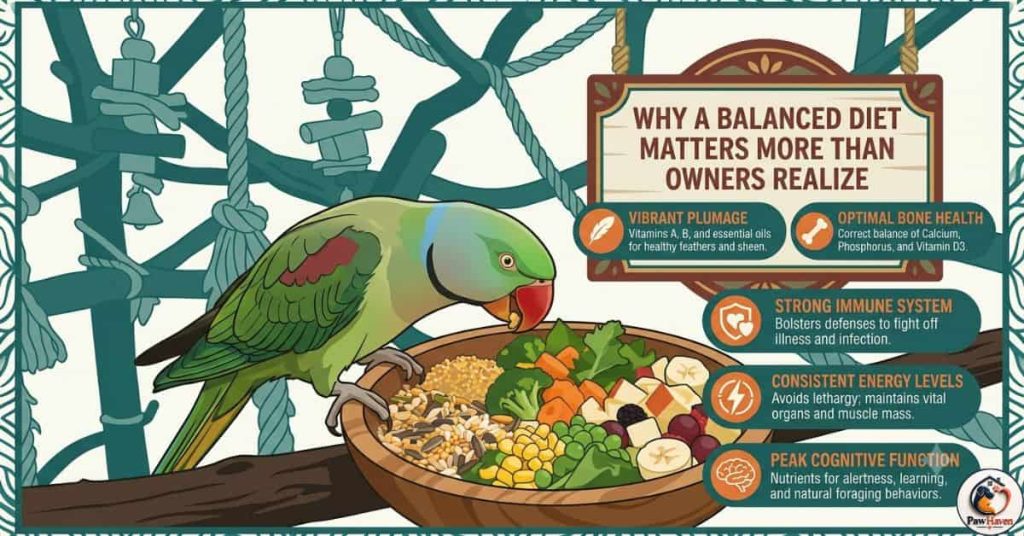
Common warning signs of poor nutrition include dull or fraying feathers, low energy, overgrown beaks (a sign of fat-heavy diets), and repeated respiratory issues. If your bird picks out only the sunflower seeds and peanuts from a mix and leaves the rest, that’s not preference; it’s closer to a child eating only dessert from a full plate.
What Should Pet Birds Eat Every Day
- High-quality pellets (brands like Vetafarm MD Maintenance Diet, NutriBlend, or Topflite) should form the nutritional foundation, since they’re formulated to avoid the nutrient gaps seed-only diets create
- Fresh vegetables and leafy greens, offered daily: dark leafy greens, carrot, corn, and lightly cooked squash all work well
- Fruit in moderation, roughly 5 to 10 percent of intake, since sugar content adds up fast in a small body
- Seeds and nuts as treats only, not the main course, walnuts and unsalted peanuts included
- Fresh water daily, replaced rather than refilled, since bacterial buildup in bowls happens faster than most owners expect
Foods That Are Safe and Foods to Avoid
Apple flesh, carrot, cooked brown rice, quinoa, and rolled oats are safe staples for most companion birds. Avocado, chocolate, caffeine, and apple seeds are toxic and should never be offered, even in small amounts, since apple seeds contain trace cyanide compounds that build up with repeated exposure. Unseasoned, unsalted foods are the rule; a bird’s kidneys process sodium far less efficiently than a human’s does.
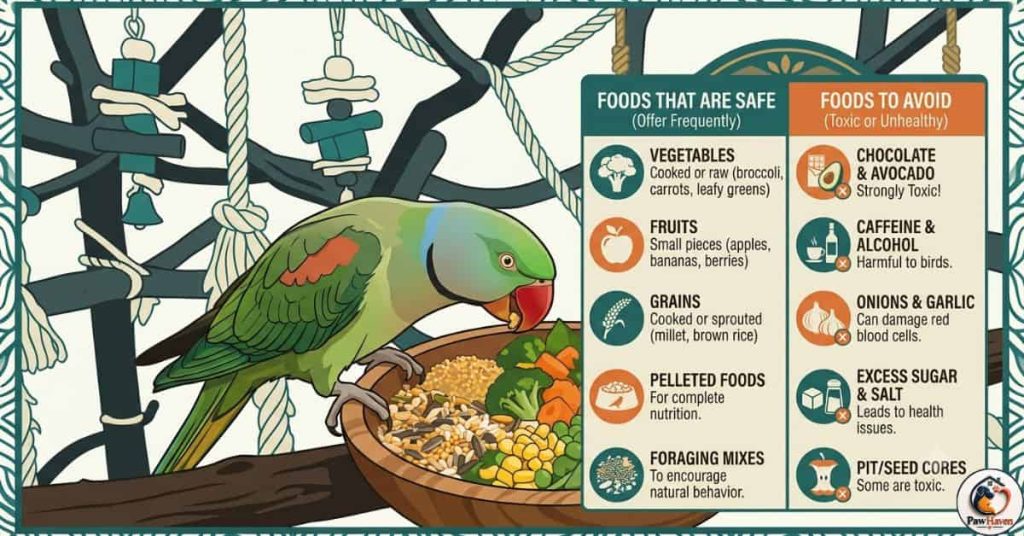
Bread, plain cooked rice, and a small piece of hard-boiled egg are occasionally fine. Cheese and dairy generally aren’t, since most birds lack the enzymes to digest lactose properly.
Pellets vs Seeds vs Fresh Foods
| Diet Type | Nutrition | Cost | Shelf Life |
| Pellets | Complete, balanced | Moderate | 6 to 12 months |
| Seed mix | Incomplete, high-fat | Low | Long |
| Fresh foods | Excellent, variable | Higher | 1 to 3 days |
Most avian veterinarians recommend a diet built around 60 to 70 percent pellets, 20 to 30 percent fresh vegetables and fruit, and 10 percent or less seeds and treats. That ratio isn’t arbitrary. It mirrors the actual nutrient spread wild birds get from foraging, just packaged for a cage.
How Much and How Often to Feed
Portion size depends heavily on body size. A budgie needs roughly 1 to 2 teaspoons of pellets daily, while a macaw needs closer to a quarter cup. Two feedings a day, morning and early evening, tends to work better than free feeding, since it lets you monitor appetite changes, which are often the first sign something’s wrong.
Homemade Bird Food and Treats
A simple chop mix (finely diced vegetables, cooked grains, and a small portion of sprouted seeds, stored in the freezer in daily portions) is one of the most effective ways to add variety without daily prep work. Baked treats using mashed pellets, grated vegetables, and a little unsalted coconut, formed into shapes and baked at 180°C for about 12 to 15 minutes, double as both nutrition and enrichment when offered inside a foraging toy.
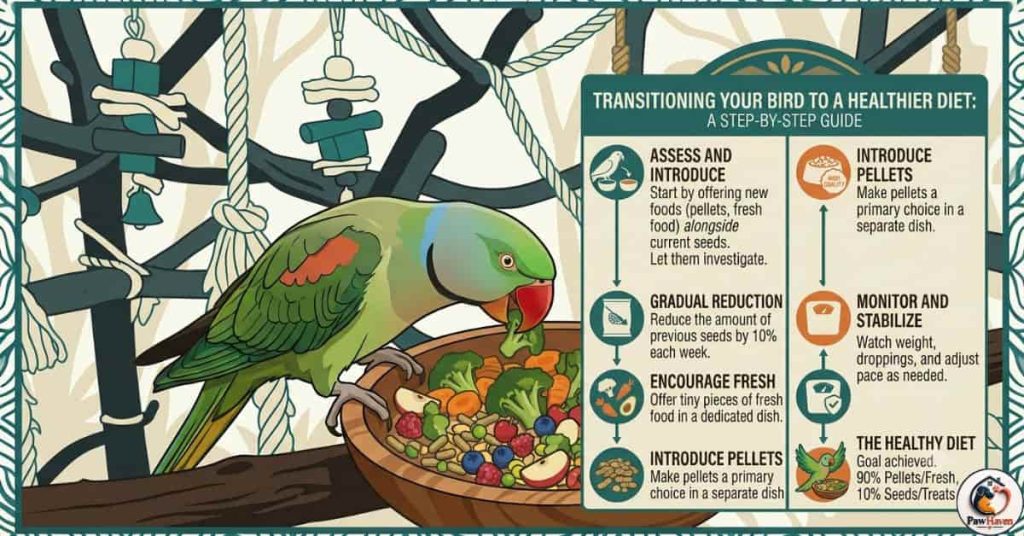
Transitioning Your Bird to a Healthier Diet
Birds resist new foods far more than most owners expect, sometimes for weeks. The fix isn’t stubbornness; it’s patience: introduce new pellets alongside the current diet rather than replacing it outright, offer new vegetables at the same time each day, and expect several attempts before acceptance. Pulling all seeds away overnight often backfires and causes a bird to eat less overall.
If You Have Other Pets Too
Bird owners with a mixed household often assume feeding rules cross over between species, and they don’t. Pet rabbit food needs a fiber-heavy, hay-based approach that looks nothing like a bird’s pelleted diet. Pet fish food and pet crayfish food both revolve around sinking pellets and different feeding frequency entirely, and pet crab food shares almost nothing nutritionally with any of the above. Treating one feeding chart as universal across species is a common and avoidable mistake.
Frequently Asked Questions
What is the healthiest food for pet birds?
A high-quality pellet diet supplemented with fresh vegetables and limited fruit, rather than a seed-only diet.
Can birds survive on seeds alone?
They can survive short-term, but seed-only diets are consistently linked to nutritional deficiencies and shortened lifespan.
How often should birds eat fruit?
A few times a week is enough for most species, kept to small portions due to sugar content.
Which foods are poisonous to birds?
Avocado, chocolate, caffeine, and apple seeds are among the most dangerous and should never be offered.
Should I feed my bird pellets or seeds?
Pellets as the base, with seeds reserved for occasional treats or enrichment, not daily meals.
Key Takeaways
A bird eating daily isn’t the same as a bird eating well. The base of any healthy diet is a quality pellet, supported by fresh vegetables, limited fruit, and seeds used sparingly as treats rather than the main event. Check your current feeding routine against the ratios above, and if seeds still dominate the bowl, that’s the first thing worth changing this week.
Recommended Articles:
Vet Approved Dog Treats & Supplements