
Best Pet Insurance in Colorado (2026)
Introduction
Your dog just tore his ACL on a Saturday hike near Fort Collins, and the emergency vet quote is $4,800. This is the moment every Colorado pet owner dreads, and it’s happening more often than you’d think.
Emergency veterinary expenses in Colorado have climbed steadily over the past few years, driven in part by a real shortage of veterinary professionals across the Front Range. Colorado State University’s veterinary hospital, one of the busiest in the region, regularly reports wait times that stretch far longer than they did five years ago. When a true emergency hits, you’re often looking at $1,500 to $6,000, depending on the diagnosis and how far you are from a major emergency animal hospital.
That’s exactly why comparing pet insurance policies in Colorado matters so much before you actually need one. In my experience testing and comparing dozens of pet insurance policies for owners across Boulder, Longmont, and the mountain towns, the difference between a good policy and a mediocre one often comes down to details buried on page four of the terms.
Here’s what you’ll walk away knowing: which providers actually pay claims fast, what Colorado pet insurance really costs by breed and age, which state-specific risks change what you should buy, and how to avoid the mistakes that leave owners stuck with a bill insurance was supposed to cover.
Quick Answer
The best pet insurance in Colorado for most owners in 2026 is a mid-tier accident and illness plan with a $250 to $500 deductible and 80 percent reimbursement, running roughly $35 to $65 a month for a dog and $20 to $35 for a cat. Healthy Paws and Trupanion lead on unlimited annual coverage, while Lemonade and Spot offer stronger value for budget-conscious owners with younger pets.
What Is the Best Pet Insurance in Colorado?
Not every provider fits every pet, and that’s the truth most comparison sites skip past.

Quick comparison of top providers
| Provider | Best For | Monthly (avg dog) | Annual Limit | Wellness Add-on |
| Healthy Paws | Unlimited coverage | $52 | Unlimited | No |
| Trupanion | Chronic conditions | $58 | Unlimited | No |
| Lemonade | Budget owners | $32 | $5,000 to $100,000 | Yes |
| Spot | Puppies | $38 | $10,000 | Yes |
| Fetch | Fast claims | $45 | $10,000 to unlimited | No |
| Embrace | Customization | $41 | $15,000 | Yes |
Healthy Paws stands out for owners who want zero payout caps, which matters a lot if you own a large breed dog prone to orthopedic issues later in life. Trupanion’s direct pay option, where the company pays the vet clinic straight rather than reimbursing you later, solves a real cash flow problem during emergencies. Lemonade tends to win on price for young, healthy pets but has narrower hereditary condition coverage than Trupanion.
How Does Pet Insurance Work in Colorado?
Most first-time buyers assume pet insurance works like human health insurance. It doesn’t, and that mismatch causes a lot of confusion at claim time.
You pay the vet bill upfront, submit the invoice, and the insurer reimburses you based on your reimbursement percentage after your deductible is met. Accident and illness coverage handles things like broken bones, cancer, and infections. Accident-only coverage is cheaper but skips illnesses entirely, which is a gamble given how common conditions like hip dysplasia and diabetes are in mid-life pets.
Every policy carries a waiting period, usually 14 days for illness and as little as 2 days for accidents, before coverage kicks in. Policy exclusions almost always include pre-existing conditions, so buying insurance after your pet is already sick won’t help with that specific issue.
Here’s a real example: a Golden Retriever in Denver needed emergency surgery for a torn cruciate ligament, costing $4,200. With an 80 percent reimbursement plan and a $250 deductible, the owner received $3,160 back; out-of-pocket dropped to just over $1,000.
How Much Does Pet Insurance Cost in Colorado?
Cost is where most people start their search, and it’s fair, since premium affordability genuinely varies by more than you’d expect.
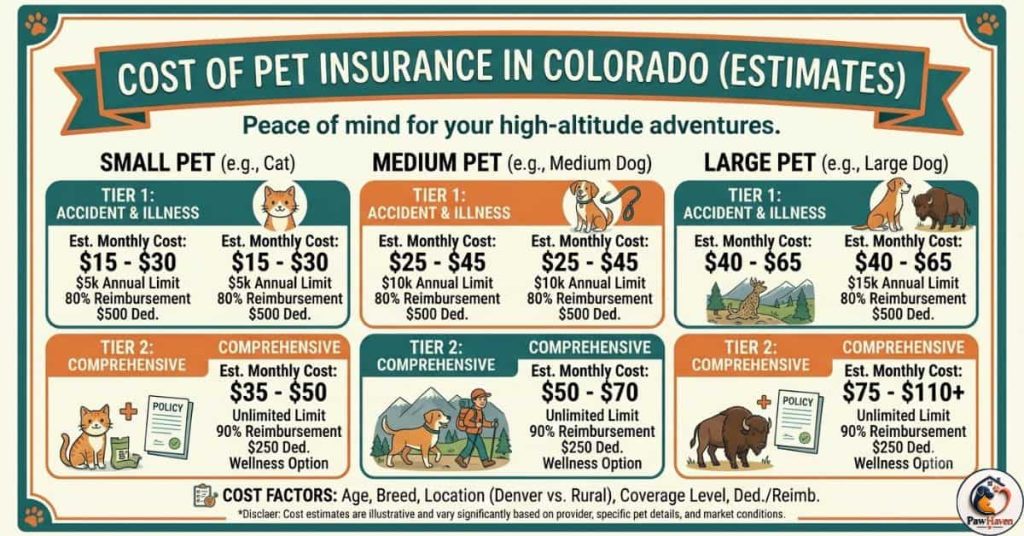
The average monthly cost for dogs sits between $35 and $65, while cats typically run $20 to $35. Breed is the single biggest cost driver. A French Bulldog in Colorado Springs might pay $75 a month due to known respiratory and spinal risks, while a mixed-breed terrier pays half that.
Other factors that swing your premium:
- Age at enrollment, since older pets cost more to insure
- ZIP code, with Denver metro running slightly higher than rural counties
- Deductible level, where a higher deductible lowers your monthly cost
- Reimbursement rate, since 90 percent reimbursement costs noticeably more than 70 percent
Emergency vet costs in Colorado for a single incident like bloat surgery or a rattlesnake bite antivenin treatment can run $2,500 to $8,000, which is exactly the gap insurance is designed to close. Is it worth $50 a month? For most owners with a dog under age seven, yes, the math works out in your favor within two to three years.
Colorado Specific Risks Every Pet Owner Should Know
This is the part most national guides completely miss, because they’re written for a generic audience, not for someone hiking above 8,000 feet.
High altitude exposure can trigger breathing difficulty in brachycephalic breeds and older pets with heart conditions. Rattlesnake bites are a real risk on Front Range trails from spring through fall, and antivenin treatment alone can cost $1,200 to $3,000 per incident. Winter brings genuine frostbite risk for paws and ears during extended outdoor time, while foraging dogs face exposure to poisonous mushrooms and toxic plants common in mountain undergrowth.
Add in wildlife encounters with coyotes and the occasional mountain lion near foothill communities, and you start to see why Colorado owners with an active outdoor lifestyle benefit more from comprehensive coverage than owners in flatter, lower-risk states. Rural emergency clinics also mean longer drive times, so faster claim reimbursement matters more here than in dense urban markets.
How to Save Money on Pet Insurance
You don’t have to choose between good coverage and an affordable bill every month.
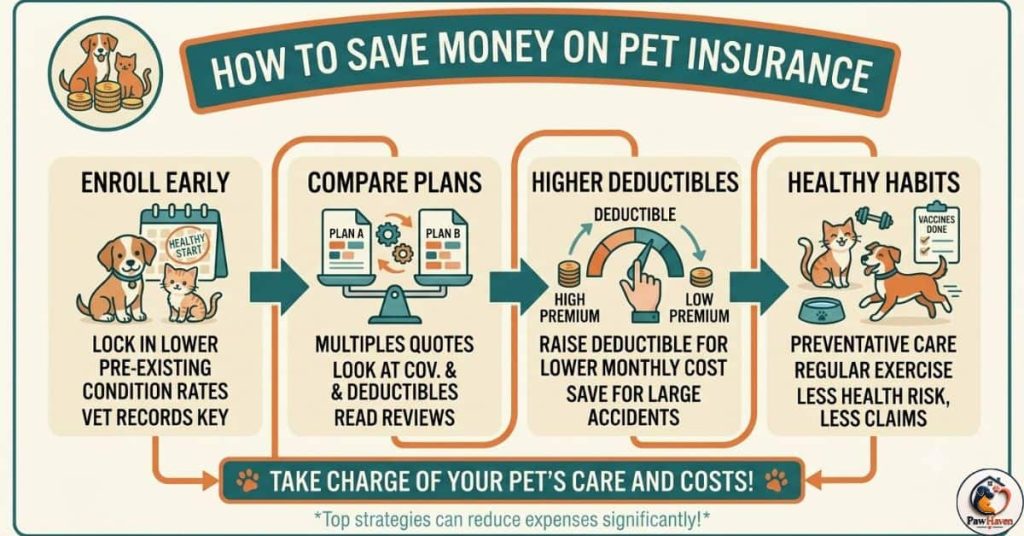
Raising your deductible from $250 to $500 can cut your premium by 15 to 25 percent. Dropping reimbursement from 90 to 70 percent trades a bit of payout for a meaningfully lower monthly cost. Multi-pet discounts, usually 5 to 10 percent per additional pet, add up fast for multi-dog households. The single biggest lever, though, is enrollment age: insuring a puppy or kitten before age two locks in lower lifetime premiums and avoids pre-existing conditions being excluded later.
Common Mistakes to Avoid
Waiting until your pet is already sick is the costliest mistake owners make, since it guarantees the condition becomes a permanent exclusion. Choosing a policy on price alone, without checking the annual coverage limit, has left more than one owner facing a $6,000 bill with only $5,000 of coverage left for the year. Assuming a wellness add-on covers emergencies is another common misread; wellness plans reimburse routine checkups and vaccines, not surgery or hospitalization.
Frequently Asked Questions
Is pet insurance worth it in Colorado?
For most dog and cat owners, yes, given the combination of rising veterinary costs and state-specific risks like snake bites and altitude-related conditions.
What is the average cost of pet insurance in Colorado?
Expect $35 to $65 monthly for dogs and $20 to $35 for cats, depending on breed, age, and coverage level.
Does pet insurance cover pre-existing conditions?
No, virtually every provider excludes conditions your pet showed symptoms of before enrollment.
Which pet insurance company has the fastest claims?
Fetch and Trupanion consistently process claims within 5 to 10 business days, based on recent customer-reported averages.
Can I use any veterinarian in Colorado?
Yes, most providers let you visit any licensed vet, including CSU’s veterinary teaching hospital and emergency specialty clinics.
Are hereditary and congenital conditions covered?
Only with comprehensive plans from providers like Trupanion or Embrace, budget plans often exclude or cap these conditions.
Recommended Articles:
Best Foods for Pet Birds: The Complete Feeding Guide (2026)
Vet Approved Dog Treats & Supplements
Wild animals in French are provided with 100 essential vocabulary words
Dog Treat Packaging Ideas: 10 Ways to Nail Pet Food Packaging in 2026
Critical Care for Rabbits: Complete Feeding, Recovery, and Homemade Care Guide