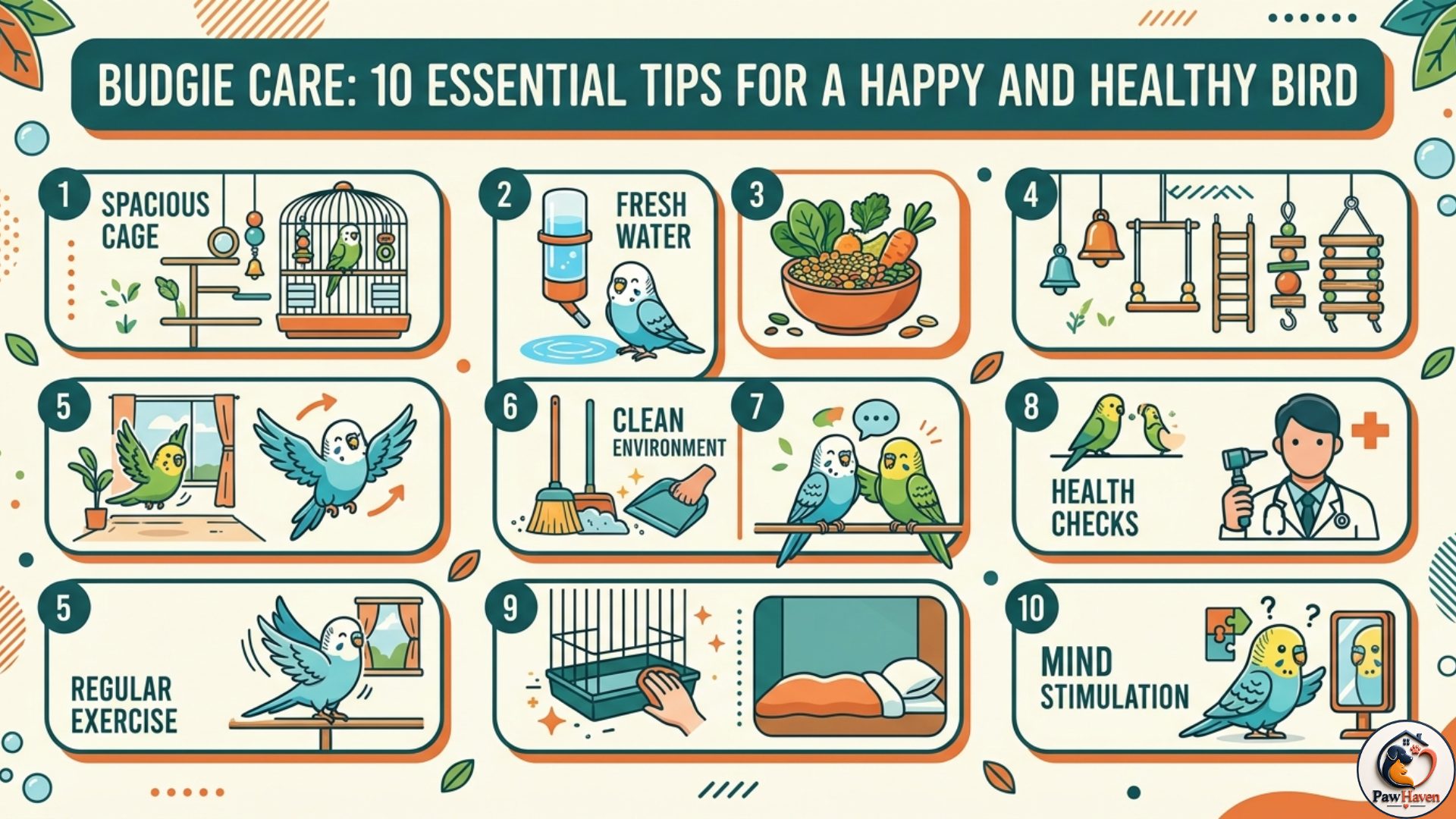
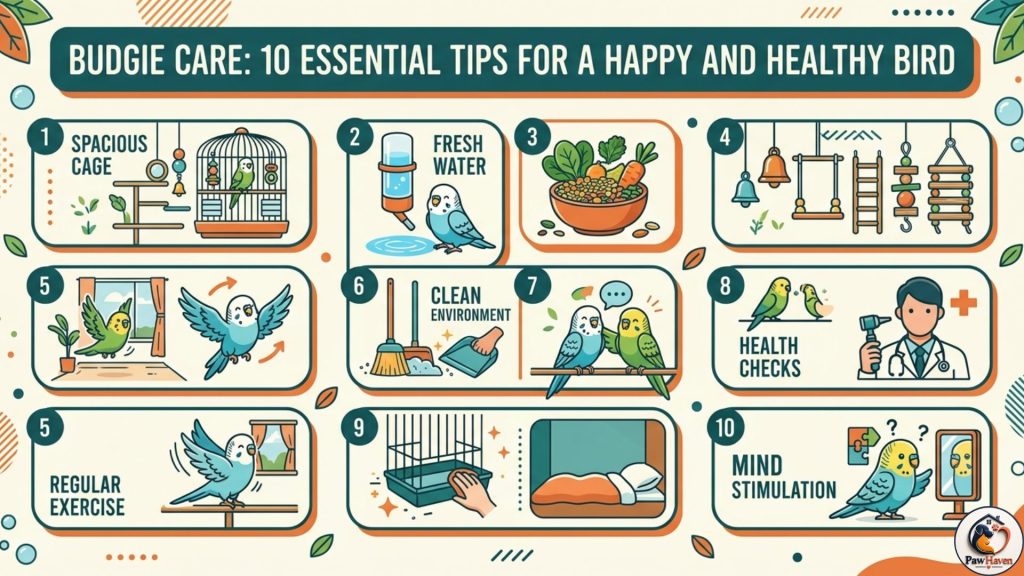
Budgie Care: 10 Essential Tips for a Happy and Healthy Bird
Bringing home a budgie sounds simple enough. They’re small, affordable, and often recommended as a starter bird. Yet many new owners quickly discover that keeping a budgie healthy and happy takes more than a cage and a handful of seeds.
If you’ve ever wondered why your bird seems nervous, refuses to interact, or spends most of the day sitting quietly on a perch, you’re not alone. Good budgie care starts with understanding what these intelligent little parrots actually need to thrive.
Quick Answer
Budgie care involves providing a spacious habitat, a balanced diet based primarily on formulated pellets, daily social interaction, mental stimulation, regular exercise, and routine veterinary care. A healthy budgie should have access to fresh water, safe toys, natural perches, and opportunities to express normal bird behaviors every day.
Is a Budgie the Right Pet for You?
Many people choose a budgerigar because they are small and relatively easy to manage compared to larger parrots. That doesn’t mean they are low maintenance pets.
A budgie is a highly social companion bird that thrives on interaction and environmental enrichment. Left alone for long periods without stimulation, even a healthy bird can develop stress behaviors.
In my experience helping new bird owners, the biggest surprise is how much personality these little birds have. Some develop impressive talking ability, while others become deeply attached to their favorite person.
A healthy budgie can live between 7 and 15 years, with some reaching 20 years under excellent care.
Before bringing one home, consider:
- Daily time available for interaction
- Long term financial commitment
- Space for a proper flight cage
- Access to an avian veterinarian
- Household noise and activity levels
A little planning now can prevent many common ownership frustrations later.
Creating the Ideal Budgie Habitat
Many care problems start with the cage.
Budgies are active flyers by nature. A cramped cage limits exercise requirements and reduces overall quality of life.
Choosing the Right Cage
Look for a flight cage that allows horizontal movement rather than simply vertical height.
A suitable cage should provide enough room for your feathered companion to:
- Fully extend both wings
- Move between multiple perches
- Climb and explore
- Play safely with toys
Best Cage Placement
Location matters more than many owners realize.
Place the bird cage in an area with:
- Natural lighting
- Family activity
- Stable temperatures
- A draft free location
Avoid kitchens, direct sunlight, air conditioning vents, and smoky environments.
Essential Habitat Features
Include:
- Natural wood perch options
- One concrete perch for nail maintenance
- Food bowl and water bowl stations
- Safe bird toys
- A swing toy or ladder toy
- Areas for rest and play
Here’s something many guides miss: constantly rearranging the cage can create anxiety in some birds. Budgies appreciate environmental stimulation, but major cage changes every few days may actually increase stress.
Once your habitat is established, nutrition becomes the next critical piece of successful budgie care.
What Should Budgies Eat Every Day?
Nutrition remains one of the most misunderstood aspects of budgie bird care.
For decades, many owners fed only seed mixes. Modern avian medicine now shows that seed only diets can contribute to obesity management issues, nutritional disorders, and shortened lifespan.
Pellets vs Seeds
Most avian specialists recommend:
| Food Type | Recommended Portion |
| Formulated pellets | 70 to 75% |
| Fresh vegetables | 20 to 25% |
| Fruits and treats | 5% or less |
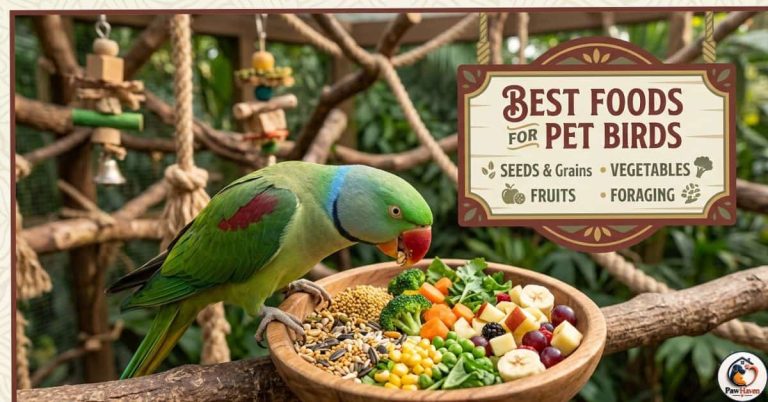
Brands such as Purina, Harrison’s Bird Foods, and Roudybush offer complete pellet diet options designed for small parrots.
Fresh Foods Budgies Enjoy
Good choices include:
- Leafy greens
- Broccoli
- Carrots
- Bell peppers
- Sprouted seeds
- Sprouted grains
Fresh fruit can be offered occasionally as healthy treats.
Foods to Avoid
Certain foods can be dangerous.
Never feed:
- Avocado
- Chocolate
- Caffeine
- Alcohol
- Onion
- Garlic
Avocado toxicity can become life threatening even in small amounts.
Fresh drinking water should be available at all times, with daily access to clean water.
A balanced avian diet supports physical health, but mental health deserves equal attention.
Why Mental Stimulation Matters
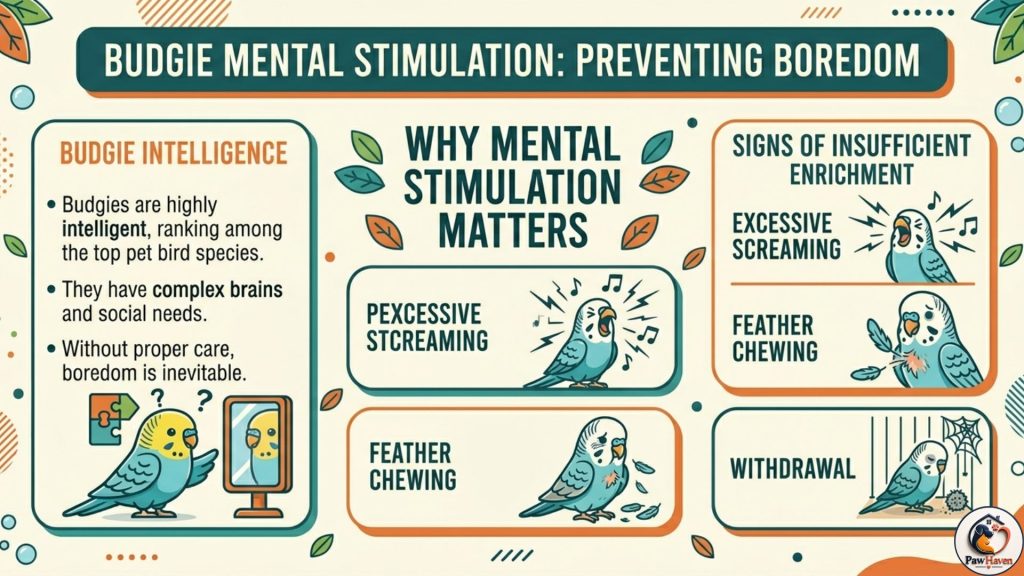
Budgies rank among the most intelligent bird species commonly kept as pets.
Without enough mental stimulation, boredom prevention becomes impossible.
Signs of insufficient enrichment may include:
- Excessive screaming
- Feather chewing
- Withdrawal
- Reduced activity level
Effective Enrichment Ideas
Consider:
- Foraging toy activities
- Bird gym stations
- Interactive enrichment games
- Mirror toy rotation
- Supervised playtime outside the cage
Out of Cage Exercise
Daily out of cage exercise is one of the most valuable forms of environmental enrichment.
Many birds benefit from:
- Safe exploration
- Climbing opportunities
- Recall training sessions
- Bird stand activities
Even 30 to 60 minutes of supervised activity can significantly improve behavioral health.
Physical and mental stimulation naturally leads into trust building and training.
How to Build Trust With Your Budgie
Many owners expect immediate affection.
Reality looks different.
A newly adopted bird often needs days or even weeks to feel secure.
The First Week
Allow your bird time to observe its environment.
Avoid:
- Grabbing
- Chasing
- Forced handling
Instead, focus on calm social interaction.
Step Up Training
Step up training teaches a bird to climb onto your finger voluntarily.
Successful sessions rely on:
- Positive reinforcement
- Patience
- Consistency
Small rewards and gentle praise often work better than lengthy sessions.
Can Budgies Learn to Talk?
Some absolutely can.
Speech development varies by individual bird, age, and socialization history.
Single-bird ownership often results in stronger vocal mimicry because the bird focuses more attention on humans than on other birds.
Trust training strengthens your relationship, but maintaining health requires routine observation.
Daily Budgie Bird Care Routine
Consistency is one of the secrets to excellent budgie bird care.
Every Day
Check:
- Fresh water supply
- Food availability
- Feather condition
- Activity level
- Droppings
- General behavior
Daily observation often catches health concerns before they become serious.
Weekly Tasks
Perform:
- Cage hygiene maintenance
- Toy cleaning
- Perch inspection
- Cage sanitation
Monthly Tasks
Review:
- Beak condition
- Nail maintenance
- Habitat maintenance
- Enrichment rotation
Small changes in behavior are often the first sign of illness.
That brings us to one of the most important parts of any budgie care guide.
Recognizing Illness Early
Birds instinctively hide weakness.
In the wild, appearing sick can attract predators. That same instinct makes illness harder for owners to detect.
Warning Signs
Contact an avian veterinarian if you notice:
- Reduced appetite
- Fluffed feathers for long periods
- Breathing difficulties
- Tail bobbing
- Lethargy
- Weight loss
- Changes in droppings
Common Health Concerns
Conditions frequently seen in pet budgies include:
- Parasite infestation
- Obesity
- Overgrown beak
- Overgrown nails
- Chronic egg laying
- Egg binding
According to veterinary resources such as PetMD and the Association of Avian Veterinarians, early intervention dramatically improves outcomes for many avian patients.
Imagine your normally active bird suddenly refusing favorite foods and spending most of the day sleeping. Many owners assume the bird is simply tired. In reality, that change could indicate a developing illness requiring prompt evaluation.
Preventive healthcare remains the safest approach.
Veterinary Care and Preventive Health
Many owners wait until a bird appears sick before seeking help.
That approach often creates problems because birds conceal symptoms so effectively.
Wellness Exams
Most avian specialists recommend:
- Annual health assessment for healthy adults
- More frequent visits for senior birds
- Diagnostic screening when concerns arise
A wellness exam may include:
- Physical examination
- Fecal examination
- Blood testing
- Health monitoring protocol review
Finding the Right Veterinarian
Not every veterinarian treats birds.
Seek an avian specialist with experience in avian wellness care and companion parrot medicine.
Routine veterinary monitoring can add years to your bird’s healthy lifespan.
One Budgie or Two?
This question appears constantly in bird owner communities.
The honest answer is that both approaches can work.
Benefits of One Budgie
- Stronger human bonding
- Greater talking ability
- Easier trust building
Benefits of Two Budgies
- Social companionship
- Natural flock behavior
- Reduced loneliness
Introducing a Second Bird
Always follow a quarantine protocol before introducing a new bird into a multi bird household.
Proper disease prevention protects both birds and reduces long term health risks.
[INTERNAL LINK: best pet birds for beginners → beginner friendly bird species comparison]
Frequently Asked Questions
How often should a budgie be let out of its cage?
Most healthy birds benefit from at least 30 to 60 minutes of supervised activity daily.
Do budgies need companions?
Not necessarily. A single bird can thrive with sufficient human interaction and enrichment.
How often should a budgie see a veterinarian?
Most healthy birds should receive an annual health check and wellness examination.
Why is my budgie puffing up its feathers?
Temporary fluffing can be normal. Persistent fluffing combined with lethargy may indicate illness.
Can budgies eat human food?
Some fresh vegetables and fruits are safe, but many human foods contain ingredients unsuitable for birds.
What is the best diet for a budgie?
Most experts recommend formulated pellets as the primary food source, supplemented with fresh produce and occasional treats.
Final Thoughts
Successful budgie care comes down to three things: proper nutrition, meaningful enrichment, and preventive healthcare.
Many owners focus heavily on food and housing while overlooking mental stimulation. Yet boredom can affect a bird’s emotional wellbeing just as much as a poor diet affects physical health.
If you want one actionable step to take today, evaluate your bird’s daily routine. Add a new foraging activity, rotate toys, or spend ten extra minutes on trust training. Small improvements often create the biggest changes in long term wellbeing.