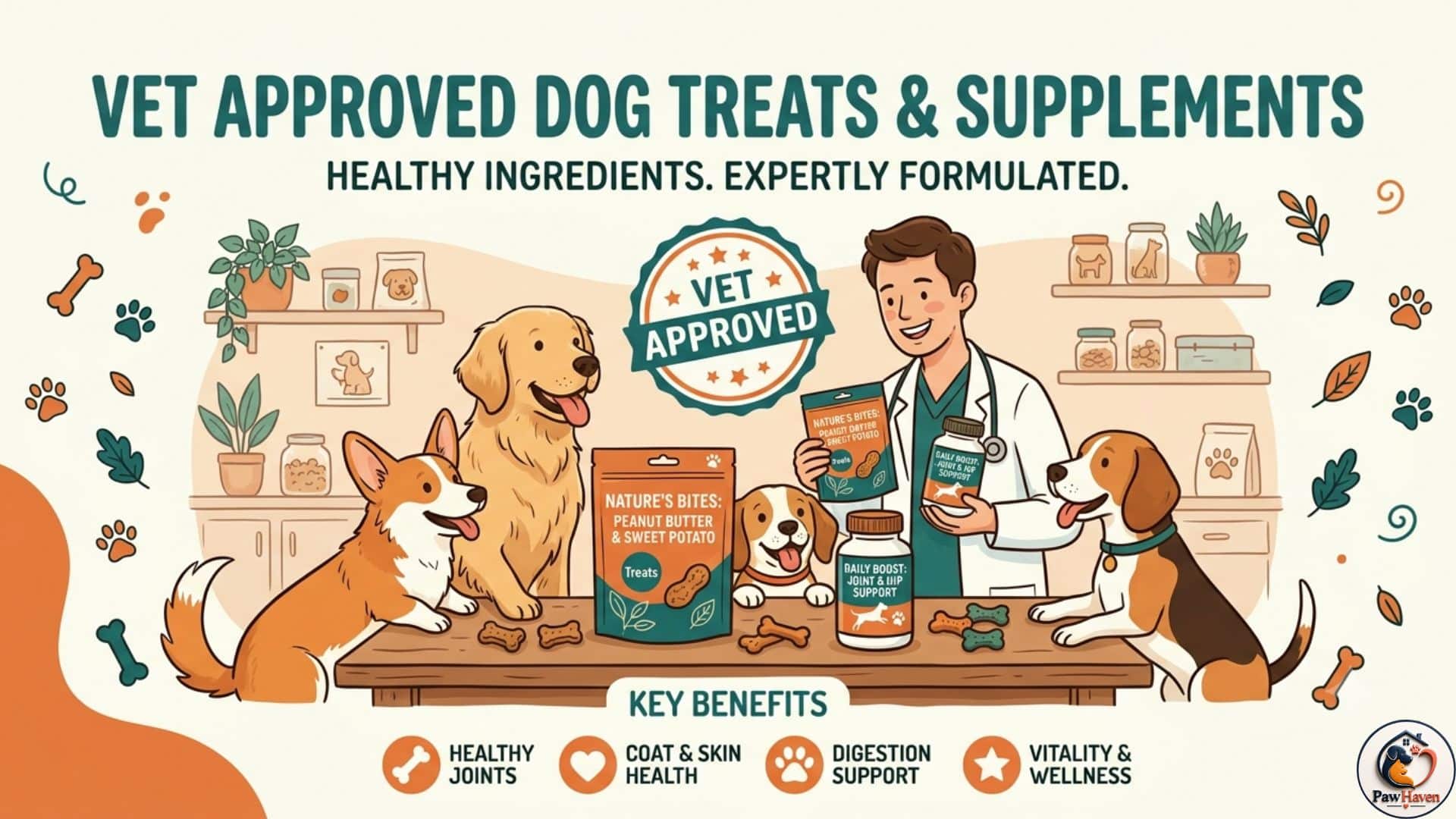
Vet Approved Dog Treats & Supplements
You’re standing in the pet aisle, holding two bags that both say “natural,” “premium,” and “vet approved,” and you genuinely have no way to tell which one is actually worth your money. That moment of confusion is exactly why so many dog owners end up buying based on packaging instead of substance.
Here’s a no-fuss framework for evaluating any treat or supplement brand, built around what veterinarians actually check before they recommend a product. This guide covers how to spot a trustworthy brand, when your dog actually needs a supplement versus whole food nutrition, how to introduce new products safely, and the mistakes that quietly waste pet parents’ money every year.
Quick Answer: A genuinely vet-approved dog treat or supplement is formulated to meet AAFCO nutritional standards, manufactured in a facility with documented quality control, and backed by named animal proteins rather than vague “meat byproduct” labeling. If a brand can’t show you sourcing details or a guaranteed analysis, treat the “vet-approved” claim as marketing, not fact.
How to Tell If a Pet Nutrition Brand Is Actually Trustworthy
Most buying guides tell you to “check the label,” which is true but useless without knowing what you’re looking for.
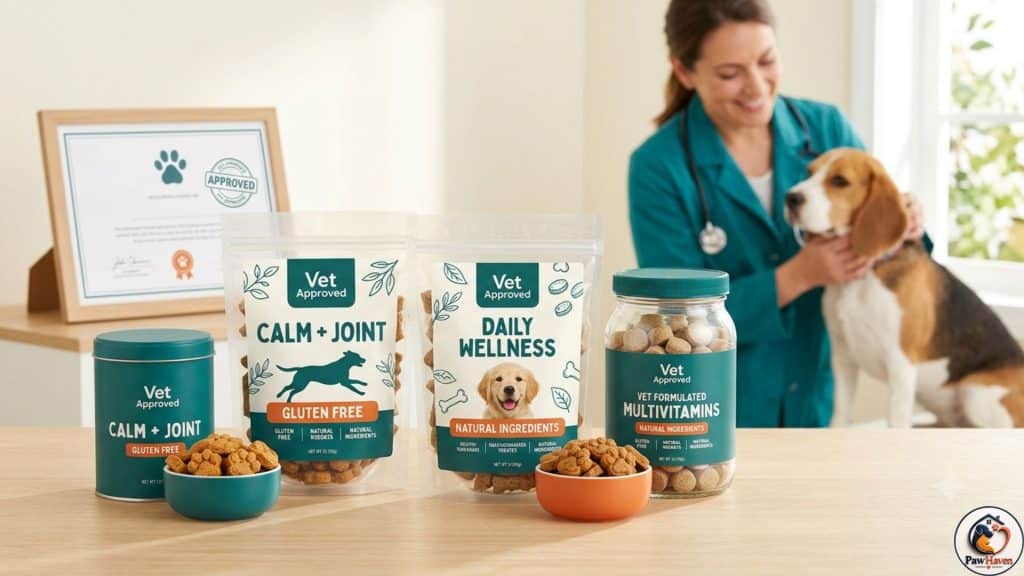
Look for Veterinary Formulation, Not Just Endorsement
A product formulated by a veterinary nutritionist is different from one that simply has a vet’s photo on the bag. The real signal is whether a credentialed nutritionist was involved in the formulation process, not whether a vet appears in an ad.
Check Sourcing & Manufacturing Location
USA-made products generally face stricter oversight from the U.S. Food and Drug Administration than imported alternatives, though imported doesn’t automatically mean unsafe. Ask the brand directly where ingredients are sourced and where the final product is manufactured.
Read the Ingredient List Like a Vet Would
Look past the first three ingredients. A vet scans for named animal proteins (chicken, salmon, lamb) rather than vague terms, checks for excessive ingredient splitting that can mask lower actual meat content, and notes whether preservatives are natural, such as mixed tocopherols, or synthetic.
Certifications & Standards That Actually Matter
AAFCO sets nutritional adequacy standards, while the National Animal Supplement Council (NASC) audits supplement manufacturers specifically. Third-party testing for contaminants adds another layer most budget brands skip entirely.
This sets up the next big question that pet parents struggle with: do you even need a supplement, or is whole-food nutrition enough?
Supplements vs. Whole Food vs. Treats: What’s the Difference?
These three categories get lumped together constantly, and that confusion costs people money.
A supplement fills a specific nutritional gap, like glucosamine for joint support or omega fatty acids for skin and coat health. Whole food nutrition, including fresh, frozen, or dehydrated pet food, delivers broader nutritional adequacy through real ingredients rather than isolated compounds. Treats sit in a different lane entirely. They’re primarily a reward tool, though some, like pet food toppers, can double as a way to boost palatability on dry pet food your dog has grown bored with.
| Category | Primary Purpose | Typical Cost | Best Use Case |
| Supplement | Targets a specific deficiency | $15 to $45/month | Diagnosed joint, gut, or skin issue |
| Whole/Frozen/Dehydrated Food | Complete nutrition | $40 to $120/month | Dogs with sensitivities to standard dry kibble |
| Treats & Toppers | Reward and palatability | $5 to $25/month | Training, picky eaters, small pet food variety |
In my experience reviewing feeding plans, the most common mistake is buying a supplement to fix a problem that a complete and balanced diet should already be solving. If your dog’s adult maintenance formula already meets nutritional adequacy standards, adding five extra supplements often creates nutrient overlap rather than benefit.
That overlap risk leads directly into the health conditions targeted nutrition can genuinely help with.
What Health Issues Can Targeted Nutrition Actually Help With?
Not every health concern responds to diet changes, and it matters to know which ones realistically do.
Joint and mobility issues respond well to glucosamine and omega fatty acids, particularly in large breed dogs prone to skeletal development problems. Digestive and gut health concerns often improve with probiotics and a limited ingredient formula built around a single protein source. Skin, coat, and allergy issues frequently trace back to food sensitivities, sometimes resolved through an elimination diet using alternative proteins like insect or plant protein. Senior dogs benefit from adjusted calorie density and joint support formulas suited to slower metabolism and reduced activity level.
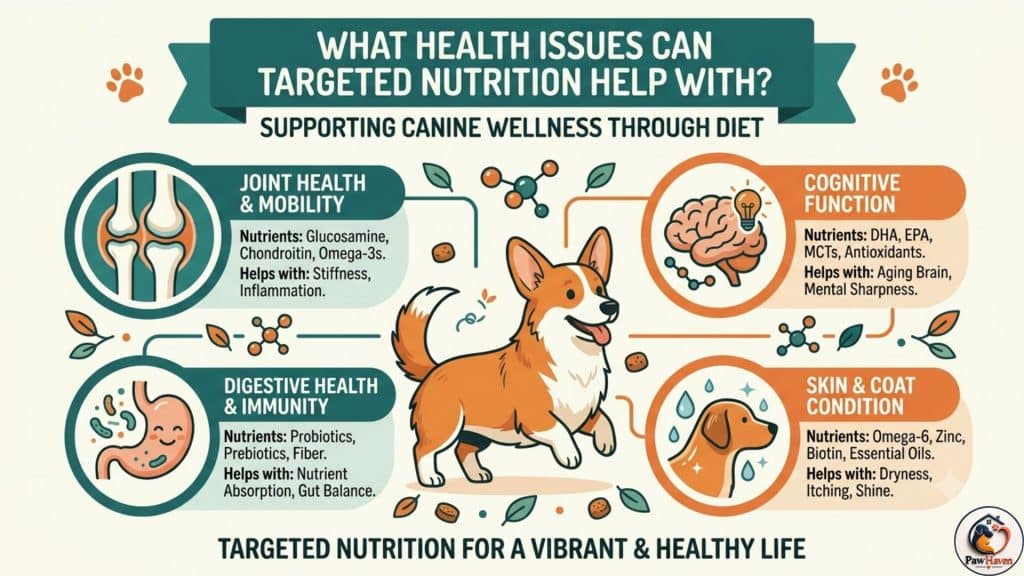
Can diet really improve chronic health issues in dogs? Yes, in many documented cases, though diet works alongside, not instead of, veterinarian guidance for diagnosed conditions like pancreatitis or diabetes.
How to Choose the Right Product for Your Dog (Step by Step)
Skip the guesswork with a five-step process.
First, identify the specific health goal, whether that’s joint support, weight management, or digestive health. Second, check your dog’s size, age, and breed needs, since large breed nutrition differs substantially from small pet food requirements. Third, cross-check ingredients against any known allergens your dog has reacted to before. Fourth, start with a trial size rather than committing to a large bag. Fifth, monitor for two to four weeks and track changes in coat, energy, and stool quality.
How to Safely Introduce a New Treat or Supplement
Transitioning too quickly is the single biggest cause of digestive upset in dogs switching foods.
Mix the new product in gradually over seven to ten days, increasing the ratio each day. Follow the feeding guide on the package for dosage, since overshooting calorie requirements even with healthy treats contributes to weight gain over time. Watch for vomiting, loose stool, or excessive itching as signs of a bad reaction, and stop the product immediately if symptoms appear.
How long does it take to see results from dog supplements? Joint supplements typically show visible improvement in four to six weeks, while skin and coat changes can take eight to twelve weeks given the hair growth cycle involved.
Mistakes Pet Parents Commonly Make
Over-supplementing without a clear goal wastes money and occasionally causes harm, since fat-soluble vitamins can accumulate to toxic levels. Ignoring ingredient overlap between a multivitamin and a joint supplement often means double dosing on the same nutrients without realizing it. Choosing a product based on attractive packaging rather than checking the actual guaranteed analysis remains the most common, and most avoidable, error.
Frequently Asked Questions
Are vet-approved dog treats actually different from regular treats? Often yes. They typically undergo more rigorous formulation review and ingredient sourcing checks than mass market treats, though the term itself isn’t legally regulated.
How do I know if my dog needs a supplement? Start with a vet visit. Visible signs like stiffness after rest, dull coat, or frequent digestive upset are common indicators worth discussing.
Can I give my dog human-grade whole food supplements? Some are safe, but always verify dosing, since human supplements aren’t formulated for canine body weight or metabolism.
How long until I see results from a new treat or supplement? Most pet parents notice changes within four to eight weeks, depending on the issue being addressed.
Are USA-made products always safer than imported ones? Not automatically, but they generally face more consistent regulatory oversight.
What’s the difference between AAFCO compliant and NASC certified products? AAFCO governs nutritional adequacy for foods, while NASC specifically audits supplement manufacturers for quality control.
Final Takeaway
A trustworthy product earns that label through verifiable sourcing, real formulation science, and ingredient transparency, not through the word “premium” printed on the bag. Before your next purchase, run the brand through this checklist instead of trusting the packaging alone.
Recommended Articles:
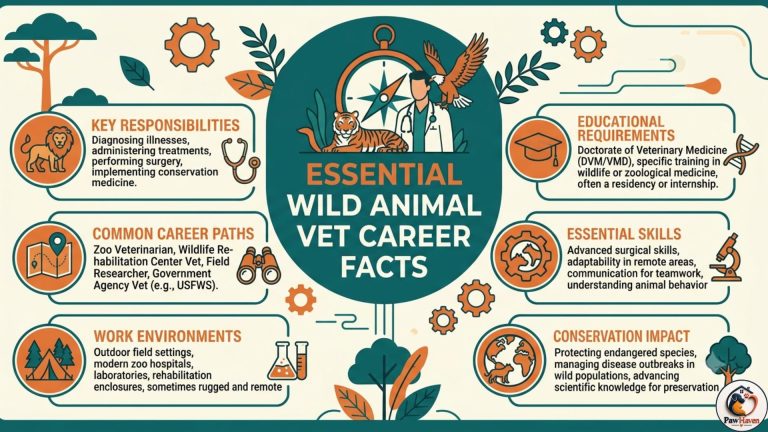
7 Essential Wild Animal Vet Career Facts
Wild animals in French are provided with 100 essential vocabulary words