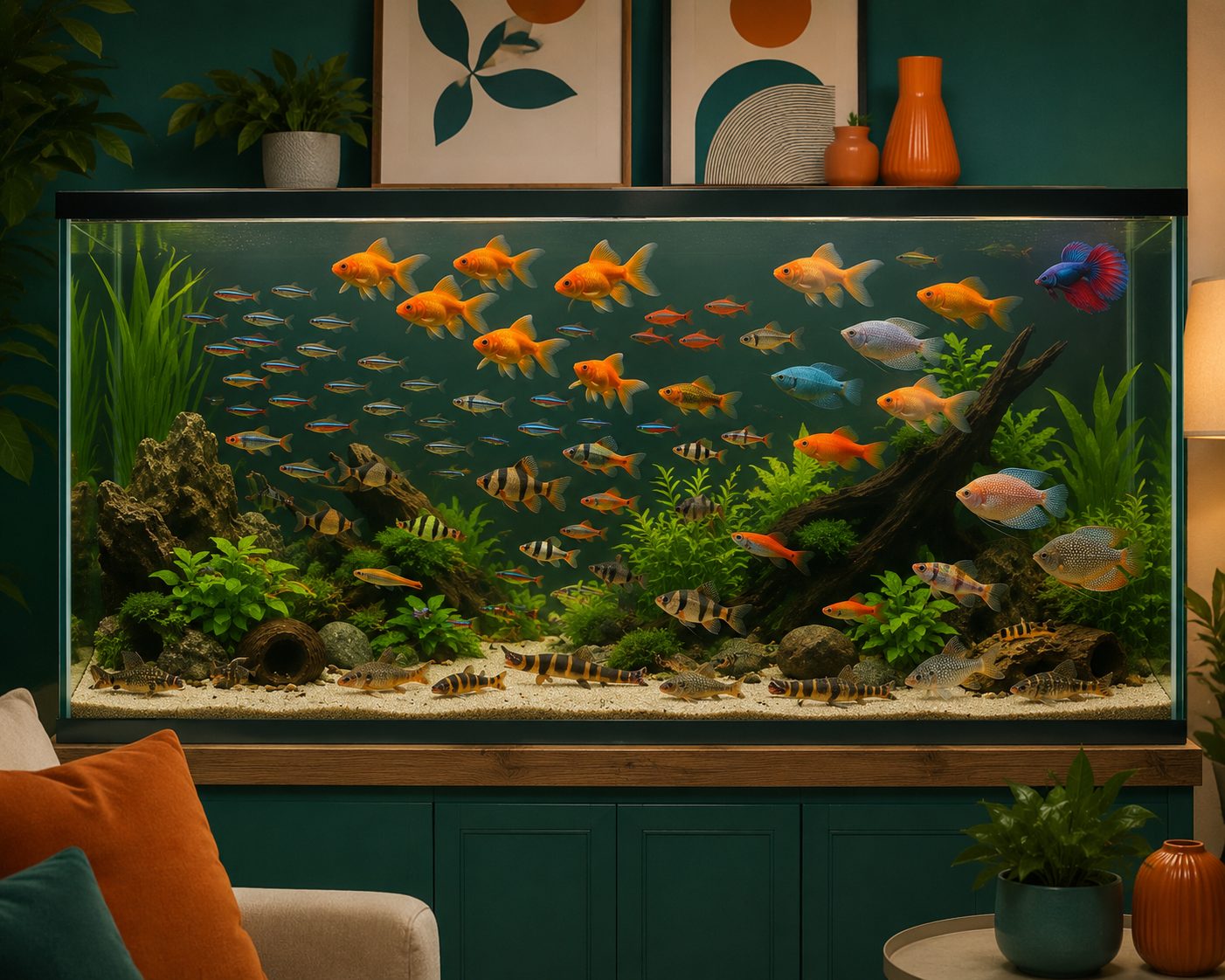
17 Best Pet Fish That Are Actually Easy to Keep (Vet Approved)
I still remember the goldfish I won at a county fair when I was nine. Classic plastic bag, tiny bowl, no clue what I was doing. He lasted four days. I cried, my dad shrugged and said, “That’s just how goldfish are,” and for years I genuinely believed fish were disposable pets. Turns out we’d done almost everything wrong, and that poor fish never had a chance.
Fast forward a few decades, and I’ve spent most of my career undoing that exact myth for other people. Most folks pick their first fish based on looks alone, plunk it into whatever container is lying around, and then watch it struggle within two weeks. I’ve seen this pattern play out more times than I can count, and almost every time, the fish wasn’t the problem. The setup was.
Here’s the thing — fish aren’t actually hard to keep. They’re just unforgiving of guesswork. Pick the right species, get the basics right from day one, and most of these guys will outlive your average houseplant.
So whether you’re hunting for the best pet fish for a first tank, something pretty and peaceful for a community setup, or just a cool aquatic pet to show off to friends, this is the list I wish someone had handed me back at that county fair.
Quick Answer: The best pet fish for most beginners are Betta splendens (bettas), neon tetras (Paracheirodon innesi), and zebra danios (Danio rerio). They’re hardy, affordable, visually striking, and forgiving of the occasional beginner mistake. For community tanks, pearl gouramis and corydoras catfish round out an ideal setup. The key is matching each fish to your tank size, water parameters, and experience level — not just picking the prettiest one at the store.
Why Picking the Right Pet Fish Changes Everything
Here’s what most guides miss: not all “beginner fish” are created equal. Some that get labeled easy are actually sensitive to water quality. Others need specific tank depth requirements or fine substrate that beginners don’t think about until something goes wrong.
The fish you choose on day one shapes your entire experience as an aquarium hobbyist. Once you get the basics right, you can expect to have a thriving, beautifully planted aquarium up and running in just a few weeks. Get it wrong, and you’ll be Googling “why did my fish die” at 11 PM.
Let’s skip that second scenario entirely.
Best Pet Fish for Beginners: Where to Start
1. Betta Fish (Betta splendens)
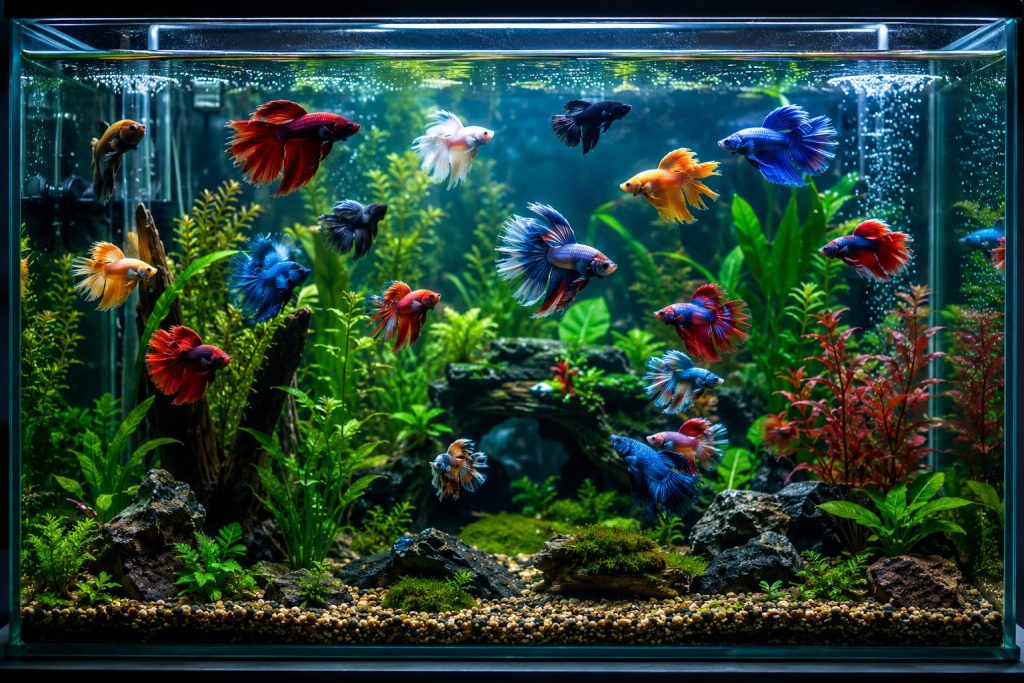
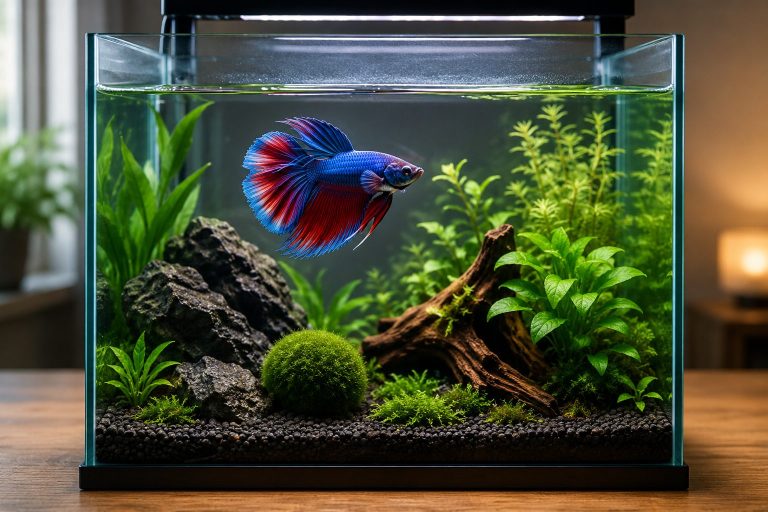
If there’s one fish I’d recommend to almost anyone just getting started, it’s the betta. Striking appearance? Without a doubt, their elegant, flowing fins in vibrant shades of red, blue, and shimmering purple make them a striking centerpiece in any aquarium. But the real reason bettas earn their spot at the top of every “best fish as pets” list is their personality.
Bettas recognize their owners. They respond to movement. Some will even follow your finger across the glass.
I had a betta named Gary on my desk for almost three years. Every morning he’d swim up and flare a little when I sat down with my coffee, like he was clocking in too. Sounds silly, but it’s part of why bettas make such a good entry point. They actually feel like a pet, not just moving decoration.
They thrive in tanks as small as 5 gallons, though 10 gallons gives them proper room to explore. Keep the water temperature between 76°F and 82°F with an aquarium heater, and you’re most of the way there. One important note — male bettas cannot be housed together, and fin-nipping behavior will occur if they’re paired with certain tankmates like tiger barbs (Puntigrus tetrazona).
Longfin varieties are especially popular but need calmer tankmates to keep those fins intact. This won’t matter for everyone, but it might for you if you’re planning a community tank.
2. Neon Tetra (Paracheirodon innesi)
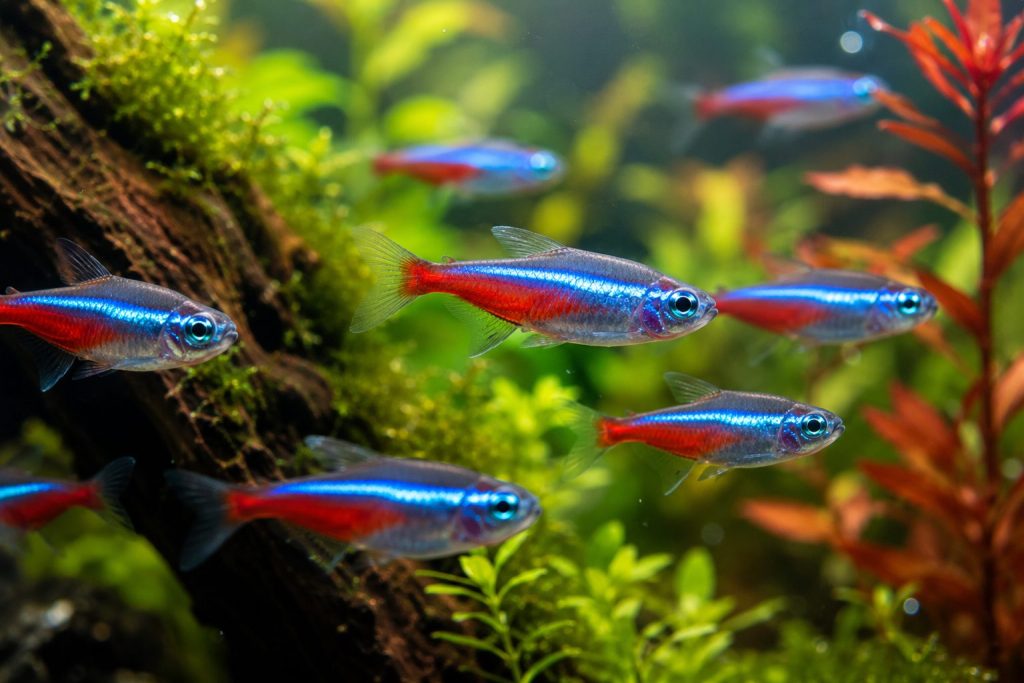
Few fish in the aquarium world match the visual payoff of a school of neon tetras moving together in a planted tank setup. That iconic electric blue and red stripe is one of nature’s small miracles. They’re shoaling fish, meaning they need at least 6 to 8 in a group to feel secure and display their best schooling fish behavior.
They’re peaceful community fish that get along with almost everything. Water parameters matter here — neon tetras prefer soft water with slightly acidic pH (6.0 to 7.0) and temperatures between 70°F and 81°F. Keep up with routine water changes, and these little guys can live 5 to 10 years.
One thing I always tell new fish keepers: neon tetras are hardy fish, but they do not tolerate ammonia spikes. Proper filtration from day one is non-negotiable.
3. Zebra Danio (Danio rerio)
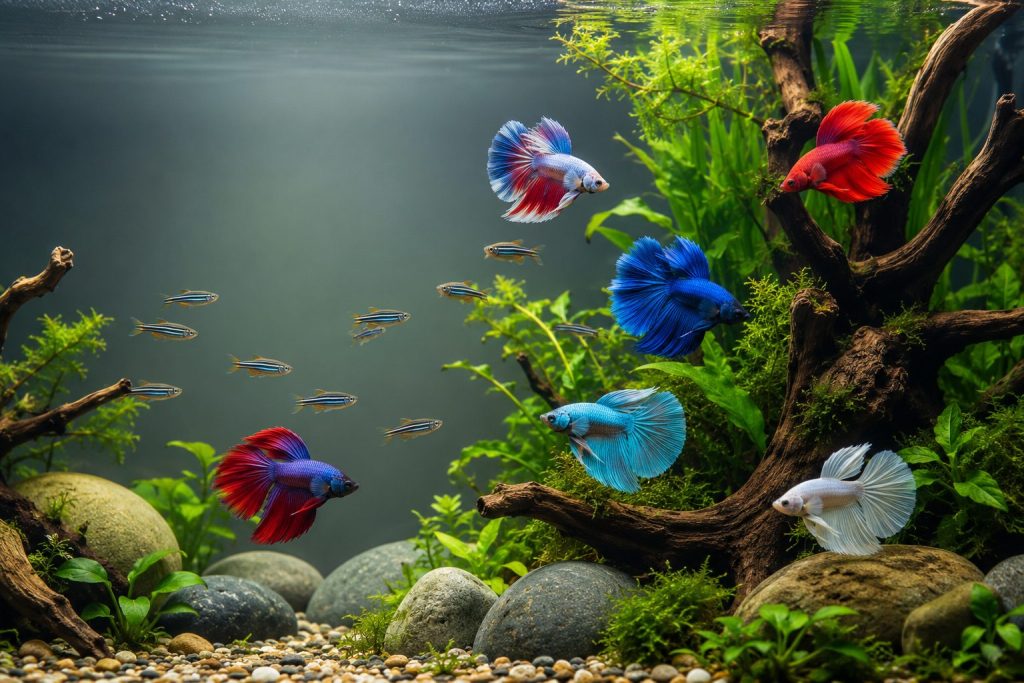
You want a fish that’s almost impossible to kill? Zebra danios are your answer. These small, active schooling fish tolerate a wider range of water temperatures (64°F to 77°F) than most tropical fish tank species, making them ideal if you’re running a tank without a heater.
They’re also among the most captive-bred fish available, which means they’re used to aquarium conditions right from the start. For the best results, keep these fish in schools of at least six individuals and provide a spacious tank with ample swimming room. GloFish — those neon-colored danios you see everywhere — are genetically modified zebra danios, and they’re just as hardy as the original species.
Fast, playful, and incredibly resilient. Good pick for a classroom pet, too.
4. Cardinal Tetra (Paracheirodon axelrodi)
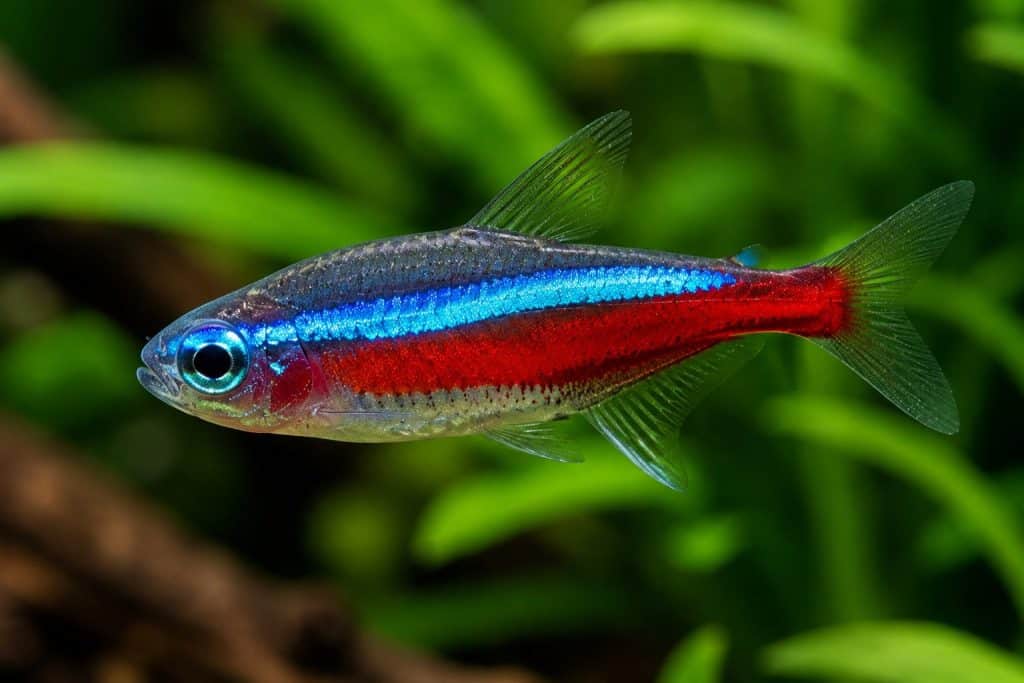
Often confused with the neon tetra, the cardinal tetra has a longer red stripe that runs the full length of its body rather than just the lower half. It’s native to South American tropical habitat, specifically the Negro and Orinoco river basins.
Here’s the catch though: cardinal tetras prefer softer, more acidic water than neon tetras and can be slightly less forgiving about water quality. Still a fantastic option for anyone who’s had a successful tank running for a few months. The payoff in color and schooling behavior is worth the small extra effort.
5. Corydoras Catfish (Corydoras sp.)
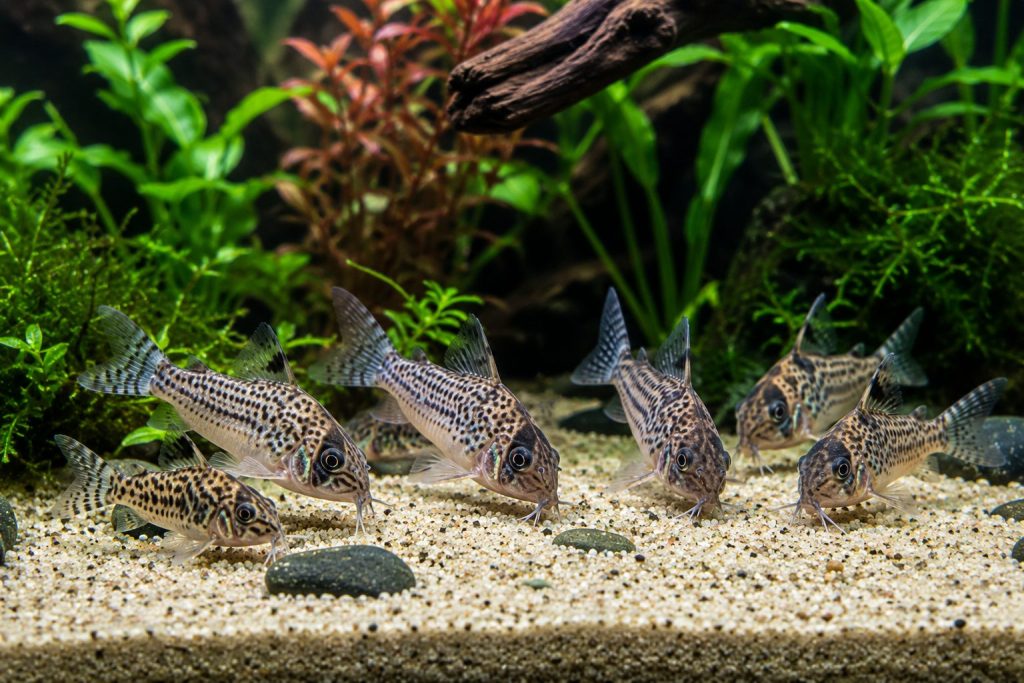
Every community tank needs a cleanup crew, and corydoras are the gold standard. These bottom-feeder fish spend their days scavenging for uneaten fish food along the substrate, keeping your tank floor remarkably tidy.
Panda corydoras and pygmy corydoras are particularly popular. Both stay small (under 2 inches), are completely non-aggressive species, and are gentle enough to share a tank with even the most delicate tankmates. They have sensitive barbels, so avoid sharp gravel — use fine substrate like sand instead. That’s a detail most beginner guides skip entirely, and it directly affects their long-term health.
They’re live-bearing… actually no, they’re egg-laying fish, but they won’t typically breed without intentional conditioning. Great for beginners who aren’t ready for that yet.
Best Aquarium Pets for Community Tanks
6. Pearl Gourami (Trichogaster leeri)
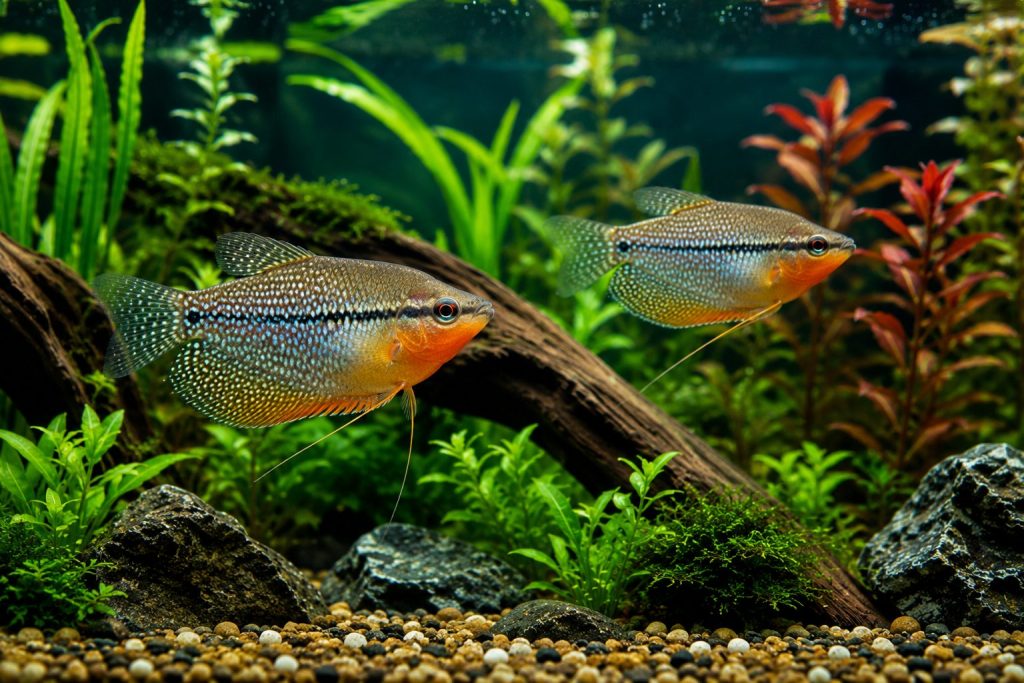
If you want something that commands attention without being aggressive, the pearl gourami is a show-stopper. Its pearlescent white spots scattered across a golden-brown body make it one of the prettiest pet fish available in the freshwater hobby.
Members of the family Osphronemidae, gouramis have a labyrinth organ that lets them breathe atmospheric oxygen — which means they’re surprisingly tolerant of lower oxygen levels. Pearl gouramis do best in tanks of 30 gallons or more with plenty of surface plants and hiding spots.
They are calm, beautiful to look at, and can live for several years when cared for properly. Few fish in the hobby offer this combination.
7. Dwarf Gourami (Trichogaster lalia)
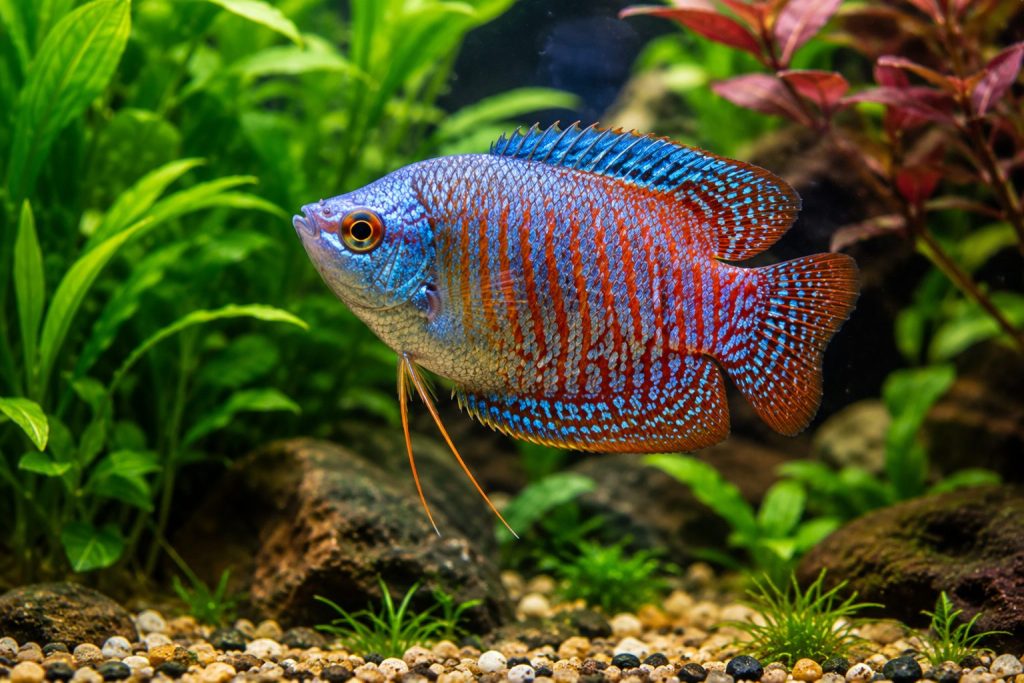
Smaller than the pearl gourami, the dwarf gourami packs vibrant colors into a fish barely reaching 3.5 inches. Males display brilliant diagonal stripes of red-orange and blue. Females are more muted but still attractive.
One thing to keep in mind is that dwarf gouramis can sometimes develop a health problem known as Dwarf Gourami Disease. This issue is seen more often in fish from certain breeding sources. Buy from reputable captive-bred fish sources and quarantine new arrivals for at least two weeks. That habit alone will save you a lot of heartbreak over time.
8. Honey Gourami (Trichogaster sp.)
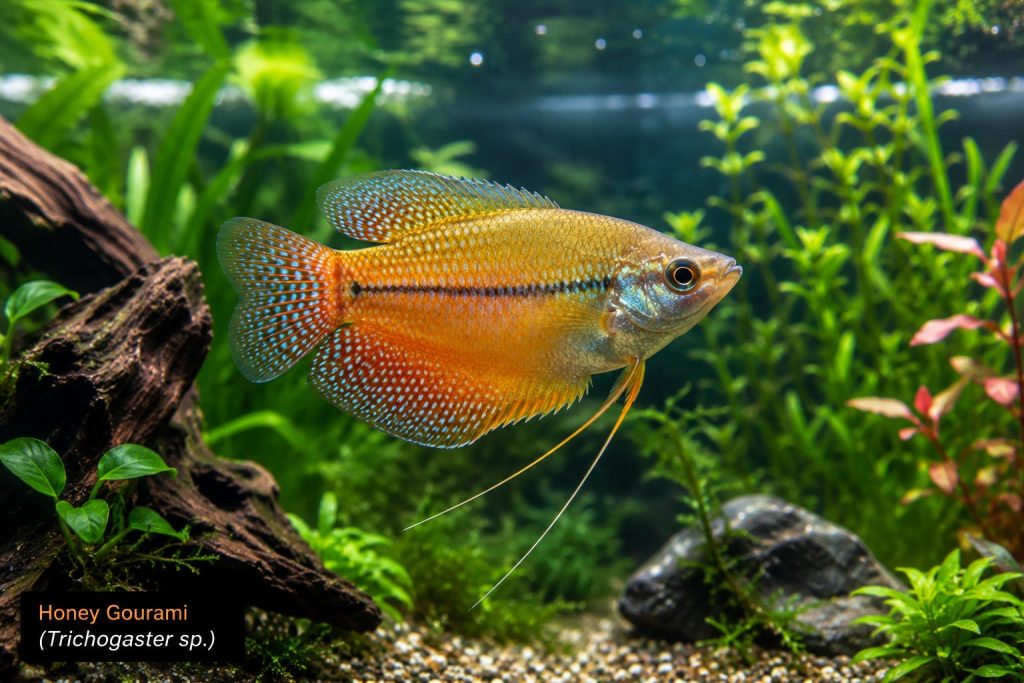
Smaller than the dwarf gourami and frankly easier to keep. Honey gouramis are beginner-friendly fish that handle a range of water conditions with grace. Males develop a golden-orange color when they mature, while breeding males turn nearly sunset-orange.
They’re among the most peaceful fish you can add to a freshwater community tank. Even the sparkling gourami (Trichopsis pumila), a tiny relative that maxes out at 1.5 inches, makes a fantastic option for nano tanks.
9. Swordtail Fish
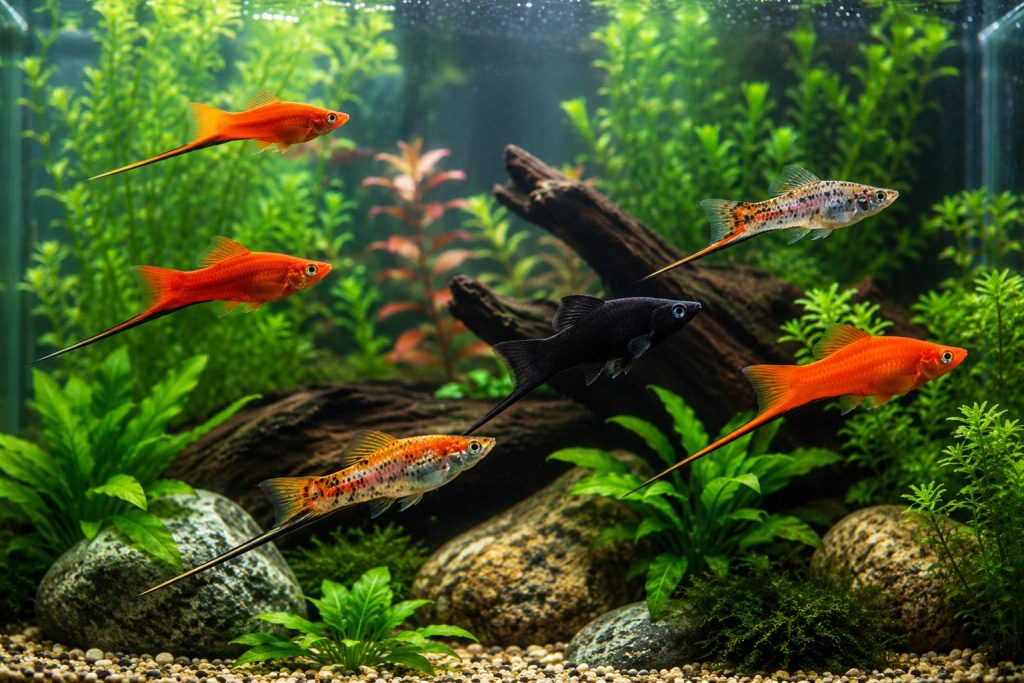
Swordtails are live-bearing fish, meaning they give birth to fully formed fry rather than laying eggs. That “sword” on the male’s tail fin is genuinely dramatic. They come in dozens of color morphs — red, green, pineapple, even black — and are incredibly easy to care for.
A tank of at least 20 gallons is recommended, and the water should stay between 65°F and 82°F. One thing many new fish keepers don’t realize is that swordtails breed readily in captivity, sometimes without you even trying. If you don’t want a population explosion, keep only males or only females.
10. Platy Fish
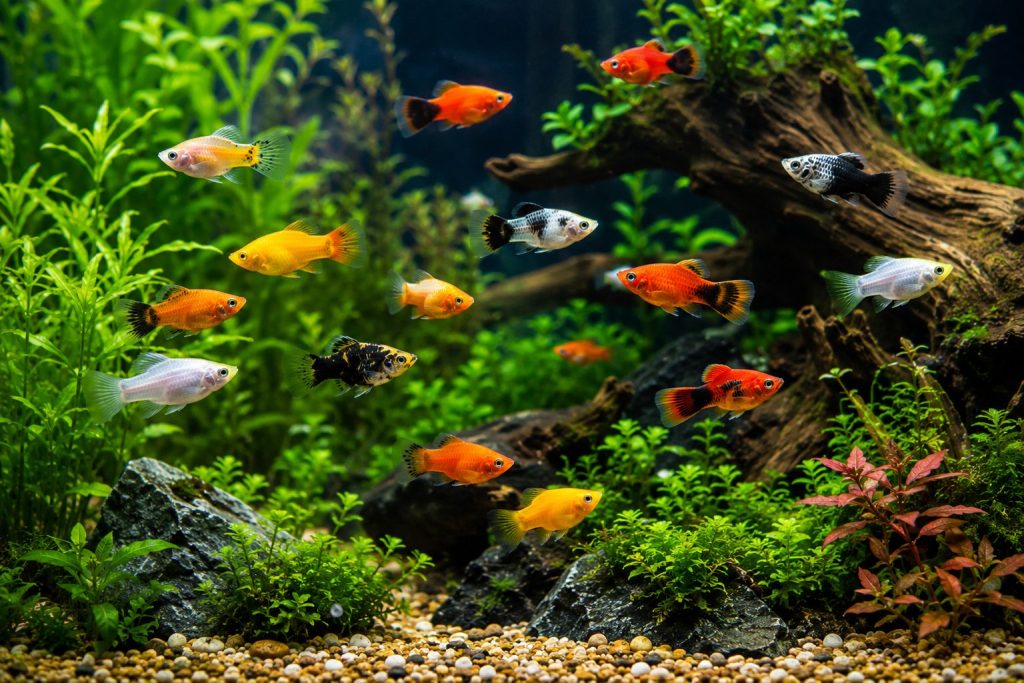
Closely related to swordtails, platies are another live-bearing fish that’s practically foolproof. They tolerate hard water better than most tropical fish tank species, which makes them a great choice in areas with naturally hard tap water.
Available in a mind-boggling range of colors and patterns. Good fish to have as pets for families with kids — they’re active, colorful, non-aggressive species, and hardy enough to handle the occasional beginner mistake.
Cool Aquatic Pets That Stand Out From the Crowd
11. Black Skirt Tetra (Gymnocorymbus ternetzi)
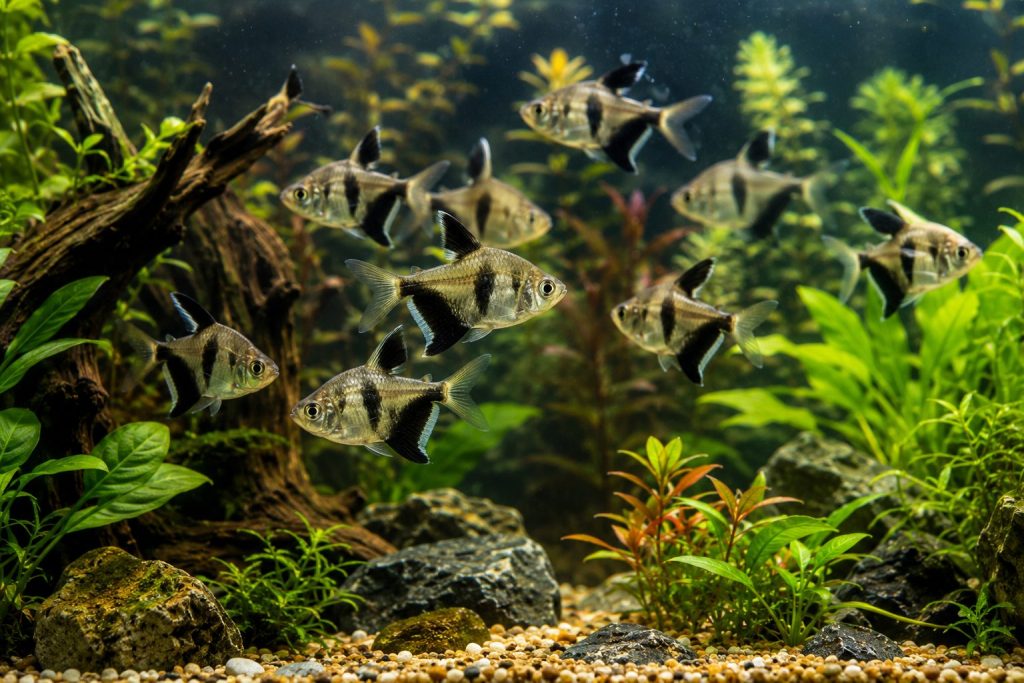
Order Characiformes, this tetra has a dramatic black-to-transparent gradient that makes it unlike anything else in a typical community tank. It’s a schooling fish that does best in groups of 6 or more and gets along well with similarly-sized tankmates.
One thing to watch: black skirt tetras can occasionally display fin-nipping behavior toward fish with long, flowing fins like bettas. Choose tankmates that can hold their own, and these fish usually do very well. They’re interesting pets and don’t need advanced fishkeeping skills.
12. Ember Tetra (Hyphessobrycon amandae)
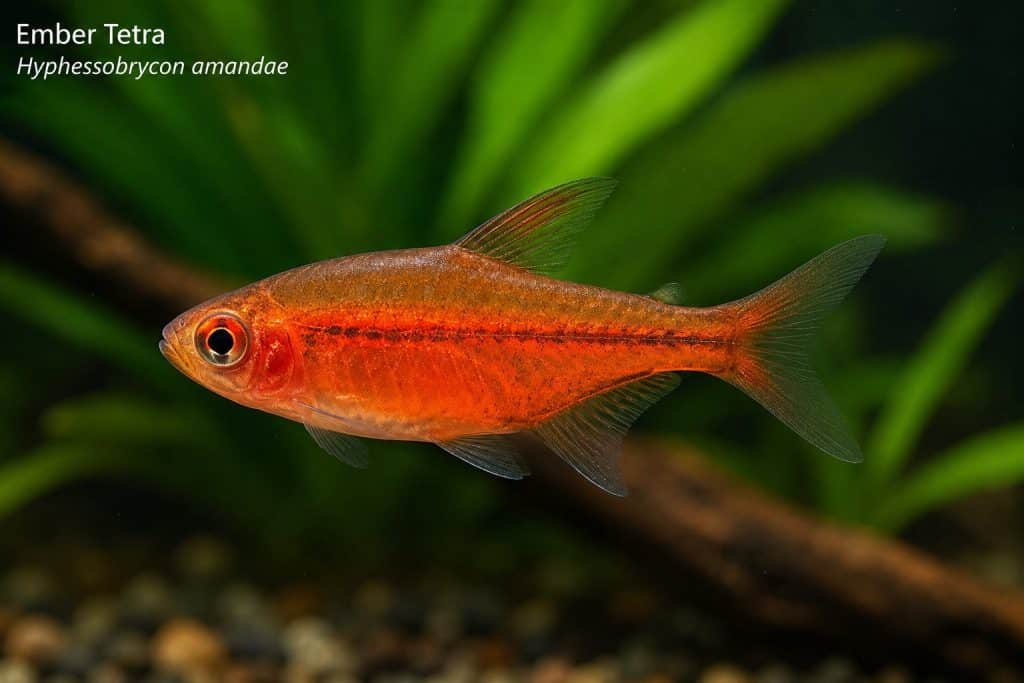
This one tends to fly under the radar, and honestly that’s a shame. Ember tetras are tiny (under an inch) with a deep orange-red color that genuinely glows under good lighting. Against a planted tank backdrop, they’re breathtaking.
They’re native to Brazil and prefer soft, slightly acidic water — similar to cardinal tetras. Because of their small adult size at maturity, they do well in tanks as small as 10 gallons. A perfect choice for anyone who wants something visually unique without complex care requirements.
13. Cherry Barb (Puntius titteya)
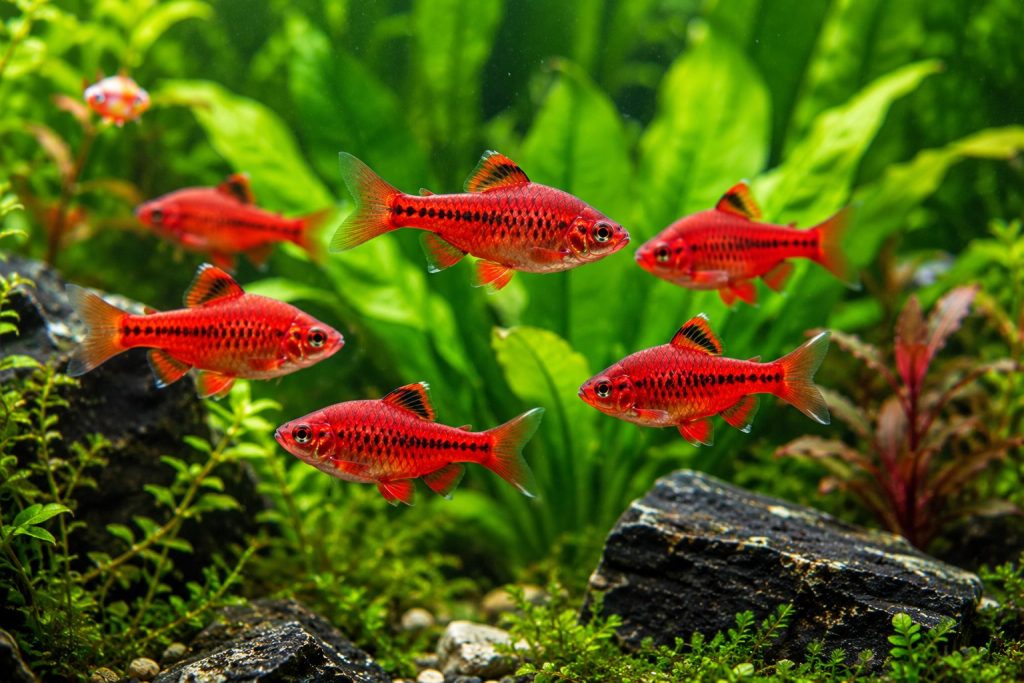
Most barbs have a reputation for aggression, but cherry barbs are the exception. Males develop a vivid cherry-red coloration especially during spawning, while females stay a more modest brownish-pink. Unlike their cousin the tiger barb (Puntigrus tetrazona), cherry barbs are peaceful community fish that won’t bother their neighbors.
They’re native to Sri Lanka and prefer slightly acidic, soft water with a tank temperature range of 73°F to 81°F. Easy to find, inexpensive, and reliably peaceful. Great fish to have as pets for community tanks.
14. Kuhli Loach (Pangio kuhlii)
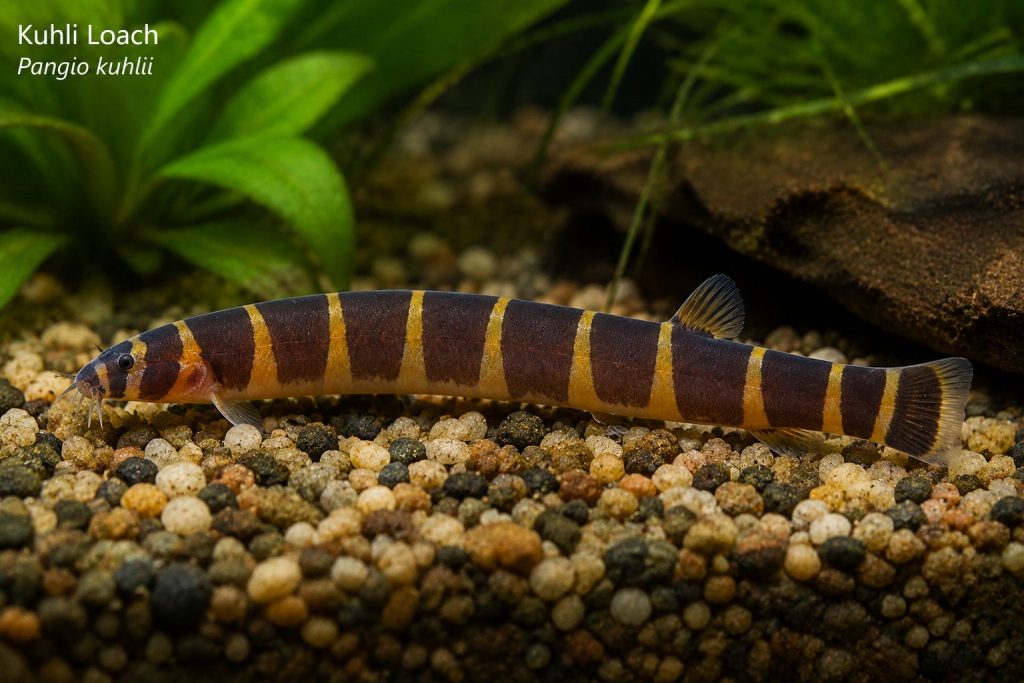
Here’s where things get interesting. Kuhli loaches look like tiny eels with their long, banded bodies, and they’re among the most unusual-looking freshwater cleanup crew members available. Part of the family Cobitoidea, they’re nocturnal scavengers that hide during the day and become active once the lights go out.
They need fine substrate (sand is ideal) and hiding spots like caves or dense plants. Keep them in groups of 3 to 5. While they’re not the flashiest fish in the tank, they add an element of mystery that seasoned hobbyists genuinely appreciate.
15. Clown Loach (Chromobotia macracanthus)
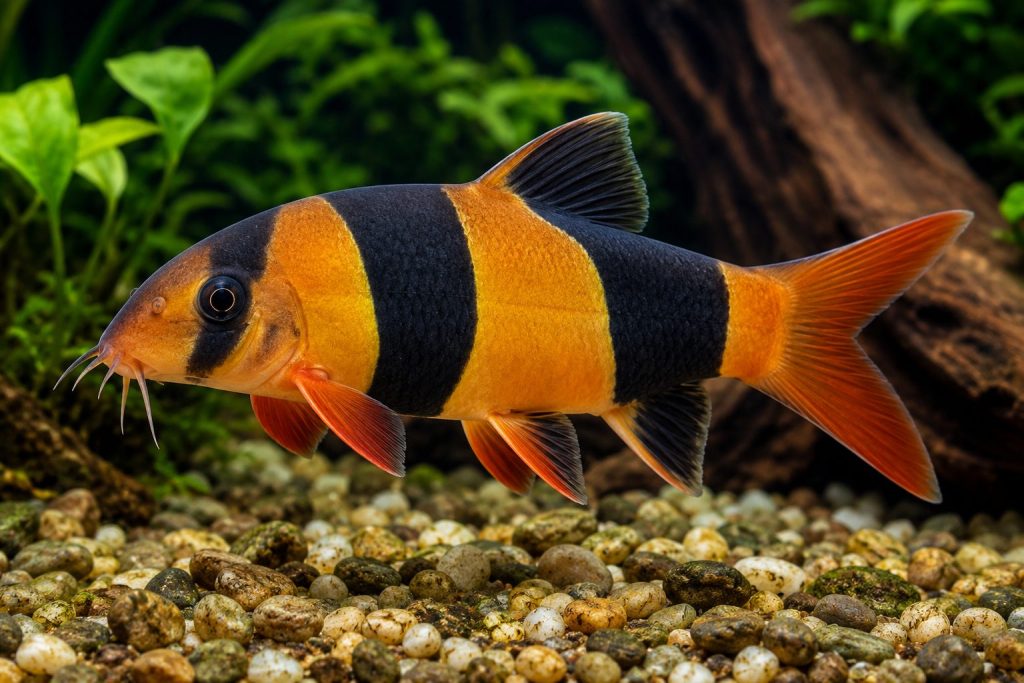
The clown loach is one of those fish that grabs attention instantly. Bold orange and black banding, active personality, and a distinctive clicking sound when they’re content. They’re social fish that should be kept in groups of at least 5 to 6.
Here’s the honest part: clown loaches grow. They can reach 12 inches in a home aquarium and live 20 or more years. Minimum tank size for adults is 75 gallons, making them a long-term commitment. Don’t buy one for a 20-gallon tank thinking it’ll be fine. It won’t.
If you have the space and the patience, though, they’re among the most rewarding cool freshwater pets in the hobby.
16. Yoyo Loach (Botia almorhae)
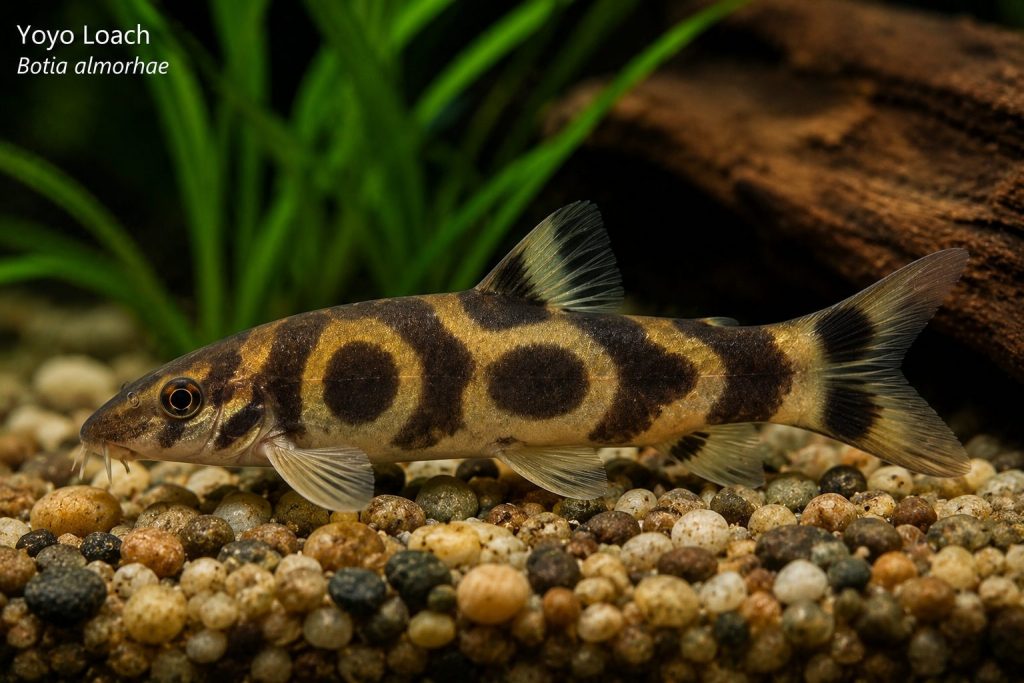
A more manageable alternative to the clown loach, the yoyo loach maxes out around 6 inches and is comfortable in 40-gallon tanks. It gets its quirky name from the “YoYo” pattern on its sides, especially visible in juveniles.
Active, inquisitive, and effective at controlling pest snails in the tank. A solid choice for aquarium hobbyists who want something beyond the typical tetra-and-gourami setup.
17. Goldfish (Carassius auratus)
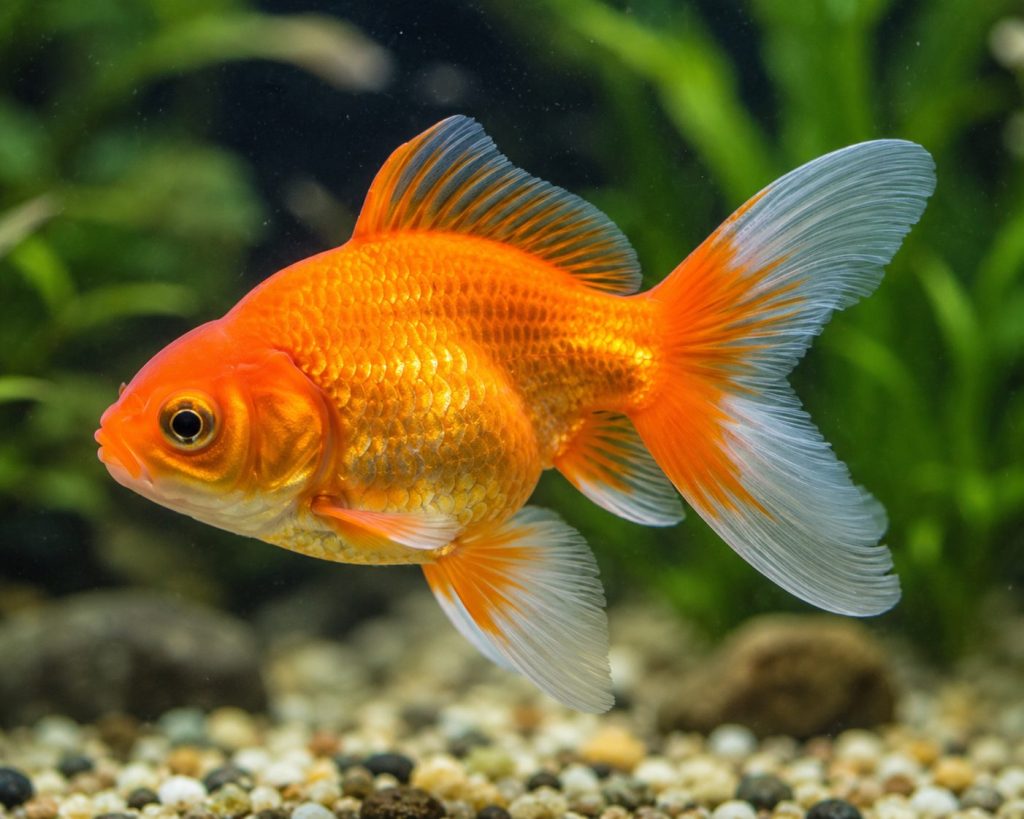
No list of best pet fish species would be complete without goldfish, and yeah, I know what you’re picturing after that intro story. But I’ll be direct: most people keep goldfish wrong, and that’s on us, not the fish. The classic carnival prize goldfish in a tiny bowl? That’s a welfare problem, not a real setup.
Fancy varieties — oranda goldfish, ryukin goldfish, and fantail goldfish — need at minimum 20 gallons for the first fish and 10 more per additional fish. Comet goldfish and shubunkin goldfish grow significantly larger and truly need pond conditions or very large tanks.
Given proper space and water quality maintenance through proper filtration and weekly water tests, goldfish can live 15 to 20 years. They’re not delicate; they’re just misunderstood. Cold-water species, so no aquarium heater needed — which actually makes them accessible for setups that don’t involve tropical fish tank requirements.
Quick Reference: Best Pet Fish Comparison
| Fish | Min. Tank Size | Temp (°F) | Beginner? | Community Safe? | Adult Size |
| Betta (Betta splendens) | 5 gal | 76–82 | Yes | Caution | 2.5 in |
| Neon Tetra | 10 gal | 70–81 | Yes | Yes | 1.5 in |
| Zebra Danio | 10 gal | 64–77 | Yes | Yes | 2 in |
| Cardinal Tetra | 15 gal | 73–81 | Moderate | Yes | 2 in |
| Corydoras | 20 gal | 72–79 | Yes | Yes | 1–2.5 in |
| Pearl Gourami | 30 gal | 77–82 | Moderate | Yes | 4.5 in |
| Dwarf Gourami | 10 gal | 77–78 | Moderate | Yes | 3.5 in |
| Swordtail | 20 gal | 65–82 | Yes | Yes | 5 in |
| Platy | 10 gal | 70–82 | Yes | Yes | 2.5 in |
| Cherry Barb | 25 gal | 73–81 | Yes | Yes | 2 in |
| Kuhli Loach | 20 gal | 73–86 | Moderate | Yes | 4 in |
| Clown Loach | 75 gal | 77–86 | No | Yes | 12 in |
| Fancy Goldfish | 20 gal | 65–72 | Moderate | Caution | 6–8 in |
Signs Your Pet Fish Is Thriving (Or Not)
Fish health is easy to read once you know what to look for. During your visual inspections, watch for these signals.
Healthy signs: Active swimming at their natural level in the water column, vibrant colors, alert response to feeding, regular appetite, smooth fins, and normal behavior patterns.
Warning signs: Lethargic behavior when they’re usually active, frayed fins (which can indicate fin-nipping behavior or bacterial infection), dull coloration, loss of appetite, clamped fins, or spending time near the surface gasping.
The two-to-three minutes feeding rule is worth following — only offer as much commercial fish food as your fish can consume in that window. Uneaten fish food breaks down fast and tanks water quality can crash quickly, even with proper filtration running.
Weekly water tests for ammonia, nitrite, nitrate, and pH are how experienced aquarium hobbyists catch problems before they become fatal. This is basic fish husbandry, and skipping it is where most beginners run into trouble.
What to Set Up Before You Buy Any Fish
One mistake I’ve watched newcomers make: buying fish before the tank is ready. Skipping this step leads directly to the nitrogen cycle crash, which leads to dead fish, which leads to frustration, which leads to giving up the hobby entirely.
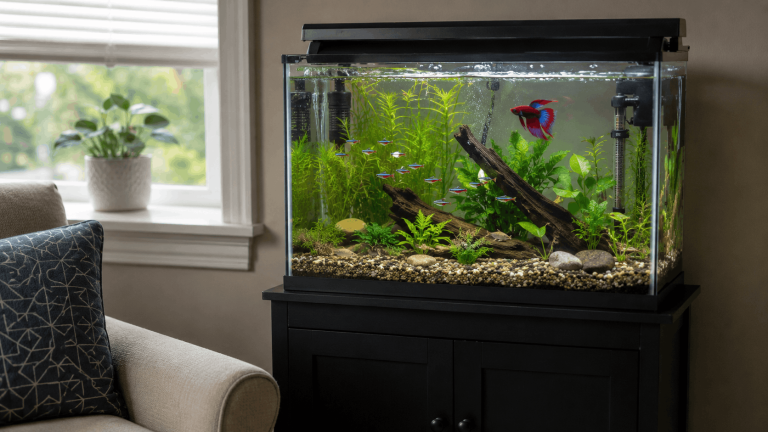
Cycle your tank first. Run the filter for at least two weeks before adding any fish. Add an ammonia source to feed the beneficial bacteria developing in your filter media. Test the water until ammonia and nitrite both read zero and nitrate begins to rise — that’s when your tank environment is ready.
For a planted tank setup, fine substrate, moderate lighting, and a few hardy aquatic plants will make any fish immediately more comfortable and your tank far more visually appealing.
Brands like Aqueon and Zoo Med make reliable starter equipment. For lighting, a Koval LED unit hits a solid balance between spectrum quality and price for most setups.
FAQ: Best Pet Fish Questions Answered
Are fish good pets for beginners? Yes, but the experience depends almost entirely on species selection and setup. Hardy species like zebra danios, platies, and bettas are genuinely forgiving for beginners. More sensitive fish like cardinal tetras and dwarf gouramis require stable water parameters from day one. Start with the former, graduate to the latter.
What is the best fish to have as a pet for a child? Platies and zebra danios are ideal best fish for kids because they’re colorful, active, hardy, and don’t require precise water conditions. Goldfish work well too, provided the child’s family understands the proper tank size requirements. A single goldfish in a bowl is not appropriate care.
Are fish considered pets the same way cats or dogs are? Legally and emotionally, yes — fish are classified as pets in virtually every context. Research increasingly shows that fish have more complex behaviors, memory, and stress responses than people once believed. They deserve appropriate environments and consistent care.
What are the best fish to own as a pet if I want something unique? Kuhli loaches and sparkling gouramis consistently impress aquarium hobbyists who want something different. GloFish offer vivid colors that stand out from typical freshwater options. For something truly unusual, African cichlids from Lake Malawi display breathtaking colors but require specific water hardness levels and more advanced care.
How often should I feed my pet fish? Most pet fish do well fed once or twice per day. Follow the two-to-three minutes feeding rule — only what they can consume in that time. Overfeeding is one of the most common causes of poor water quality in home aquariums.
What is the best pet fish species for a small apartment tank? For tanks under 10 gallons, bettas (solo), ember tetras, pygmy corydoras, honey gouramis, or sparkling gouramis are your best options. All of these species stay small, are non-aggressive, and don’t require large tank gallons capacity to thrive.
The best pet fish for you is ultimately the one that fits your actual life — your tank size, your water parameters, your time commitment, and your experience level. Start with something forgiving. Learn how your tank behaves. Then, once you’re confident, the whole world of aquarium pets opens up.
That’s when it gets genuinely addictive.
I think about that goldfish from the county fair more than I probably should. Not with guilt anymore, just gratitude, honestly. He’s the reason I ended up caring this much about getting it right for other people’s fish. If you take one thing from this whole guide, let it be this: a little research before you buy beats a lot of regret after. Your future fish will thank you for it, in whatever way fish thank people.