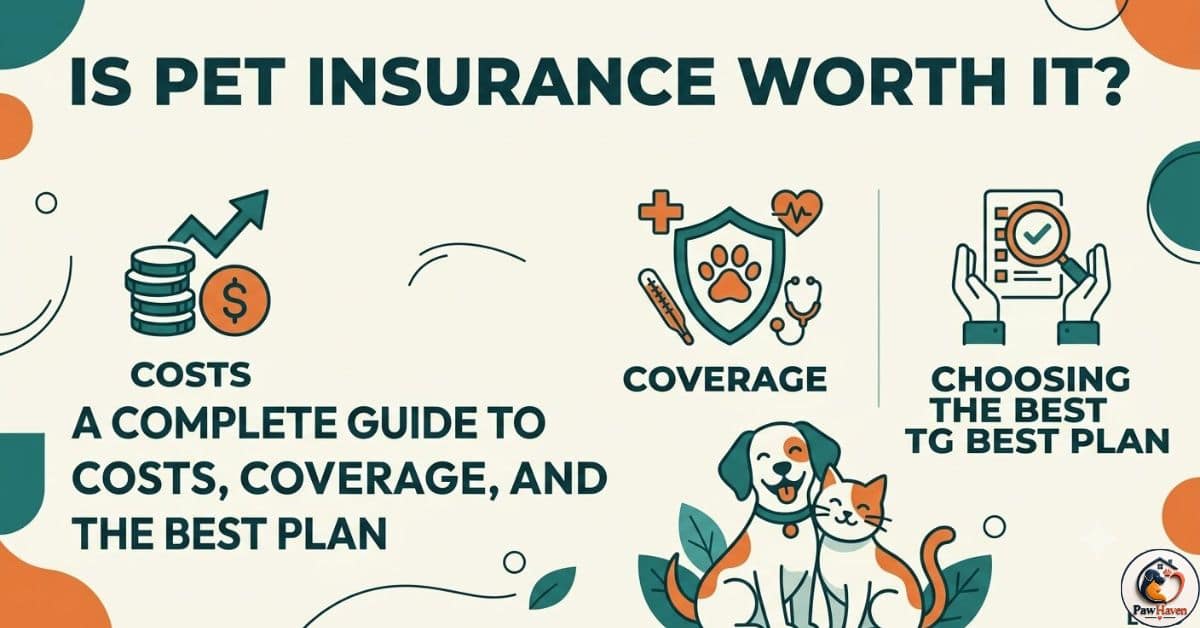
Is Pet Insurance Worth It? A Complete Guide to Costs, Coverage, and Choosing the Best Plan
Vet bills have a way of showing up at the worst possible moment. One minute your dog is chasing a squirrel, the next you’re sitting in an emergency animal hospital looking at a bill that starts with a three and ends with a lot of zeros. That’s the moment most pet owners start Googling pet insurance, and for good reason.
Veterinary care has gotten noticeably more expensive over the last several years. Diagnostic imaging, specialist referrals, and overnight hospitalization all cost more than they did even five years ago. Whether you’re comparing nyc pet insurance options in a borough with three emergency animal hospitals within a ten-minute drive, or you’re looking into pet insurance Austin residents rely on for Hill Country hiking injuries, the underlying question is the same: Does the monthly premium actually pay for itself?
This guide walks through what pet insurance covers, what it costs, who benefits most, and how to avoid common mistakes that leave pet parents underinsured when they need coverage most.
Quick Answer
Pet insurance is generally worth it if you want protection against unpredictable, expensive veterinary expenses like surgery, cancer treatment, or emergency care. A typical accident and illness plan costs $25 to $70 per month, depending on your pet’s breed, age, and location, and it can save thousands in a single emergency. It’s less valuable if your pet is older with pre-existing conditions, since those won’t be covered, or if you already have a solid emergency fund set aside.
What Is Pet Insurance and How Does It Work?
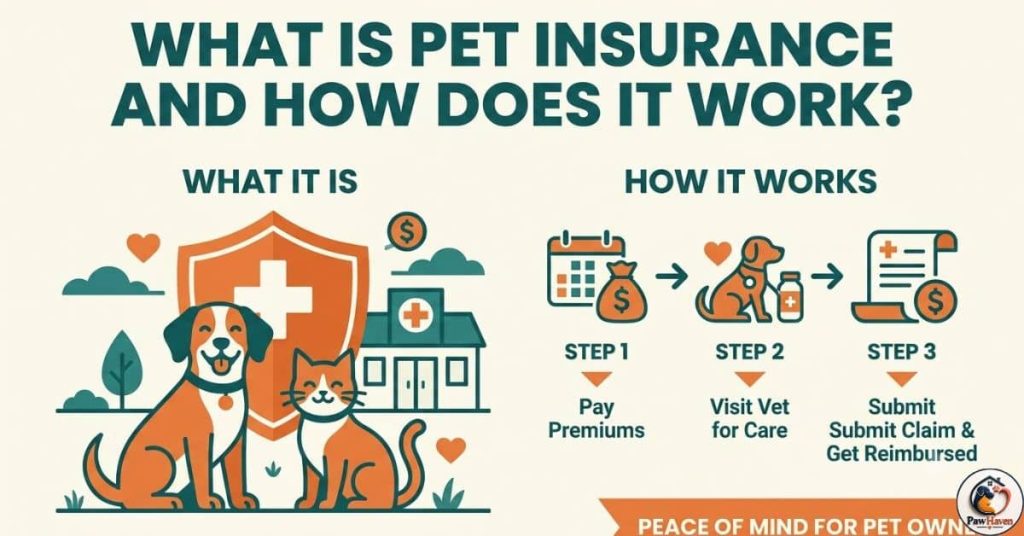
Pet insurance works on a reimbursement model. You pay the vet bill upfront, submit a claim with your itemized invoice, and the insurer reimburses you based on your policy’s coverage terms. It’s closer to how human health insurance used to work decades ago than how it works today.
What pet insurance actually covers
Most accident and illness policies cover emergency treatment, surgery, hospitalization, diagnostic examinations, prescription medications, and treatment for chronic conditions like diabetes or hip dysplasia. Some plans extend to hereditary conditions such as ligament tears in large breed dogs, which matters if you own a Labrador or German Shepherd.
What is usually excluded from coverage
Pre-existing conditions are the big one. If your cat was diagnosed with a heart murmur before you enrolled, that condition won’t be covered under almost any provider. Cosmetic procedures, breeding-related costs, and elective treatments typically fall outside coverage exclusions, too.
Types of pet insurance plans
- Accident-only coverage, which handles injuries like broken bones or foreign object ingestion, but not illness
- Accident and illness coverage, the most common and comprehensive option
- Wellness add-ons, which reimburse for routine care like annual checkups and spaying and neutering
How the reimbursement process works
You submit a claim, usually through an app or web portal, along with your vet’s invoice. Processing typically takes five to fourteen days. Reimbursement rates commonly range from 70 to 90 percent of the eligible bill, depending on the plan you chose.
Waiting periods, deductibles, and reimbursement rates explained
Every policy has a waiting period, often 14 days for illness and shorter for accidents, before coverage kicks in. Your annual deductible resets each policy year, and it interacts directly with your reimbursement rate. A $250 deductible with 90 percent reimbursement leaves you paying far less out of pocket than a $500 deductible at 70 percent.
That structure sets up the real question most readers actually came here for.
Is Pet Insurance Worth It?
The honest answer depends heavily on your pet’s breed, age, and your own financial cushion. In my experience helping pet owners compare policies, the ones who regret skipping insurance are almost always the ones whose pet developed a chronic or hereditary condition that would have been covered.

Who benefits the most from pet insurance?
Large breed dogs prone to hip dysplasia, brachycephalic breeds like Bulldogs and Pugs prone to breathing issues, and any pet under age six all tend to get the most value. Enrolling young, before any conditions exist, avoids the pre-existing condition exclusion entirely.
Situations where pet insurance may not be worth it
If your pet is already a senior with several diagnosed conditions, most of what you’d want covered will already be excluded. In that case, a dedicated savings account earmarked for veterinary expenses often makes more financial sense.
Financial pros and cons
The pro is straightforward: a single cruciate ligament surgery can run $3,000 to $6,000, and insurance can turn that into a $300 to $600 out-of-pocket expense. The con is that you’re paying a monthly premium whether or not your pet ever gets sick, and healthy pets can go years without filing a claim.
Peace of mind vs self-funding emergency expenses
Some pet owners genuinely prefer building their own emergency fund instead of paying premiums. It’s a reasonable approach if you’re disciplined about it, but it requires having several thousand dollars set aside and untouched, which not everyone has.
Real-life examples of expensive veterinary treatments
Foreign object ingestion surgery in dogs commonly costs $1,500 to $3,000. Cancer treatment involving chemotherapy can exceed $5,000 to $10,000 across a full course. These aren’t rare edge cases; they’re common enough that most veterinary hospitals see them weekly.
Factors that affect the value of a policy
Breed-specific risk, your pet’s age at enrollment, and how comprehensive your chosen plan is all shift the value equation. A cat insured at eight weeks old will almost always get more lifetime value than a dog enrolled at age nine.
How Much Does Pet Insurance Cost?
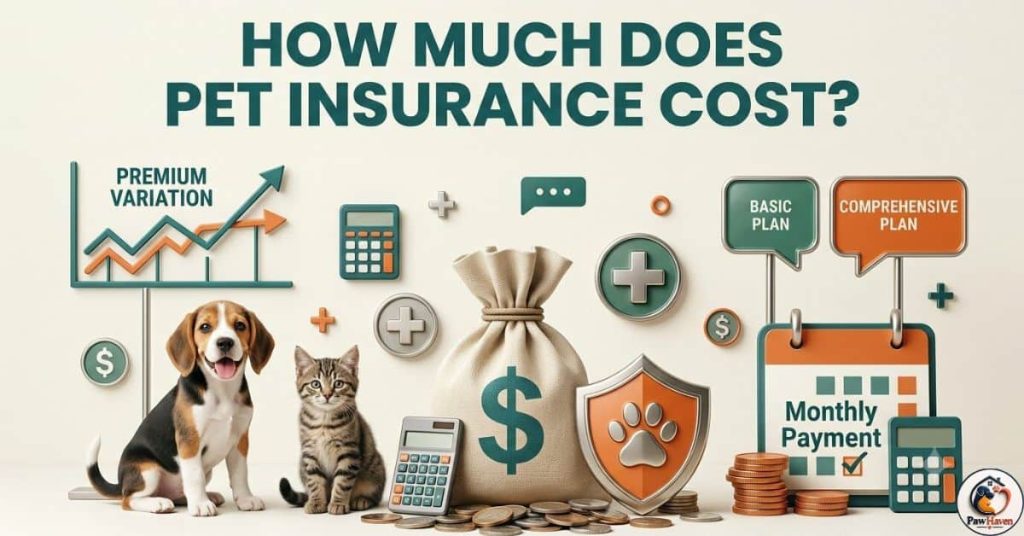
Monthly premium costs vary more by location and breed than most people expect.
Average monthly premiums for dogs
Dog owner costs for accident and illness plans typically fall between $35 and $65 a month nationally, though large or high-risk breeds can push past $80.
Average monthly premiums for cats
Cat owner costs tend to run lower, generally $15 to $35 a month, since cats statistically file fewer high-cost claims than dogs.
What affects the cost
- Breed, since certain breeds carry known hereditary risks
- Age, with premiums rising as pets get older
- Location, since urban centers with pet insurance, such as Chicago and DC, providers price policies against local veterinary costs, and the same holds for pet insurance in Houston and pet insurance in Seattle markets, where emergency care pricing differs from smaller cities
- Coverage level and annual deductible chosen
- Reimbursement percentage selected at enrollment
Hidden costs and policy limitations
Watch for per-condition payout caps and annual policy limits. Some cheaper policies look attractive on the monthly premium but cap total annual payouts at $5,000, which won’t stretch far if your pet needs major surgery.
Ways to lower your premium
Choosing a higher deductible, opting for a 70 percent reimbursement rate instead of 90 percent, and skipping the wellness add-on are the three most effective ways to bring the monthly premium down without losing core accident and illness protection.
What Does Pet Insurance Cover?
Beyond the basics already mentioned, most comprehensive plans extend into specific categories worth understanding individually.

Accidents and emergency care
Broken bones, bite wounds, and toxic ingestion cases fall squarely under accident coverage, usually with no waiting period longer than 48 hours.
Illnesses and chronic conditions
Diabetes, allergies, and long-term chronic conditions are covered under illness riders, assuming the condition wasn’t diagnosed before your policy started.
Surgery and hospitalization
This is where insurance earns its keep. Surgical procedures and multi-day hospitalization stays represent the largest single claims most policyholders file.
Diagnostic tests and imaging
Bloodwork, X-rays, ultrasounds, and MRIs are typically covered when tied to a diagnosed accident or illness, though routine diagnostic screening usually requires a wellness add-on.
Prescription medications
Medications prescribed for a covered condition are reimbursed alongside the treatment claim itself.
Optional wellness and preventive care
Annual wellness visits, vaccinations, and preventive healthcare aren’t part of standard accident and illness plans. You’ll need to add a wellness rider, usually for an extra $10 to $25 a month.
Common exclusions you should know before buying
Pre-existing conditions, cosmetic procedures, and breeding costs are excluded almost universally. Read the coverage exclusions section of any policy before enrolling, not after filing your first claim.
How to Choose the Best Pet Insurance Plan
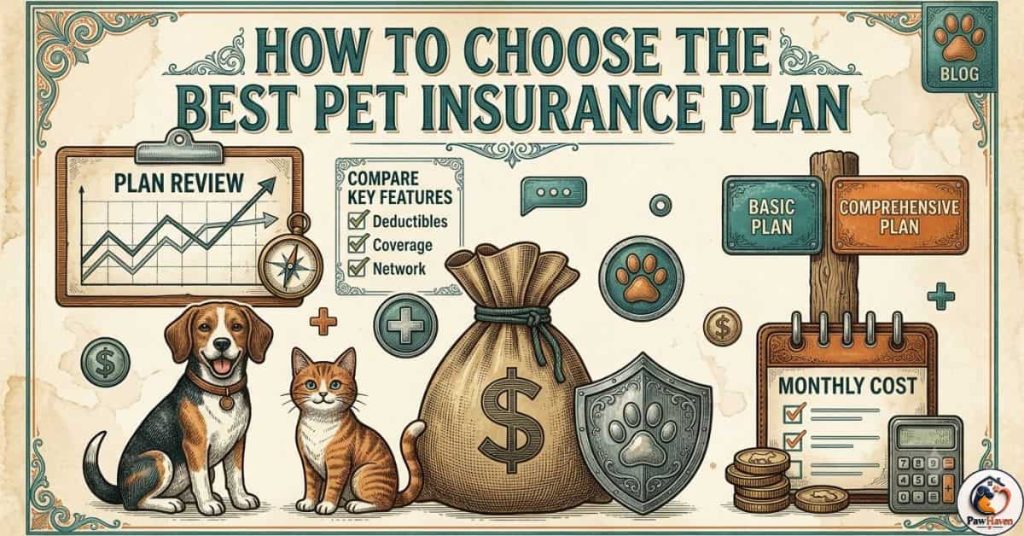
Six steps cover nearly everything you need to compare policies properly.
Step 1: Assess your pet’s healthcare needs
A young, healthy cat needs different coverage than a seven-year-old Bulldog with known breathing sensitivity.
Step 2: Compare coverage options
Look at accident-only versus accident and illness versus plans with wellness bundled in.
Step 3: Understand deductibles and reimbursement
Run the math on a few realistic claim scenarios before choosing between a low deductible and a low premium.
Step 4: Check annual coverage limits
Some policies offer unlimited annual payouts; others cap at $10,000 or $20,000 a year.
Step 5: Read exclusions and waiting periods
Every provider handles hereditary conditions and waiting periods slightly differently.
Step 6: Evaluate customer reviews and claim satisfaction
Claim reimbursement speed and customer service responsiveness vary enormously between insurance providers like Trupanion, Healthy Paws, Embrace, and Figo.
Red flags to avoid when comparing providers
Be wary of any provider that’s vague about exclusions or slow to disclose annual policy limits during the quote process. According to data tracked by the North American Pet Health Insurance Association, transparency in policy documentation is one of the clearest indicators of a reliable provider.
Pet Insurance vs Paying Veterinary Bills Yourself
Building a pet emergency fund
A realistic target is $3,000 to $5,000 set aside specifically for veterinary expenses, untouched for anything else.
Comparing long-term costs
Over a pet’s lifetime, premiums can add up to more than a single major claim would have cost. That said, you don’t know in advance whether your pet will need that major claim.
Risk analysis for unexpected medical expenses
Insurance exists to protect against low probability, high cost events. If your pet never needs major treatment, you’ll have paid more in premiums than you received in reimbursement. That’s how insurance works for every policyholder who stays healthy.
Which option offers better financial protection
Insurance offers stronger protection against catastrophic single events. A self-funded emergency fund offers more flexibility but only works if you’re consistent about contributing to it.
Decision checklist for pet owners
Consider your pet’s breed risk, your own savings discipline, and how much financial stress an unexpected $5,000 bill would actually cause your household.
Common Mistakes to Avoid When Buying Pet Insurance
Waiting until your pet becomes sick
By the time symptoms appear, the condition becomes a pre-existing condition, disqualifying it from coverage.
Ignoring exclusions
Read the full exclusions list, not just the coverage highlights on the sales page.
Choosing based only on price
The cheapest premium coverage eligibility often comes with the lowest annual limits and reimbursement rates.
Not understanding reimbursement percentages
A 70 percent reimbursement rate leaves you paying nearly a third of every bill, which adds up fast on expensive claims.
Missing policy renewal details
Some insurers adjust premium costs or coverage terms at renewal. Review your policy annually.
Forgetting annual benefit limits
Hitting your annual limit mid-treatment can leave you covering the remainder entirely out of pocket.
Frequently Asked Questions
Is pet insurance worth it for indoor cats?
Yes, though the value is lower than for dogs since indoor cats face fewer accident risks. Illness coverage still matters, since chronic conditions like kidney disease are common regardless of indoor lifestyle.
Is pet insurance worth it for older dogs?
It’s harder to justify once a dog has multiple diagnosed conditions, since those become pre-existing and excluded. Accident-only coverage can still make sense for senior dogs.
Can I get pet insurance for a pet with pre-existing conditions?
You can still get coverage, but the specific pre-existing condition itself won’t be included in the policy.
Does pet insurance cover vaccinations and routine checkups?
Only if you add a wellness rider. Standard accident and illness plans don’t include routine or preventive care.
How soon can I use my pet insurance after enrolling?
After the waiting period, which is typically 14 days for illness and as little as 24 to 48 hours for accidents.
Can I visit any veterinarian with pet insurance?
Most providers let you visit any licensed veterinarian or animal hospital, including emergency and specialty clinics, unlike human health insurance networks.
Recommended Articles:
Best Foods for Pet Birds: The Complete Feeding Guide (2026)
Vet Approved Dog Treats & Supplements
Wild animals in French are provided with 100 essential vocabulary words
Dog Treat Packaging Ideas: 10 Ways to Nail Pet Food Packaging in 2026