
Fennec Fox for Pets: The Complete Guide to Cost, Care, Legality and What to Expect
A two pound animal with ears nearly half its body length just sold for more than most people’s monthly rent. That’s the fennec fox world in one sentence, and if you’ve been wondering whether a fennec fox for pets is even a realistic option for you, you’re about to get the unfiltered version most listicles skip.
Quick Answer
You can legally own a fennec fox as a pet in some parts of the United States, but the rules vary by state and sometimes by local city regulations. These are not domesticated animals. They’re small, nocturnal, high energy desert canids that need an exotic animal permit in most jurisdictions, a specialized diet, and an owner who understands they’re bringing home wild instincts in a cute package. A fennec fox typically costs 2,500$ to 4,000$ upfront, with ongoing expenses that can be higher than many people expect.

What Is a Fennec Fox? (Quick Species Snapshot)
Picture the smallest fox species on the planet, then give it satellite dish ears and a coat the color of warm sand. The fennec fox (Vulpes zerda) is a tiny desert fox that lives in the Sahara and other parts of North Africa. Its huge ears do more than make it look adorable they help keep the fox cool by releasing excess body heat. It also has furry feet that protect it from the hot desert sand and make it easier to move across loose ground.
In the wild, fennec foxes spend the day sleeping in underground burrows to avoid the intense heat. They become active at night, searching for insects, small animals, fruits, and other food. They often live in family groups and are naturally social animals.
Even though fennec foxes belong to the same animal family as dogs, they are very different from domestic pets. They have unique instincts, behaviors, and needs that come from thousands of years of adapting to life in the desert. While their wild population is currently stable, concerns remain about the impact of the exotic pet trade on these remarkable animals.
Are Fennec Foxes Good Pets? (The Honest Answer)

I’ll be straight with you. A fennec fox can be a rewarding pet, but “good pet” depends entirely on what you’re expecting going in.
These animals are not dogs with fox faces. They’re a non domesticated species, which means thousands of years of human breeding never softened their wild edges. They retain strong digging instincts, territorial marking behavior, and a startle response that can border on frantic if they feel cornered.
On the upside, many owners report that fennecs can be litter trained with patience, and they do bond closely with the humans who raise them from kits. Socialization matters enormously here. A fennec handled gently and often from a young age tends to be far more affectionate than one rehomed later in life after limited human contact.
The honest answer is this: a fennec fox is closer to owning a small, perpetually curious wild animal who happens to enjoy your couch than it is to owning a cat. If that excites you, keep reading. If it makes you nervous, that’s useful information too.
Is It Legal to Own a Fennec Fox? (State by State Breakdown)
This is where most potential owners hit their first wall, and honestly, where most guides get sloppy with outdated info.
Fennec fox ownership sits in a strange legal gray zone because it’s regulated state by state, sometimes county by county, with zoning restrictions layered on top. There’s no single federal law banning them, though USDA licensing requirements apply to breeders and certain transporters, and international movement involves CITES paperwork since they’re a regulated wildlife species crossing borders.
States Generally Considered Legal (With Permits Often Required)
| State | General Status | Permit Needed |
| Texas | Legal in most areas | Often no state permit, check local rules |
| Tennessee | Legal | Varies by county |
| Oklahoma | Legal | Sometimes required |
| Nebraska | Legal | Check local zoning |
| Minnesota | Legal | Permit may apply |
| Michigan | Generally legal | Local ordinances vary |
States Where Ownership Is Banned or Heavily Restricted
Illinois, California, and New York are the big three most people ask about, and the short version is no, not as a typical household pet. California’s Fish and Wildlife code treats them as a restricted wild animal. New York bans most wild and exotic canid ownership outright within city limits, and even rural parts of the state have tight rules.
The pattern across legal states is consistent: an exotic animal permit is the norm, not the exception, and many municipalities add their own zoning restrictions on top of state law. A property zoned residential in one county might flatly prohibit any non native wildlife, while the next county over allows it with a simple application.
My honest take after digging through this for years of pet content work? Always check your specific city ordinance, not just your state. State law can say yes while your homeowners association or local zoning board says absolutely not.
How Much Does a Fennec Fox Cost?
Sticker shock is real here. A captive bred fox kit from a reputable breeder typically runs 2,500$ to 4,000$ and that’s before you’ve bought a single supply.
Add in a climate controlled enclosure (often 500$ to 1,500$ depending on size and materials), specialized diet costs running 30$ to 60$ monthly, exotic pet insurance if you can find a provider that covers them, and the inevitable specialist veterinary care visits that cost noticeably more than a standard cat or dog checkup. First year total cost, realistically, lands somewhere between 4,000$ and 7,000$ once you factor in setup.
That number catches people off guard every single time. Here’s what most guides miss: ongoing vet costs alone can run 200$ to 400$ per visit because exotic veterinarians are scarce and their expertise commands a premium.
How to Bring Home a Fennec Fox: Step by Step
So you’ve checked your local laws and you’re still in. What now?
- Verify your legal status first. Contact your state wildlife agency and your local zoning office, not just one or the other.
- Secure your exotic animal permit before you spend a dollar on the fox itself. Some states process applications in weeks, others take months.
- Find a USDA licensed breeder. Avoid backyard breeders advertising on social media marketplaces; reputation and health records matter more than price here.
- Set up your habitat before pickup day. A temperature controlled habitat needs to be ready and tested, not assembled the week after the fox arrives.
- Schedule a vet visit within the first week. Find a specialist familiar with desert adapted mammals before you need one in an emergency.
- Budget for the unexpected. Set aside at least 20 percent above your initial cost estimate for surprises, because there will be some.
Fennec Fox Care Guide: What Daily Life Actually Looks Like
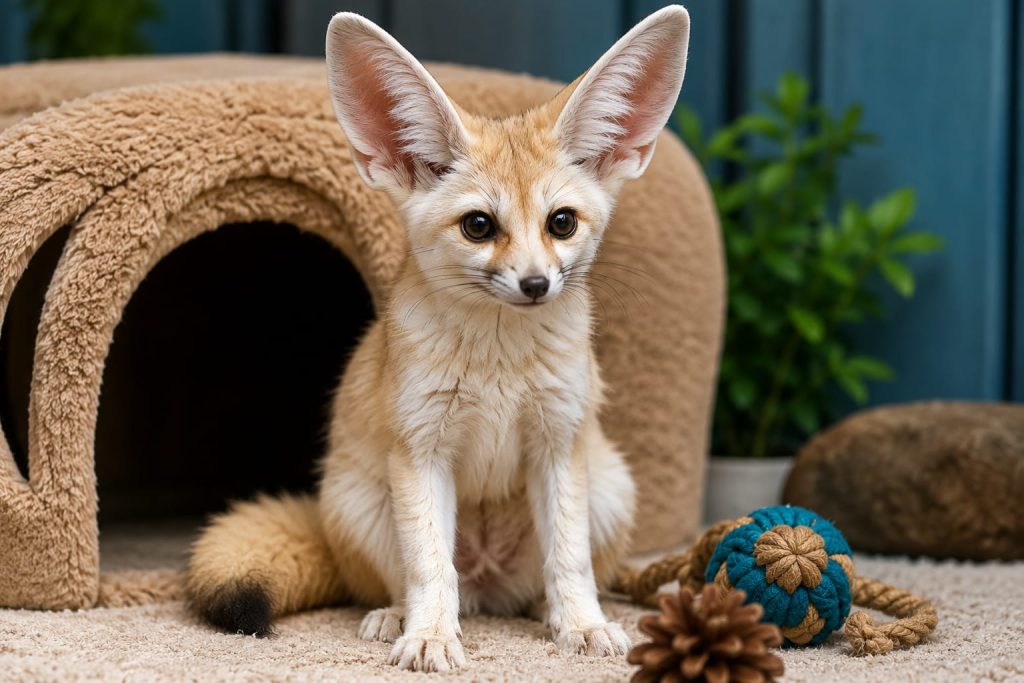
Mornings are quiet. Fennecs sleep hard during the day, often curled into a tight ball in a den box, undisturbed by household noise once they’re settled. Evenings flip the switch entirely.
Once dusk hits, you’ve got a small tornado of energy on your hands. Digging, climbing, investigating every inch of accessible space, this is when a fennec is fully awake and fully demanding of attention. Enrichment activities matter enormously here, things like dig boxes filled with sand, puzzle feeders, and rotating toys to prevent destructive behavior born from boredom.
Diet wise, brands like Mazuri and ZuPreem make exotic carnivore formulas that many keepers use as a base, supplemented with live or freeze dried insects and occasional lean protein. Taurine deficiency is a real concern in improperly balanced diets, so working with a vet familiar with insectivore and omnivore nutrition needs isn’t optional, it’s essential.
Expect occasional urine spraying as a territorial marking behavior, particularly in unneutered males, and don’t be shocked by a sudden high pitched scream that sounds almost human. It’s startling the first time. After that, you just learn it’s Tuesday.
Fennec Fox Temperament and Behavior
Flighty and skittish temperament is the default for many fennecs, especially ones without heavy early socialization. They startle easily, bolt fast, and can be genuinely tricky to recapture if they slip outside.
That said, bonded fennecs show real affection. They’ll curl up against their owner, follow them room to room, and display the kind of curious, almost catlike investigation of new objects that owners describe as endlessly entertaining. The vocalizations alone surprise newcomers, ranging from soft chirps to that unmistakable scream that’s become something of a meme thanks to characters like Finnick from Zootopia drawing public attention to the species.
Wild instincts retained means you’ll never fully eliminate digging or marking behavior. You manage it. You don’t erase it.
Fennec Fox Health and Veterinary Care
Finding a vet who actually knows fennecs isn’t always simple. Zoos like the San Diego Zoo and London Zoo employ specialists, and figures like Julie Mahler, a recognized name in exotic veterinary medicine, represent the caliber of expertise these animals genuinely require.
Common health watchpoints include ear and dental health, since their oversized ears are prone to mites and infections if not checked regularly, plus a real risk of ringworm transmission, which carries zoonotic disease risk to humans in the household. Spay or neuter procedures, microchipping, and a current health certificate are typically required for any interstate travel requirements, particularly if you’re relocating or transporting your fox for breeding oversight.
This is genuinely not a pet for someone unwilling to invest in specialist vet care. If that sentence makes you hesitate, that hesitation is doing its job.
Fennec Fox vs Other Pets (Side by Side Comparison)
| Factor | Fennec Fox | Domestic Cat | Ferret |
| Lifespan in captivity | 10 to 14 years | 12 to 18 years | 6 to 10 years |
| Legal complexity | High, varies by state | Universally legal | Restricted in a few states |
| Daily care time | High, especially at night | Moderate | Moderate to high |
| Vet cost per visit | 200$ to 400$ | 50$ to 150$ | 75$ to 200$ |
| Beginner friendly | Not suitable for first time owners | Yes | Somewhat |
| Litter trainable | Yes, with patience | Yes, naturally | Yes |
Is a Fennec Fox Right for You? (Self Assessment Checklist)
Ask yourself these honestly before you commit:
- Do you live somewhere it’s legal, confirmed at both the state and local level?
- Can you afford 4,000$ or more in first year costs without financial strain?
- Are you comfortable being awake and attentive during nighttime hours?
- Do you have access to a specialist vet within a reasonable distance?
- Can you commit to years, not months, of consistent care?
- Are you prepared for occasional screaming, marking, and digging as normal behavior, not a problem to fix?
If you answered yes across the board, a fennec fox pets journey might genuinely suit your lifestyle. If even two of those gave you pause, that’s worth sitting with before signing a breeder contract.
Frequently Asked Questions
Are fennec foxes good pets for beginners? Generally, no. They’re considered not suitable for first time owners because of their specific care needs, legal complexity, and wild behavioral instincts that require experience to manage well.
Is it legal to own a fennec fox in my state? It depends entirely on where you live. Check the state breakdown section above, then confirm with your local city or county office, since regulations frequently differ from state law.
How much does a fennec fox cost in total, including setup? Plan for 4,000$ to 7,000$ in the first year once you account for the fox itself, enclosure, diet, and veterinary care.
Do fennec foxes smell? Yes, to a degree, particularly unneutered males due to territorial marking through urine spraying. Spaying or neutering reduces this significantly.
Can fennec foxes live with dogs or cats? Sometimes, with careful and gradual introductions, though it’s never guaranteed. Their flighty and skittish temperament means a calm resident pet improves the odds considerably.
How long do pet fennec foxes live compared to wild ones? Captive fennecs often live 10 to 14 years thanks to consistent food and veterinary care, compared to a shorter, harsher lifespan in the wild where predation and food scarcity take a toll.
Are fennec foxes good with kids? It varies by individual temperament and how well socialized the fox was as a kit. Supervision is always recommended given their small size and quick, unpredictable movements.
Can you leave a fennec fox home alone during the day? Yes, actually, since they sleep through most daylight hours anyway. The bigger consideration is evening and nighttime hours when they’re awake and need engagement.
The bottom line on a fennec fox for pets comes down to this: it’s a genuinely doable commitment for the right person in the right state, but it’s financially and time intensive in ways that catch unprepared owners off guard. Do your legal homework first, find a reputable breeder second, and go in with realistic expectations about what living with a small, nocturnal, wild hearted desert animal actually looks like day to day.