How to Take Care of Pet Fish: The Complete Beginner’s Guide to a Thriving Tank
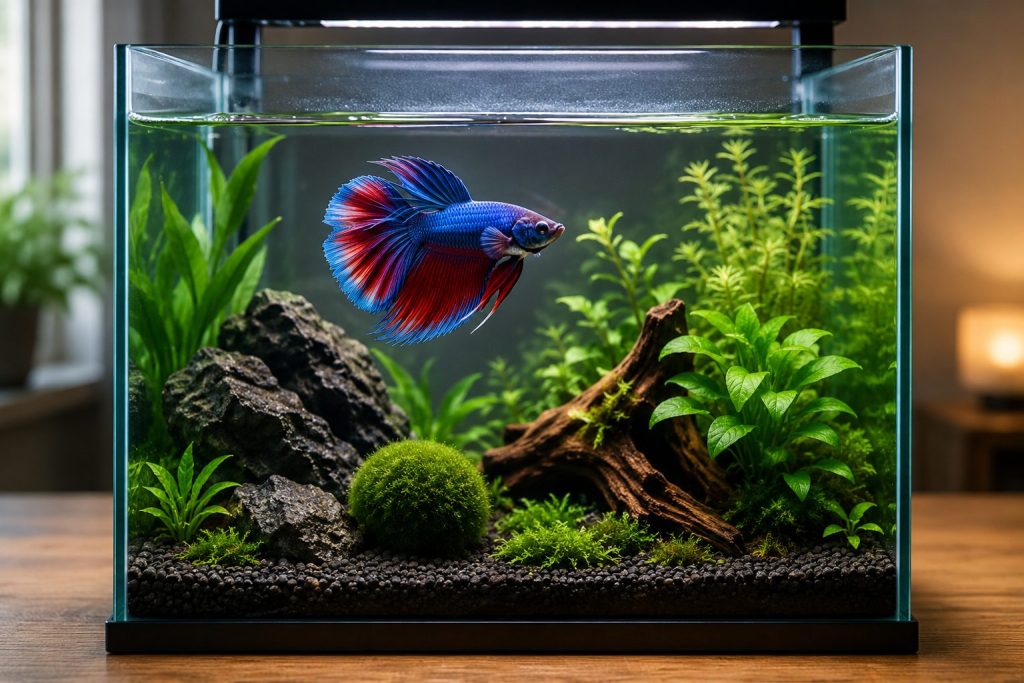
If you’ve ever stood in the pet store aisle staring at a wall of bettas and tetras wondering if you’re actually ready for this, you’re not alone. Learning how to take care of pet fish properly is less about luck and more about understanding a handful of basics that most beginners never get told upfront.
After more than two decades around aquariums — my own, friends’ tanks I’ve helped troubleshoot, and a few classroom setups I consulted on for teachers wanting a low-key pet for their students — I can tell you the fish themselves are rarely the hard part. The water is.
Quick answer: Taking care of pet fish means giving them a properly cycled tank with a filter and heater (if needed), feeding them a small, appropriate amount once or twice daily, and changing part of the water weekly to keep ammonia and nitrate from building up. Skip any of these three things and you’re not really keeping fish — you’re keeping fish alive on borrowed time.
Is a Fish the Right Pet for You? (Quick Reality Check)
Here’s something many fish care guides never mention: fish are marketed as the “easy” starter pet, but a healthy tank actually requires more consistent chemistry management than a dog or cat needs in daily routine. You’re not just feeding an animal — you’re managing an entire miniature ecosystem.
That said, fish are genuinely a great fit if:
- You want a calming hobby you can enjoy without walks or litter boxes
- You live in an apartment with pet restrictions (more on whether fish count as pets in apartments below)
- You’re looking for a classroom pet that doesn’t trigger allergies
- You can commit 15–20 minutes a week to maintenance, even when you’re tired or busy
Fish are a poor fit if you want something low-effort with no learning curve, or if you’re hoping to skip equipment costs. A tank, filter, heater, and test kit will run you anywhere from $60 to $200+ depending on size, before you even buy fish.
What Equipment Do You Need for Fish?
Every healthy aquarium setup needs the same core components, regardless of whether you’re keeping a single betta or a community tank.
The essentials:
- Tank — 10 gallons minimum for beginners; smaller bowls limit your margin for error
- Water filter — handles mechanical and biological filtration
- Aquarium water heater — only needed for tropical fish; check species requirements
- LED aquarium light — for plant growth and to see your fish clearly
- Gravel substrate — pebble-sized gravel works well and is easy to clean
- Aquarium decor and plants — give fish places to hide, which reduces stress
- Fish net and dosing cup — for water changes and medication
- Water conditioner (dechlorinator) — removes chlorine, chloramine, and heavy metals from tap water
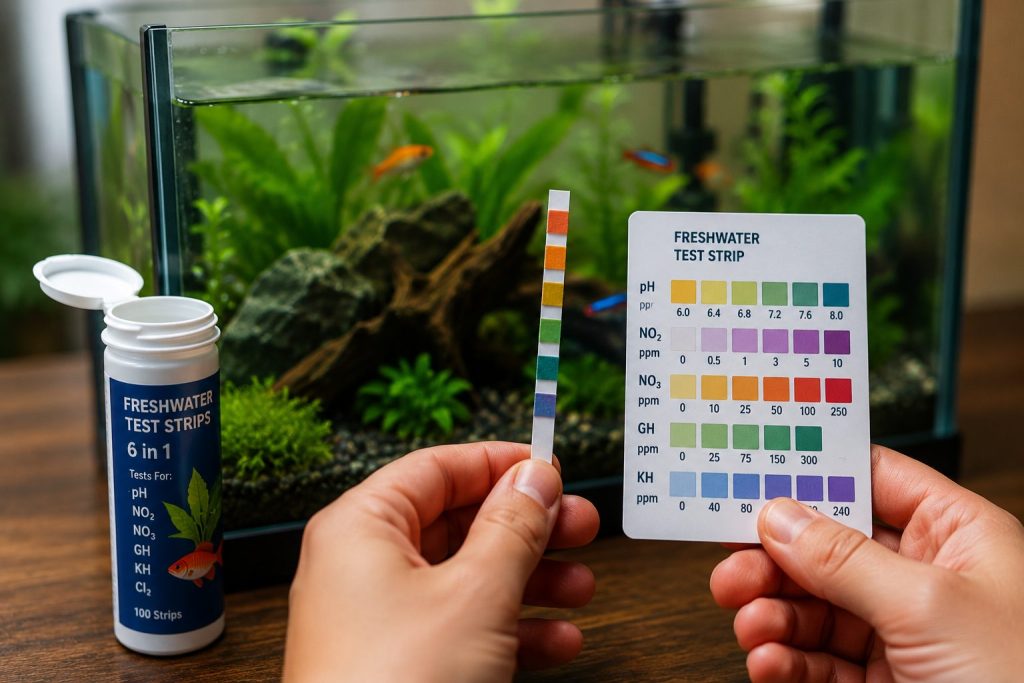
- Water test strips — for ammonia, nitrite, nitrate, pH, GH, and kH
One thing I’d add that most setup guides skip: think about tank placement before you buy anything. You need a level, flat surface away from direct sunlight, heating vents, and high foot traffic. A wobbly stand or a spot near a window can mean algae blooms or, worse, a cracked tank from uneven weight distribution.
Freshwater vs. Saltwater: Which Should Beginners Choose?
Freshwater, almost without exception. Saltwater tanks involve more complex water parameters, pricier equipment, and far less room for mistakes early on. I’ve seen plenty of excited beginners jump straight into a reef tank after watching a few videos, only to lose their entire stock within weeks because they underestimated how unforgiving saltwater chemistry is.
Start freshwater. Once you’ve run a tank successfully for six months to a year, you’ll have the instincts to handle saltwater’s tighter margins.
How to Set Up a Fish Tank (Step-by-Step)
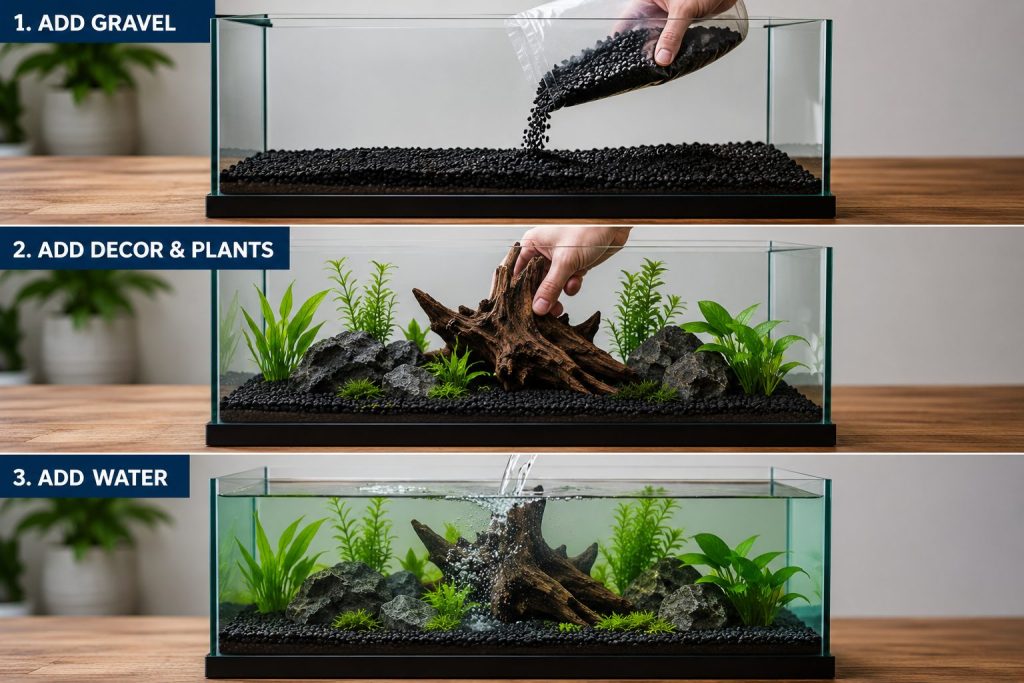
- Wash the tank and gravel with plain water — no soap, ever.
- Add substrate, then arrange decor and plants.
- Fill with dechlorinated water, treating it with a water conditioner to neutralize tap water stress from chlorine, chloramine, and heavy metals.
- Install your filter and heater, then let the tank run empty for 24–48 hours to confirm stable temperature.
- Begin the nitrogen cycle (covered in detail below) before adding any fish.
- Test your water with strips until ammonia and nitrite read zero and nitrate is present but low.
- Add fish gradually — a few at a time, not all at once.
Realistic scenario: imagine setting up your tank on a Saturday, adding fish that same afternoon because everything “looks” clean, and then watching your new betta go belly-up within a week. This happens constantly, and it’s almost always the nitrogen cycle being skipped.
Understanding the Nitrogen Cycle (The #1 Beginner Mistake)
This is the single most important concept in fishkeeping, and it’s also the thing new owners are least prepared for.
Fish waste and uneaten food break down into ammonia, which is highly toxic even in small amounts. Beneficial bacteria called nitrifying bacteria need time to colonize your filter and gravel. These bacteria convert ammonia into nitrite (still toxic), and a second type of bacteria converts nitrite into nitrate, which is relatively harmless at low levels and removed through regular water changes.
This whole process — known as cycling — takes roughly 4 to 6 weeks in a brand-new tank. Adding a full stock of fish before this bacterial colony establishes itself is the most common reason beginner tanks fail. You can speed things up with bottled bacteria starters or by adding fish very slowly, but you can’t skip it entirely.
The myth: “Clear water means clean, safe water.” The truth: water can look perfectly clear while ammonia or nitrite levels are dangerously high. Clarity tells you nothing about chemistry — only test strips do.
What Do Fish Eat?
Most tropical community fish thrive on a combination of tropical flakes and fish pellets formulated for their specific diet needs, supplying the proteins, fats, and amino acids they need for energy and peak coloration.
As for household foods to feed pet fishes — yes, some are genuinely fine in moderation. Cooked peas (skins removed), small pieces of cucumber, blanched zucchini, and tiny bits of cooked, unseasoned fish or shrimp can work as occasional treats for many species. Avoid anything seasoned, fried, or sugary, and never feed bread — it bloats and offers almost no nutrition.
How Often Should You Feed Fish?
Most fish do best on one to two small feedings per day, only what they can consume in about two minutes. A pinch of food is genuinely all most tanks need — overfeeding is far more dangerous than underfeeding because excess food rots and spikes ammonia output.
How long can pet fish go without food? Healthy adult fish can typically go 5–7 days without eating with no lasting harm, which is genuinely useful to know if you’re worried about a weekend away. I wouldn’t recommend testing this regularly, but it’s not an emergency if you miss a day or two.
How Often Do Fish Tanks Need to Be Cleaned?
A biweekly water change of 10–20% is the standard recommendation for most established community tanks, paired with light sludge removal from the gravel during each change. Larger tanks with light stocking can sometimes stretch this slightly; smaller tanks or heavily stocked ones may need weekly attention.
Signs your tank is overdue for cleaning include cloudy water, a film of air bubbles clinging to the glass, or a sour smell when you lift the lid. Full tank teardowns aren’t usually necessary and can actually destroy your beneficial bacteria colony — partial water changes are almost always the better call.
What Do Fish Need to Survive in a Tank? (Core Care Checklist)
- Stable water temperature appropriate to species (most tropical fish: 75–80°F)
- Functioning biological filter
- Established nitrogen cycle with zero ammonia and nitrite
- pH, GH, and kH within range for your species
- Appropriate tank size with no overcrowding
- Compatible tank mates
- Regular, moderate feeding
- Consistent water changes
Choosing the Right Fish for Beginners
If you’re searching for the easiest pet fish to take care of, here’s my honest take after years of recommending starter fish to friends and family:
| Fish | Difficulty | Temperament | Notes |
| Betta Fish | Easy | Territorial, solitary | Needs at least 5 gallons; don’t house with other bettas |
| Neon Tetra | Easy | Peaceful, schooling | Best kept in groups of 6+ |
| Clown Loach | Moderate | Peaceful but grows large | Often mislabeled as beginner-friendly — see below |
| White Cloud Minnow | Very easy | Peaceful | Tolerates cooler water well |
| Guppy | Easy | Peaceful | Breeds quickly; plan for population growth |
I personally don’t recommend clown loaches for beginners despite many sites listing them as easy. They’re sold tiny but grow over a foot long and need a much bigger tank than new owners typically have, plus specific group housing to avoid stress.
For a classroom pet fish setup, bettas or white cloud minnows tend to handle inconsistent care during weekends and holidays better than more delicate tropical species.
Common Fish Care Mistakes to Avoid
- Adding fish before the tank has cycled
- Overfeeding “because they seem hungry”
- Overcrowding a small tank
- Doing full water changes instead of partial ones
- Mixing incompatible tank mates (territorial fish with timid schooling fish)
- Ignoring water test results because the tank “looks fine”
How to Tell If Your Fish Is Sick or Stressed
Watch for clamped fins, faded color, rapid gill movement, hiding constantly, or floating sideways. Cloudy eyes, white spots, or stringy waste are also red flags worth acting on quickly. Honestly, some of this behavior scares new owners, but occasional resting at the bottom or brief color dulling isn’t always cause for panic — it’s a pattern of symptoms, not a single moment, that usually signals a real problem.
If you suspect illness, test your water parameters first since poor water quality causes most fish health issues, then consider consulting an aquatic veterinarian or experienced local fish store staff for species-specific treatment.Losing a fish out of nowhere happens to almost every beginner at some point, and after years of troubleshooting tanks for other people, I can tell you it’s rarely bad luck. Nine times out of ten, the water was the real problem long before anyone noticed.
.
Daily, Weekly, and Monthly Fish Care Routine (Quick-Reference Checklist)
Daily
- Feed once or twice, small amounts
- Visually check fish behavior and water clarity
- Confirm filter and heater are running
Weekly
- Test water parameters
- Wipe algae from glass if needed
- Top off evaporated water
Biweekly to Monthly
- 10–20% partial water change
- Light gravel cleaning
- Rinse filter media in old tank water (never tap water)
- Inspect equipment for wear
Frequently Asked Questions
How do you take care of fish for beginners? Start with a cycled tank, appropriate filtration, a manageable number of hardy fish like bettas or white cloud minnows, and a consistent feeding and water-change schedule. Patience during the first month matters more than any single piece of equipment.
What do fish need to survive in a tank? Stable temperature, a functioning filter, an established nitrogen cycle, appropriate water chemistry, and regular, moderate feeding. Skipping any of these shortens a fish’s lifespan significantly.
Are fish low-maintenance pets? They’re lower-maintenance than a dog in terms of daily attention, but they’re not maintenance-free. Water chemistry needs ongoing monitoring, which surprises a lot of new owners expecting a “set it and forget it” pet.
Can fish survive without a filter? Some hardy species can survive short-term in very large, lightly stocked, frequently changed water, but it’s not recommended. A filter does the heavy lifting of housing beneficial bacteria that keep ammonia in check.
How often should you change fish tank water? A 10–20% partial water change every one to two weeks is standard for most community tanks. Heavily stocked tanks may need more frequent changes.
How long can fish go without being fed? Most healthy adult fish tolerate 5–7 days without food. It’s not ideal as a regular practice, but it won’t cause harm for an occasional missed weekend.
What is the easiest fish to take care of for beginners? Betta fish and white cloud minnows are widely considered among the easiest, thanks to their tolerance for slight water fluctuations and minimal space requirements compared to many tropical species.
How long does it take to set up a new fish tank before adding fish? Plan for 4–6 weeks for a full nitrogen cycle before adding a full stock of fish, though a few hardy fish can sometimes be added gradually during a fishless or fish-in cycling process.
Final Thought
Taking care of pet fish well comes down to respecting the invisible part of the hobby — the water chemistry — just as much as the visible part. Get the nitrogen cycle right, don’t overfeed, and stay consistent with water changes, and you’ll find fishkeeping is genuinely one of the more relaxing pets you can bring into your home.
My practical advice for anyone starting out: buy your test kit before you buy your fish. It’s the cheapest insurance policy against losing animals you’ve already grown attached to.