How Long Do Pet Fish Live and What Can You Control ?
Quick Answer: Most pet fish live between 5 to 15 years, but the same species kept in different conditions can die in months or live 25+ years. Lifespan is less about species genetics and far more about water chemistry, tank size, feeding habits, and what happened during the first weeks after you brought them home.
Why the Same Species Can Live 3 Years or 30: The Lifespan Gap Explained
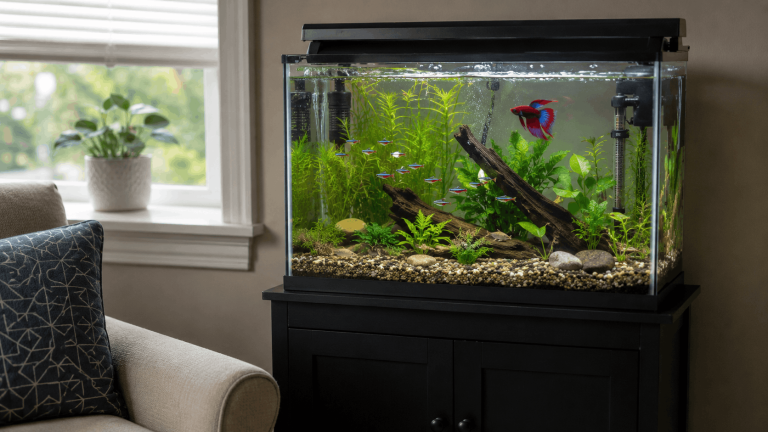
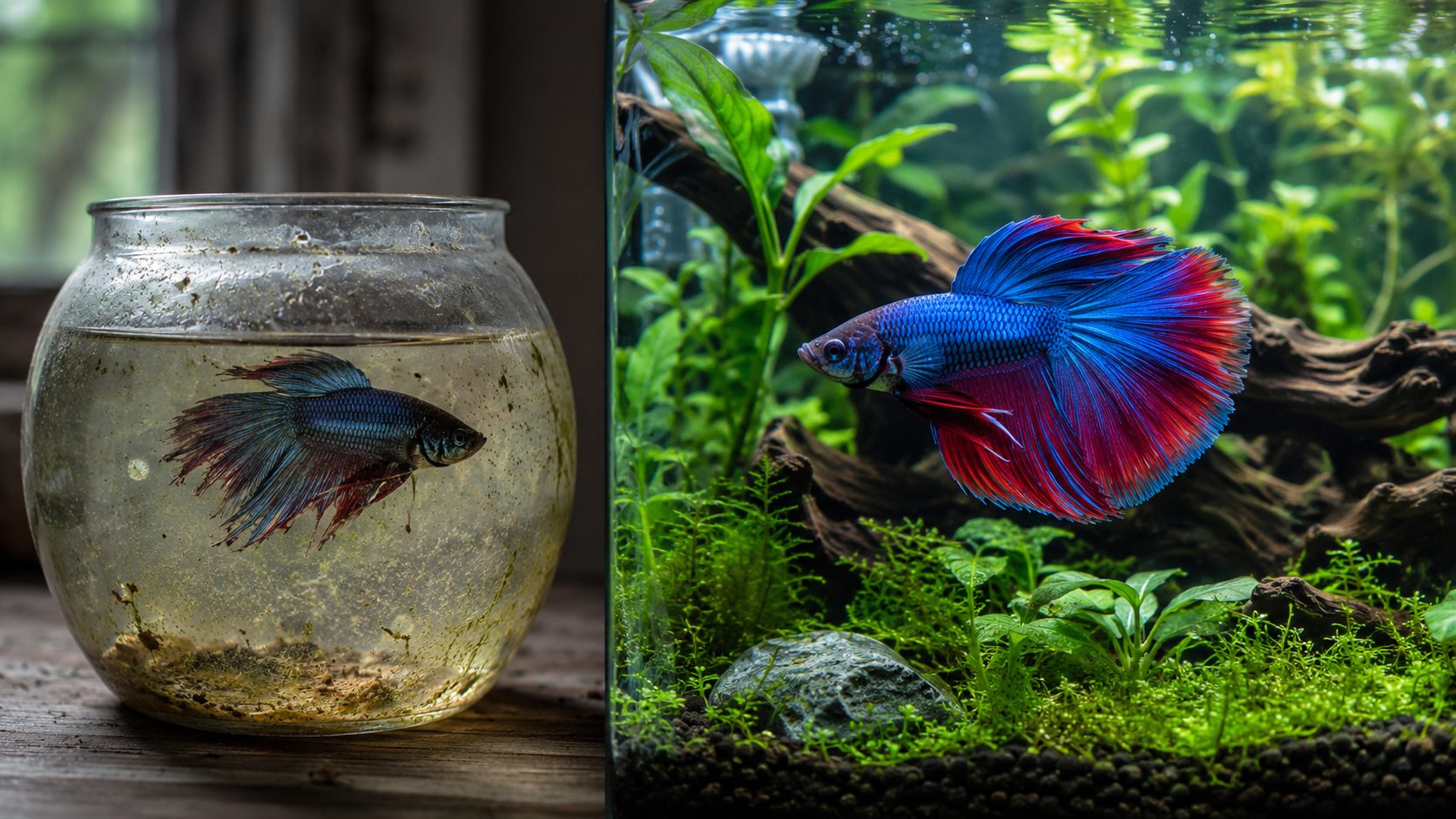
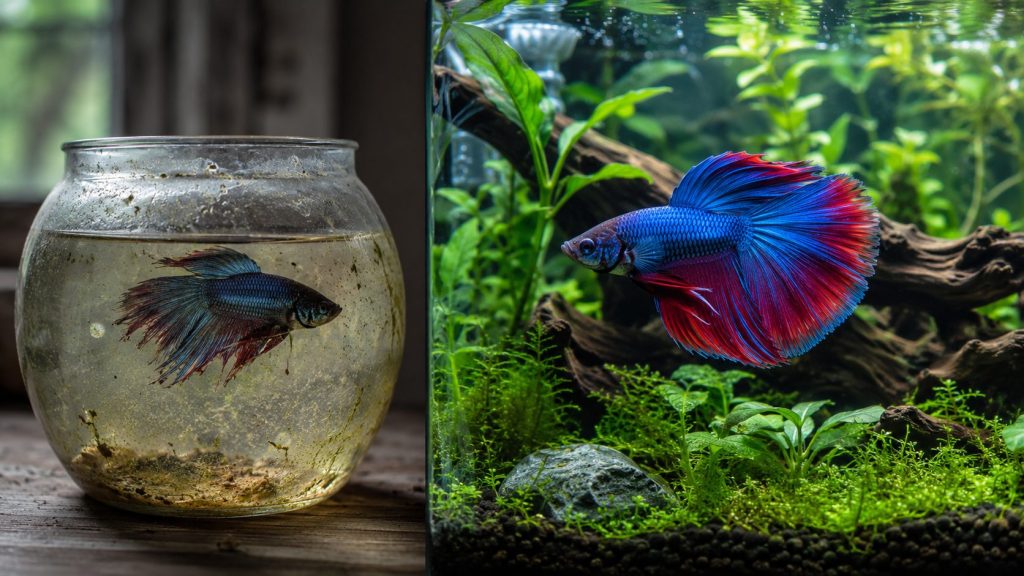
Here’s something that catches most beginners off guard: a betta in a 2-gallon bowl might live 2–3 years, while the same species in a 20-gallon planted tank can easily reach 5 or 6 years. That’s not genetic variation; that’s environmental accountability.
When people ask how long pet fish live, they’re usually asking the wrong question. They should be asking: What conditions am I providing?”
The gap exists because most aquatic vertebrates are incredibly flexible creatures. They’ve survived 530 million years on this planet by adapting to whatever water chemistry, food availability, and space constraints their environment presents. In a small bowl, your fish adapts by slowing its metabolism. Growth halts. The immune system runs lean. Lifespan contracts.
In a properly maintained aquarium, that same species expresses something closer to its actual biological potential.
This matters because it means you don’t get to blame the species when your fish dies at 2 years. You can absolutely blame water parameters, tank size, feeding schedule, or temperature stability. Those factors—not your fish’s genetic ceiling—control how long it actually lives.
The real truth most care guides skip: Wild versus captivity lifespans don’t matter much anymore. What matters is which type of captivity you’re creating. A 10-gallon unheated tank and a 40-gallon heated planted system with weekly water changes are both “captivity,” but the lifespan outcome looks completely different.
How Long Do Pet Fish Live? Species Lifespans with Honest Context
Let me give you the species breakdown without the fantasy lifespan numbers you see everywhere.
Goldfish
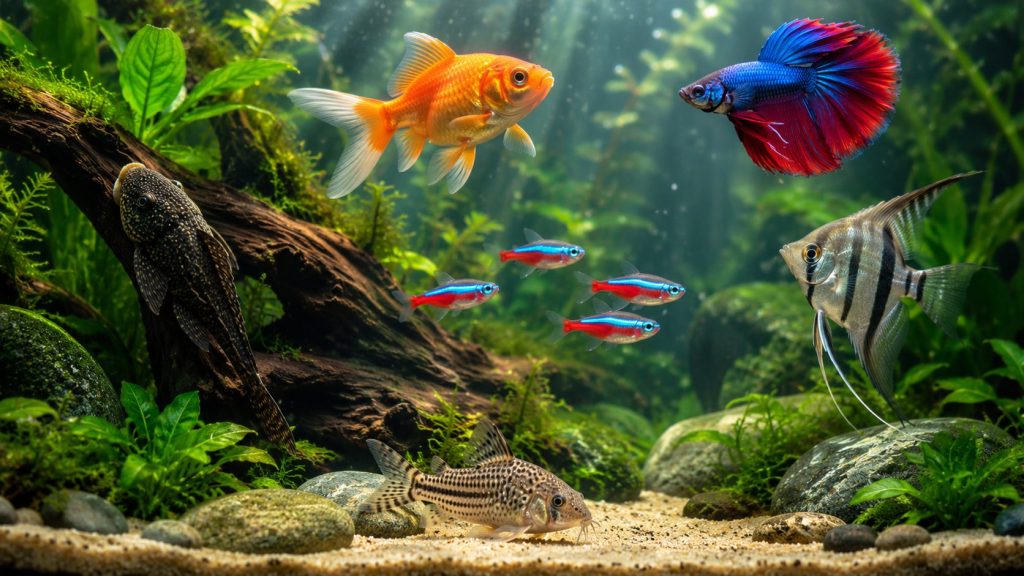
People say 10–20 years. The honest answer? Most live 3–5 years in standard setups. They’re coldwater fish that absolutely hate warm tanks and produce massive bioload (waste accumulation). They need either a proper outdoor pond or a heavily filtered 40-gallon minimum. Keep one in a bowl or a 10-gallon tank, and you’re looking at 2–3 years max, often shorter due to ammonia spikes. I’ve seen goldfish reach 15+ years only when owners are committed to weekly 50% water changes or pond conditions.
Betta Fish
These are sold as “low-maintenance” pets that live 3–5 years. In reality, most live 2–3 years in cramped conditions. But in a stable 10–20 gallon tank with a heater and filter? Five to seven years is realistic. I’ve documented bettas living past 8 years, but it required consistent temperature (76–80°F), no ammonia spikes, and no overfeeding.
Neon Tetras
Expected lifespan: 5–10 years. But here’s the catch—they’re incredibly sensitive to water parameter swings and temperature drops below 72°F. Most die within 1–3 years due to pH instability or nitrate creep (when nitrogen compounds build up past 40 ppm). In a cycled tank with stable parameters? Six to eight years is common.
Corydoras Catfish
These bottom-dwellers often get overlooked in lifespan conversations. They typically live 5–7 years but can reach 10+ years if you maintain proper substrate (fine sand, not gravel) and regular water changes. Many die early from fin erosion or gill damage caused by poor water quality, not age.
Angelfish
Often marketed as living 5–10 years. More honestly? You’ll get 5–7 years in most home aquariums, 8–10 in excellent setups. They’re sensitive to rapid water parameter changes and do poorly if you don’t match their pH and temperature preferences (slightly acidic, 75–80°F).
Koi and Large Carp
These are the outliers. In outdoor ponds with proper filtration, they live 15–30 years. A famous koi named Hanako reportedly reached 226 years (though that requires healthy skepticism). The point: these fish demonstrate that with stable conditions and proper care, aquatic vertebrates can live dramatically longer than smaller species kept in inadequate indoor tanks.
Plecos
Common advice says 10–20 years. Reality check: most die within 5 years due to overfeeding (they’re scavengers, not garbage disposals) or inadequate tank size. A 150-gallon pleco needs more space than most beginners provide. The ones that live longer often get rehomed to serious keepers or large pond systems.
What These Numbers Actually Tell You
Notice the pattern? The difference between “typical lifespan” and “realistic lifespan” usually comes down to one thing: most people don’t maintain stable water chemistry long enough for their fish to express full lifespan potential.
The Four Tank Conditions That Determine Lifespan More Than Species Do
Your fish’s actual lifespan is determined by four factors you can measure and control. Species genetics matter far less than people assume.
1. Water Chemistry Stability (Ammonia, Nitrite, Nitrate)
This is the mechanism behind most premature fish deaths, and it’s not mysterious.
When you set up a new tank, it goes through something called New Tank Syndrome. For the first 4–6 weeks, ammonia and nitrite levels spike because the bacterial colonies that break down waste haven’t established yet. Many beginners add fish during this window—then wonder why they all die.
Here’s what’s actually happening: ammonia burns their gills. Nitrite prevents oxygen absorption in the blood. Both are neurotoxic at levels you can’t even see. The fish don’t show symptoms until damage is severe.
This single event—introducing fish to an uncycled tank—often triggers chronic stress that shortens lifespan by years, even if the fish survive the initial cycle. Their gill tissue is scarred. Their immune response is compromised. They become susceptible to every parasitic disease that comes through the tank.
That’s why many fish die within weeks or months: it’s not the species. It’s the nitrogen cycle.
The Fix: Cycle your tank before adding fish. Use established media from another tank, or dose it with ammonia and wait 4–6 weeks. Test for zero ammonia, zero nitrite, and under 40 ppm nitrate before adding livestock.
2. Temperature Stability
Abrupt temperature swings cause metabolic shock. Sustained temperature outside the species’ range causes chronic stress.
Most beginners keep their tanks at room temperature, which fluctuates 5–10°F daily. For tropical fish, that’s devastating. Their metabolism can’t adjust quickly. Immunity drops. Disease follows.
A steady 76°F with a heater is vastly superior to a tank that swings between 68°F and 78°F naturally.
I’ve noticed repeatedly: fish in heated, stable tanks live measurably longer than those in temperature-fluctuating setups, even if the average temperature is the same.
The Fix: Get a reliable heater. Use a thermometer to verify the actual temperature. Most cheap heaters are inaccurate by 3 to 5 degrees.
3. Tank Volume and Water Change Frequency
Smaller tanks accumulate waste faster. Waste degrades water chemistry. Degraded chemistry stresses the fish’s osmoregulation (the biological process that maintains water/salt balance in their tissues).
A 5-gallon tank with a single betta needs 25 to 50% water changes twice weekly. Most people do them monthly. That’s chronic nitrate exposure and chronic stress.
A 20-gallon tank needs weekly water changes. A 40-gallon needs them less frequently.
Here’s the honest part: bigger tanks are easier. Not because fish prefer space (though they do), but because chemistry is more stable. Stability drives longevity.
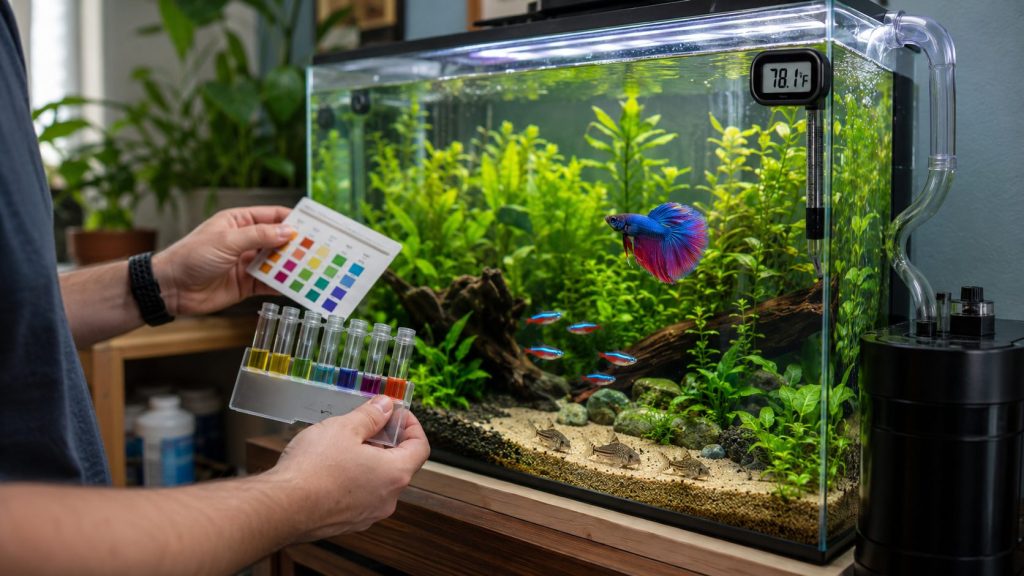
The Fix: Don’t go smaller than 10 gallons for most community fish. Do weekly 25–30% water changes, minimum. If you’re using a kit to test water parameters, you’re already ahead of 80% of casual keepers.
4. Diet and Feeding Discipline
Overfeeding is the single most common mistake. Uneaten food rots and clouds water chemistry. Overfed fish develop fatty liver disease—a silent killer that shortens lifespan by years.
Fish don’t eat the way humans do. They don’t need to feel full. A goldfish will literally eat until it dies if you keep feeding it.
The rule: feed only what they consume in 2–3 minutes, once or twice daily. Most fish thrive on less food than you think they need.
High-quality pellets matter, too. Cheap flake food has filler. Fish can’t process it efficiently, so they excrete more waste (higher bioload), which stresses water chemistry.
The Fix: Feed less. Use quality sinking pellets or flakes. Skip feeding one day per week—it won’t hurt them, and it gives their digestive system a break.
Reading Your Fish: Behavioral Signs That Its Environment Is Shortening Its Life
By the time a fish shows obvious symptoms, environmental damage is often already severe. But there are subtle signals that appear before collapse.
Clamped Fins
When fish hold their fins tight against their body instead of fanned out, they’re stressed. This is almost always water chemistry (ammonia, nitrite, or pH shock) or temperature stress. Not a disease. An environmental signal.
Lethargy or “Glass Surfing”
A fish that hangs near the surface, gulping air, is struggling for oxygen. This might mean dissolved oxygen is too low (overcrowded tank, no aeration, high bioload), or more commonly, nitrite poisoning. Either way, it’s a parameter problem, not a health problem.
Similarly, extreme lethargy—fish barely moving, hiding constantly—usually signals ammonia or nitrite stress or a temperature crash.
Fin Erosion or Splitting Fins
This develops when water quality degrades over weeks. The fish’s immune system weakens. Secondary bacterial infections attack the fins. By the time you see it, the water has been marginal for a while.
Unusual Coloring or Fading
Healthy fish in ideal conditions are vibrant. Dull, faded coloring often signals chronic stress from poor water chemistry or inadequate lighting.
The Underlying Message
Every one of these signs points back to water parameters or tank conditions. Not genetics. Not bad luck. Not “the species just doesn’t do well in captivity.”
If your fish is showing these signs, test your water. Check your heater temperature. Count how often you’re changing water. Ninety times out of 100, you’ll find the answer.
What Early-Life Keeper Mistakes Actually Do to a Fish’s Long-Term Health
The first month matters disproportionately.
Mistake: Adding Too Many Fish at Once
You cycle an aquarium for two weeks (not long enough, but let’s say you did). Then you add five fish in one day because you’re excited.
The bacterial colonies can’t handle the waste load yet. Ammonia and nitrite spike. The fish survive the initial spike, but with gill damage. Their baseline immunity drops by 30–40% for the rest of their lives. They’ll be more susceptible to ich, fin rot, and parasites for years.
Then you blame the species when they only live 3 years instead of 7.
Mistake: Overcleaning the Filter
Many beginners think a “clean tank” means a sterile tank. They do massive filter cleanings or replace the filter media entirely after a few weeks. This removes the bacterial colonies that were just starting to establish.
Tank cycle resets. Ammonia spikes again. Another round of damage to developing fish.
Mistake: Water Parameter Swings
You test water once, see it’s “fine,” and then don’t test again for three months. In those three months, nitrates crept to 80+ ppm. pH drifts from 7.0 to 6.2. When you finally test and do a massive water change to “fix” it, you’ve just shocked the fish’s osmoregulation by forcing it to adjust 0.8 pH units in a few hours.
That’s damage that takes weeks to recover from.
Mistake: Wrong Temperature from Day One
You set up a tropical tank at 72°F because you forgot the heater. For the first month, your fish are metabolically suppressed. Their immune function is at 60%. They’re stressed constantly.
By the time you add a heater and get the temperature to 78°F, the fish has already lost weeks of optimal development. Lifespan gets shortened by years.
The Pattern
All of these mistakes happen in the first 4–8 weeks. By the time water chemistry stabilizes and you think you’re doing fine, the damage is done. The fish will never express their full lifespan potential because early stress permanently altered their physiology.
This is why cycling a tank properly before adding fish is non-negotiable. It’s not just about ammonia levels. It’s about giving the fish zero trauma during their most vulnerable phase.
How to Extend Your Fish’s Life: What the Evidence Actually Supports
Forget the marketing claims about “miracle products” and special supplements. Here’s what actually extends aquatic vertebrate lifespan based on what keeper data and research actually show.
1. Larger Tank, More Stable Chemistry
Every study comparing small tanks to larger ones finds the same result: fish in bigger tanks live longer. The mechanism isn’t just “more space feels better” (though that matters). It’s because chemistry is more stable.
A 20-gallon tank absorbs minor feeding mistakes. A 5-gallon tank becomes a chemistry crisis the moment you overfeed.
Minimum recommendation: 10 gallons for a single betta, 20 gallons for a small community setup. Yes, those “betta bowls” are cute. They’re also a lifespan reduction to 2–3 years.
2. Consistent Weekly Water Changes (25–30%)
This removes accumulated nitrates and prevents pH drift. It’s the single most cost-effective lifespan extension you can do.
Schedule it. Do it the same day every week. Don’t skip it. Consistency matters more than perfection.
Fish in tanks with weekly changes outlive those in tanks with monthly changes by 2–3 years on average, across species.
3. Proper Filtration
A filter does two things: mechanical (removes visible debris) and biological (maintains ammonia-eating bacteria). Most people only think about one.
A good filter is oversized for your tank. A 20-gallon tank gets a 30–40-gallon-rated filter. Overcapacity is fine. Undercapacity kills fish.
Run it continuously. Every single day. The moment you turn it off, the bacterial colonies start dying, and you’re headed for water chemistry collapse.
4. Temperature Control (Species-Specific)
A simple aquarium heater ($30–50) that holds temperature within 1–2°F is one of the highest ROI purchases you’ll make. It single-handedly prevents temperature-induced stress and metabolic suppression.
Tropical fish: 76–80°F. Goldfish: 65–72°F. Bettas: 76–80°F. Pick the right heater for your species and leave it alone.
5. Quality Food, Fed Sparingly
High-quality pellets contain better digestibility and fewer fillers. Feed less—seriously, about 30% less than you think is necessary. One fasting day per week helps.
Overfeeding shortens lifespan more than underfeeding. Thin fish live longer than fat fish in captivity.
6. Substrate Matters More Than Beginners Think
Fine sand allows beneficial bacteria to colonize more surface area than bare-bottom setups. It also suits bottom-feeding fish (Corydoras, plecos) by mimicking natural environments and preventing gill damage from poor substrate.
Gravel works but isn’t optimal. Sand is better.
7. Live Plants (If You’re Willing)
Planted tanks have better water chemistry stability. Plants consume excess nutrients, including nitrogen compounds. Oxygen production improves water quality.
Live plants aren’t mandatory, but they’re a lifespan multiplier if you can maintain them.
8. Avoid Stress Triggers
Loud noises, aggressive tank mates, overcrowding, and lights on 24/7—these all create chronic stress. Stressed fish have suppressed immunity. Disease follows quickly.
A calm, stable environment is free, and it extends lifespan significantly.
What Doesn’t Extend Lifespan
Expensive supplements, “aquarium superfoods,” special salt mixes, and boutique filtration systems don’t extend lifespan if you’re already maintaining the basics. The fundamentals—stable chemistry, appropriate tank size, consistent feeding, and temperature control—matter infinitely more than luxury products.
Real-Life Scenario: The Lifespan Gap in Action
Imagine two people adopt the same species of angelfish the same week.
Person A: Sets up a 10-gallon tank and adds angelfish after three days (unaware of nitrogen cycling). No heater. Feeds twice daily, as much as the fish will eat. Checks water monthly, if at all. Water changes happen “when it looks dirty.”
Result: Fish dies at 2 years. The authors conclude that angelfish generally have relatively short lifespans.
Person B: Sets up a 40-gallon tank and cycles it for 6 weeks before adding fish. Gets a heater set to 78°F. Feeds once daily, only what the fish eats in 2–3 minutes. Test the water weekly. Does 25% water change every Sunday? Has a planted tank with decent filtration.
Result: Fish lives 8 years, showing no signs of age when eventually rehomed due to life circumstances.
Same species. Same genetics. Same local water parameters.
The only difference is what the keeper controlled. That’s the lifespan gap, and it’s real.
Comparison Table: Real Lifespan Expectations (Honest Numbers)
| Species | Poor Conditions | Good Conditions | Excellent Conditions |
| Goldfish | 2–3 years | 7–10 years | 15–25 years |
| Betta | 2 years | 4–5 years | 7–8 years |
| Neon Tetra | 1–2 years | 5–7 years | 8–10 years |
| Corydoras | 3–4 years | 6–8 years | 10+ years |
| Angelfish | 3–4 years | 5–7 years | 8–10 years |
| Pleco | 3–5 years | 8–12 years | 15–20 years |
Notice how “excellent conditions” can double or triple lifespan compared to poor conditions? That’s the entire story of how long pet fish live.
FAQ: Questions About Fish Lifespan People Actually Ask
How long do goldfish live in a bowl?
Realistically, 2–3 years, often shorter. Goldfish produce enormous amounts of waste (bioload), so a bowl’s chemistry destabilizes rapidly. Ammonia and nitrite spikes are common. Lifespan contracts because of chronic water quality stress, not because the species can’t live longer. A goldfish in a proper 40-gallon tank can live 15–20 years. A bowl turns that same species into a 3-year pet.
Why did my fish die so quickly?
Most premature fish deaths trace back to one of three things: New Tank Syndrome (fish added before the nitrogen cycle is completed, ammonia poisoning), overfeeding (waste accumulation destroying water chemistry), or temperature instability. Less commonly: bad genetics from poor breeding, though this is rarer than people assume. If your fish died within weeks or months, check your ammonia and nitrite levels. If they’re present, that’s your answer. If not, review your feeding schedule and temperature consistency.
Can fish die of old age, or is it always something I did wrong?
Fish absolutely die of old age, but it’s rare in captivity. Most deaths that look like “old age” (lethargy, fading color, eventual passing) are actually the result of years of chronic stress from marginal water conditions. A truly well-cared-for fish dies of senescence (actual aging) when its organ systems simply stop functioning efficiently. It’s calm. It’s lived a long life. But most aquarists never see this because most aquariums aren’t maintained at that level. So yes, you can do everything right, and the fish eventually dies of old age. But you’ll know it because it lived 10+ years, visibly thriving.
Do fish recognize their owners?
Yes, more than most people realize. Fish learn to associate you with feeding time. They show visible excitement when you approach the tank (fin raises, color brightening, swimming to the front glass). Some species—bettas especially—develop personality and respond to voices. This matters because emotional investment drives better care. You’re more likely to maintain water chemistry consistently if you see your fish as an individual instead of a “tank decoration.” That investment translates directly into longer lifespan. So the connection you feel to your fish isn’t sentimental—it’s actually correlated with better survival outcomes.
Is a 5-year-old goldfish old?
Not necessarily. A 5-year-old goldfish in a small tank is past its typical lifespan, so it’s elderly or at the end of its life. But a 5-year-old goldfish in a large, well-maintained pond setup is still middle-aged. The same age means completely different things depending on conditions. A goldfish’s biological capacity is 20–30 years, but most never get there because most setups can’t sustain that. So, five years is “has your fish beaten the odds?” or “is it finally showing normal age?” depending on what conditions it’s lived in.
Conclusion: Your Fish’s Lifespan Is Mostly Your Choice
The hard truth in aquarium keeping is this: fish lifespan reflects keeper commitment far more than species potential.
You’ll read that bettas live 3–5 years or goldfish live 10–20 years. Those ranges exist because the lower end is what happens when conditions are mediocre, and the upper end is what happens when someone actually maintains a proper aquarium.
The gap between “my fish died in two years” and “my fish lived eight years” almost never comes down to bad luck or incompatible genetics. It comes down to water chemistry stability, tank size, temperature consistency, and feeding discipline.
You can’t change the species you chose. But you can absolutely change whether it lives 3 years or 10. Start with cycling your tank properly. Add a heater. Do consistent water changes. Feed less than you think is necessary. Test your water parameters monthly. These aren’t fancy techniques—they’re non-negotiable basics.
Your fish will live as long as you’re willing to make it matter.