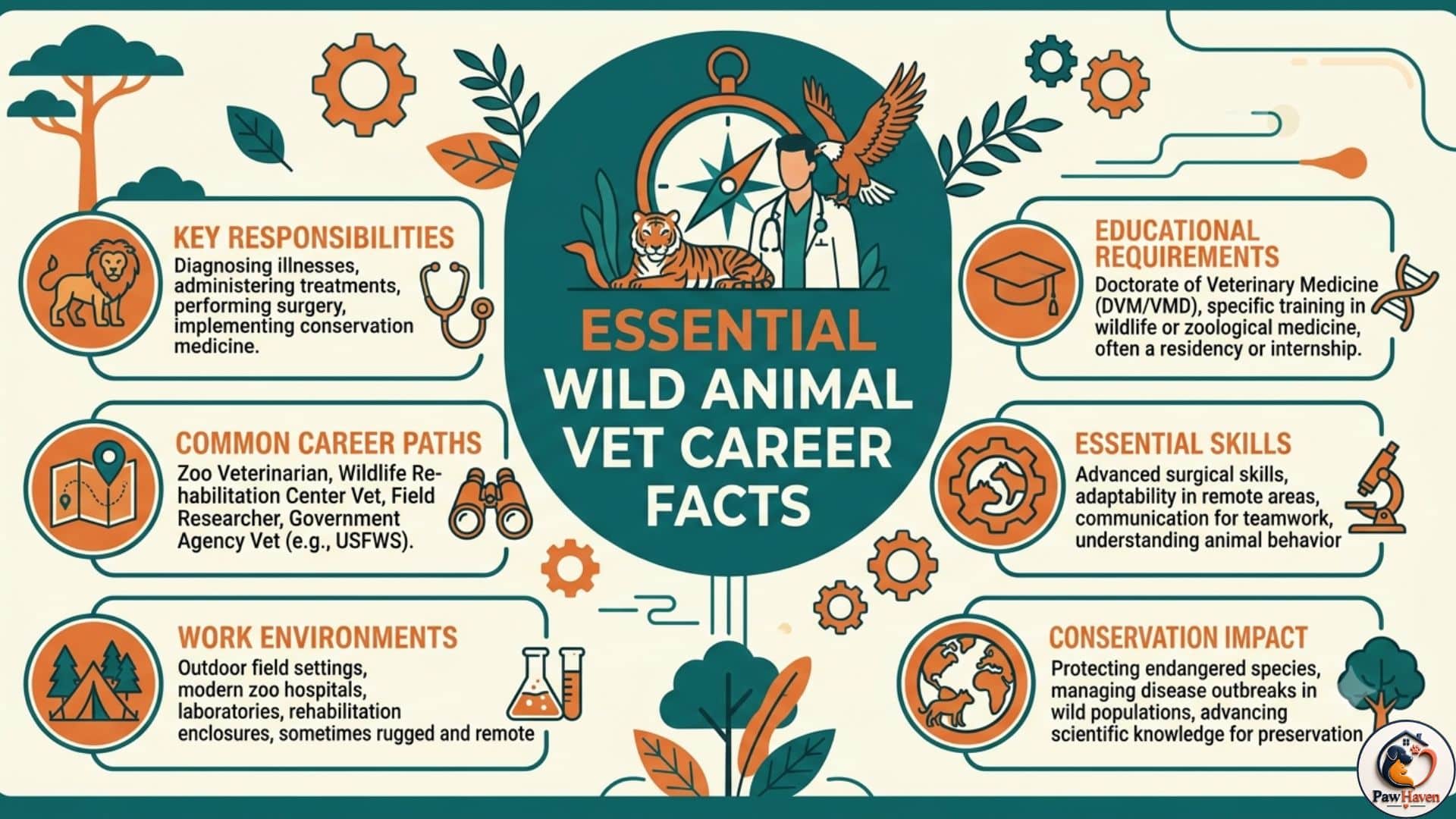
7 Essential Wild Animal Vet Career Facts
If you’ve ever wondered who treats an injured eagle, relocates a tranquilized bear, or helps protect endangered species from disease outbreaks, the answer is often a wild animal vet. Unlike traditional veterinarians who mainly care for pets, these professionals work on the front lines of wildlife conservation, combining veterinary medicine with ecology, research, and public health.
Whether you’re a pet lover considering this career or simply curious about what happens behind the scenes of wildlife rescue, understanding the role of a wild animal vet can help you appreciate how much goes into protecting nature.
Quick Answer
A wild animal vet is a veterinarian trained to diagnose, treat, and protect wild animals while supporting wildlife conservation and ecosystem health. Most professionals work with government agencies, wildlife rehabilitation centers, zoos, conservation organizations, and research institutions rather than private pet clinics.
What Is a Wild Animal Vet?
Many people assume a wildlife veterinarian spends every day caring for lions or rescuing injured birds. Reality is much broader.
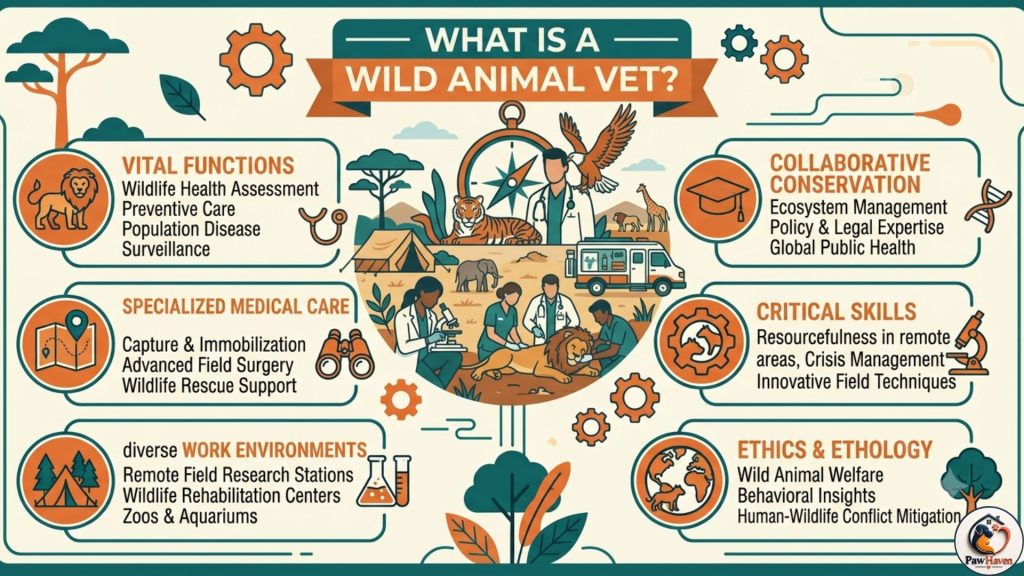
A wild animal vet specializes in the health of free-living wildlife rather than household pets. Some focus on individual animal care through wildlife rehabilitation, while others work on wildlife population health, disease surveillance, and habitat conservation.
Their biggest responsibility is protecting both animals and ecosystems.
Career paths include:
| Career Path | Primary Focus |
| Free-ranging wildlife veterinarian | Wildlife populations and ecosystem health |
| Wildlife rehabilitation veterinarian | Treating injured and orphaned wildlife |
| Zoo veterinarian | Caring for animals in accredited zoos |
| Conservation veterinarian | Wildlife conservation and disease management |
| Marine wildlife veterinarian | Ocean mammals, turtles, and seabirds |
In my experience, many aspiring veterinarians overlook conservation medicine. Yet it’s one of the fastest-growing specialties because wildlife diseases increasingly affect both animals and humans through the One Health approach.
That naturally leads to understanding what these veterinarians actually do each day.
What Does a Wild Animal Vet Do?
Every day looks different.
One morning might involve examining an injured owl brought into a wildlife rehabilitation center. The next could mean collecting samples from wild deer to monitor disease outbreaks.
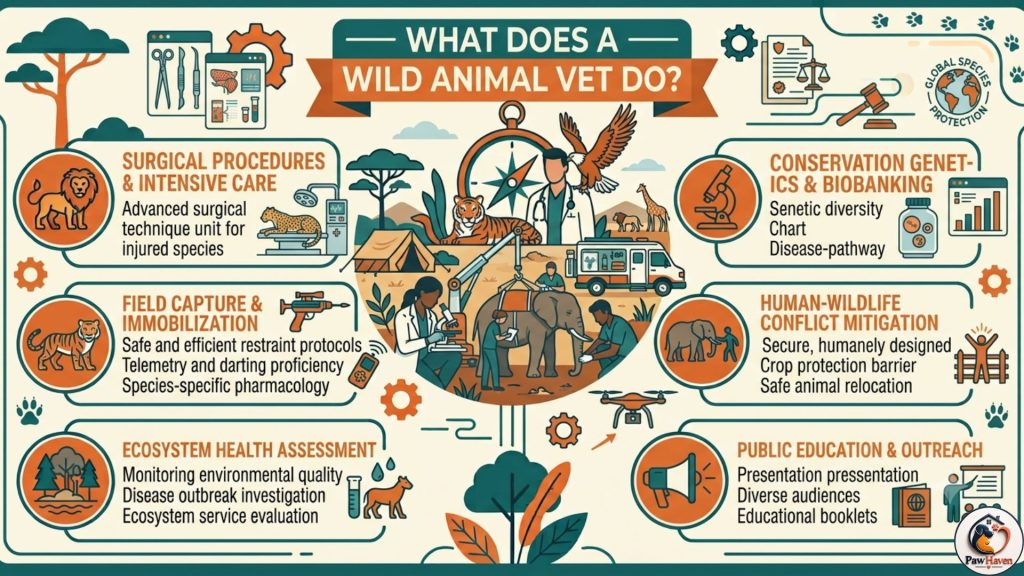
Common responsibilities include:
Diagnosing Wildlife Diseases
Wildlife diagnostics often involve tissue analysis, laboratory diagnostics, body fluid analysis, and advanced imaging techniques to identify illnesses before they spread through wildlife populations.
Emergency Rescue
Many veterinarians assist with wildlife rescue after vehicle collisions, oil spills, natural disasters, or habitat destruction.
Surgery and Medical Care
Clinical procedures range from repairing broken wings to removing embedded fishing hooks and performing life-saving surgeries.
Wildlife Capture and Relocation
Animal immobilization and wildlife anesthesia require extensive training because every species reacts differently to sedatives.
Disease Surveillance
Working alongside wildlife biologists, veterinarians monitor diseases that threaten biodiversity conservation and public health.
Conservation Research
Field research frequently includes wildlife monitoring, ecological assessment, scientific publication, and conservation planning that help endangered species recover.
Here’s something most guides miss: success isn’t measured by the number of animals treated. Instead, many conservation veterinarians judge success by improving the health of an entire ecosystem.
How to Become a Wild Animal Vet
Getting into this profession requires dedication, but the path is straightforward.
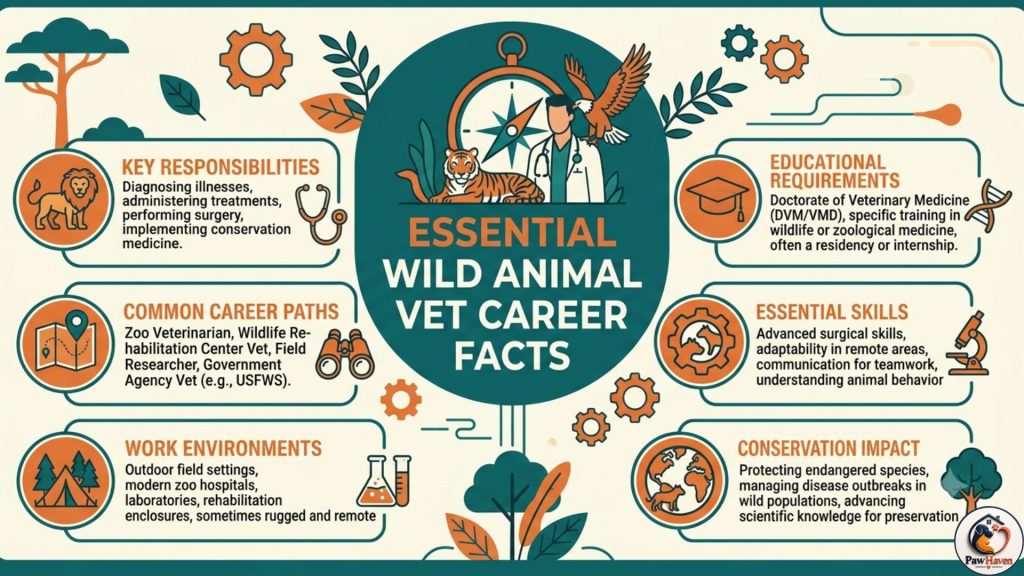
Step 1: Build a Strong Science Foundation
Biology, chemistry, anatomy, and environmental science provide the academic foundation you’ll need before college.
Step 2: Earn a Bachelor’s Degree
Most future veterinarians complete an undergraduate degree in biology, zoology, wildlife ecology, or animal science while gaining volunteer experience.
Step 3: Attend Veterinary School
You’ll need to earn either a Doctor of Veterinary Medicine (DVM) or Veterinary Medical Doctor (VMD) degree from an accredited veterinary school.
Veterinary education covers surgery, pathology, pharmacology, diagnostic imaging, preventive veterinary medicine, and animal welfare.
Step 4: Obtain Veterinary Licensing
Graduates must complete national licensing requirements before practicing veterinary medicine.
Step 5: Gain Wildlife Experience
Volunteer at wildlife rehabilitation centers, conservation organizations, zoos, or research facilities.
Real field experience matters far more than many students realize.
Step 6: Complete Advanced Training
Many professionals pursue:
- Veterinary internship
- Residency training
- Wildlife pathology
- Graduate studies
- Master’s degree
- PhD
Programs such as a Master of Conservation Medicine or Master of Preventive Veterinary Medicine can strengthen your expertise in ecosystem conservation and wildlife disease ecology.
Essential Skills Every Wild Animal Vet Needs
Excellent grades alone won’t make someone successful.
Practical problem-solving matters just as much as medical knowledge.
Important skills include:
- Surgical skills
- Wildlife handling techniques
- Disease diagnosis
- Critical thinking
- Communication
- Research experience
- Ecological fieldwork
- Professional networking
- Emotional resilience
- Leadership during emergencies
Imagine responding to a call involving an injured bald eagle caught in fishing line. You have limited time, changing weather, and an anxious rescue team waiting for instructions. Calm decision-making often becomes just as valuable as surgical expertise.
Where Do Wildlife Veterinarians Work?
Career opportunities extend well beyond zoos.
Many professionals build rewarding careers with:
- Government wildlife agencies
- Federal fish and wildlife agencies
- State fish and wildlife agencies
- Tribal fish and wildlife agencies
- Wildlife rehabilitation centers
- National parks
- Aquariums
- Universities
- Conservation organizations
- Wildlife hospitals
- Research laboratories
- International conservation projects
Some even contribute to wildlife management programs by helping monitor endangered wildlife through disease detection and wildlife population monitoring.
Interestingly, students interested in wild animals in Maryland often discover volunteer opportunities through state wildlife rescue organizations before applying to veterinary school. Those experiences provide valuable clinical exposure while building a stronger application.
Salary and Career Outlook
Wildlife medicine isn’t usually the highest-paying veterinary specialty.
Still, demand continues growing because habitat loss, emerging diseases, and biodiversity protection require more trained professionals.
Salary depends on several factors:
- Experience
- Geographic location
- Government employment
- Research funding
- Academic appointments
- Conservation projects
Challenges and Rewards
No career is perfect.
Wildlife medicine can involve long hours, unpredictable weather, dangerous animals, and emotionally difficult rescue cases.
Funding limitations also mean many conservation organizations operate with limited resources.
Yet many professionals wouldn’t choose any other path.
Helping restore endangered wildlife, contributing to ecosystem sustainability, and participating in species recovery programs create an incredible sense of purpose that’s difficult to find elsewhere.
According to organizations such as the Wildlife Disease Association and the American Association of Wildlife Veterinarians, interdisciplinary collaboration among veterinarians, ecologists, and public health experts is increasingly important as wildlife diseases affect both environmental health and human populations.
Wild Animal Vet vs Traditional Veterinarian
| Wildlife Veterinarian | Small Animal Veterinarian |
| Treats wild species | Treats household pets |
| Works outdoors frequently | Mostly clinic-based |
| Focuses on conservation biology | Focuses on individual patient care |
| Conducts wildlife research | Performs routine pet medicine |
| Supports wildlife population health | Supports companion animal health |
Both careers are rewarding, but they require different personalities and career goals.
Frequently Asked Questions
How many years does it take to become a wild animal vet?
Most professionals spend 8 to 12 years completing undergraduate education, veterinary school, licensing, internships, and optional residency training.
Do wildlife veterinarians only work in zoos?
No. Many work for government agencies, wildlife rehabilitation centers, universities, research institutions, and nonprofit conservation organizations.
Can wildlife veterinarians treat endangered species?
Yes. Many participate directly in endangered species recovery and conservation science projects.
Is wildlife veterinary medicine competitive?
Very. Building research publications, volunteer experience, wildlife internships, and strong professional networking greatly improves your chances.
Are there opportunities related to wild animals in Maryland?
Yes. Maryland offers wildlife rehabilitation facilities, conservation programs, and state wildlife agencies where students can gain valuable volunteer experience working with local wildlife.
Final Thoughts
Choosing to become a wild animal vet isn’t simply about treating injured animals. It’s about protecting entire ecosystems while advancing wildlife conservation through science, medicine, and research.
If you’re passionate about wildlife biology, veterinary medicine, and environmental health, this career offers a chance to make a lasting impact on species conservation.
Recommended Articles :
Wild animals in French are provided with 100 essential vocabulary words