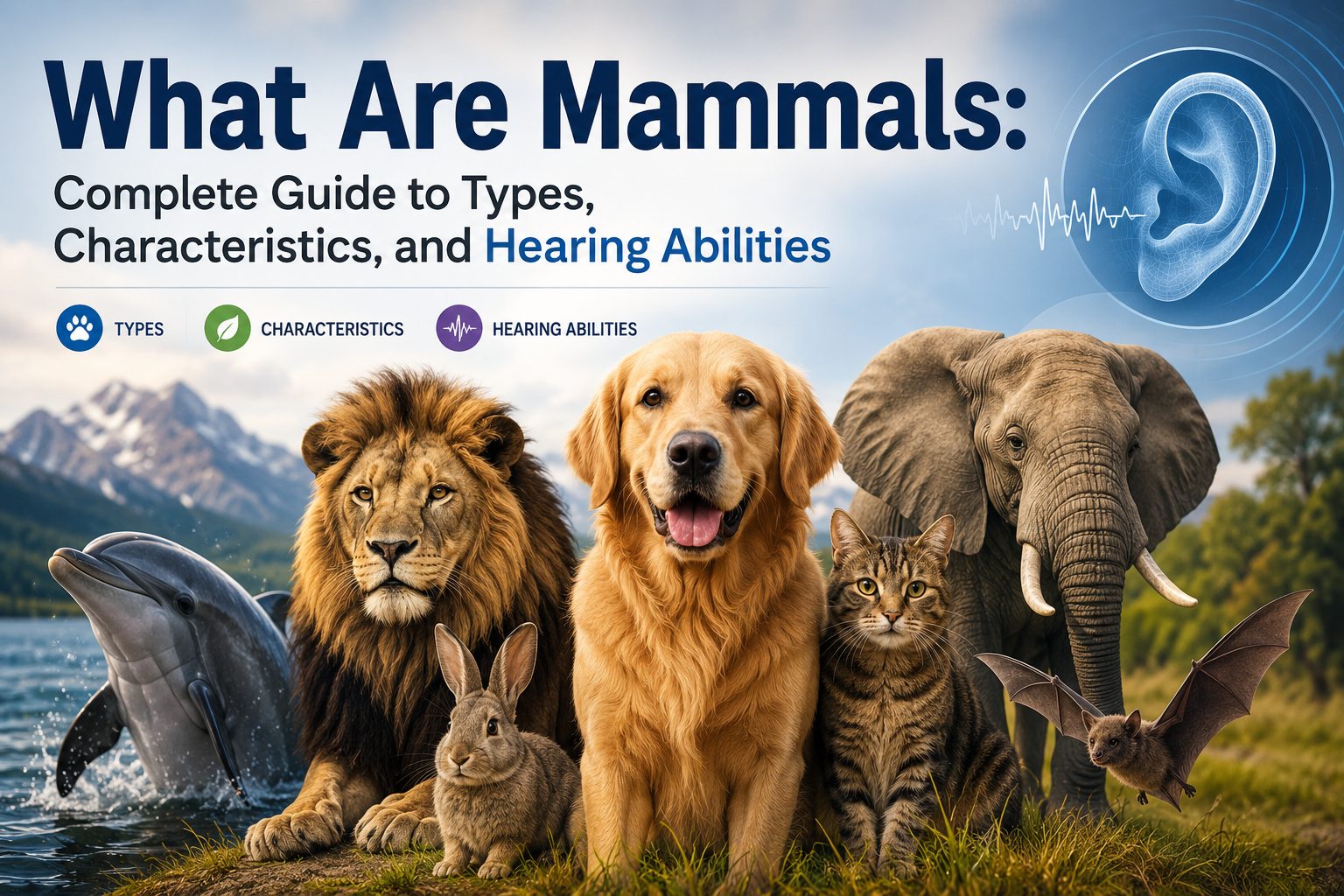
What Are Mammals: Complete Guide to Types, Characteristics, and Hearing Abilities
You own a dog. Your neighbor has a cat. Your cousin raises rabbits. But here’s a question most people never think to ask: what do those animals share with blue whales, bats, and elephants?
They’re all mammals and they’re far more extraordinary than most of us realize.
With roughly 6,400 known species spread across every continent and ocean, what are mammals if not one of nature’s great success stories? They’ve colonized arctic tundra, deep ocean trenches, tropical canopies, and suburban backyards. They’re the only animals that produce milk, the only ones with true hair, and the only ones with a specific three-bone ear structure that makes their hearing genuinely exceptional.
But the real fascination is the range. The same class of animals contains the bumblebee bat which weighs less than a penny and is the world’s smallest vertebrate and the blue whale, which outweighs every dinosaur that ever lived. Some mammals eat 300 pounds of leaves a day. Others sprint at 70 miles per hour. A few produce venom.
This guide covers all of it: what defines a mammal, the major types, how mammal hearing works, what they eat, how they reproduce, and some genuinely surprising facts most people have never come across.
What Are Mammals? The Defining Characteristics
A mammal is a vertebrate an animal with a backbone belonging to the class Mammalia. But that taxonomic label doesn’t tell you much. What actually matters is the set of traits that separate mammals from every other animal on Earth.
Five Characteristics All Mammals Share
1. Mammary Glands and Milk Production
The word “mammal” comes directly from mammary glands. Every female mammal produces milk to feed her young no exceptions. Whether you’re a dog, a dolphin, a bat, or a human, this is the one universal constant. No other animal group does this.
Why does it matter? Milk allows mammal parents to invest heavily in fewer offspring. Instead of producing thousands of eggs and hoping for the best, most mammals raise a small number of highly capable young. It’s a fundamentally different reproductive strategy and a very effective one.
2. Hair or Fur
Every mammal has hair at some point in its life. Whales have it as fetuses. Humans keep it on their heads and bodies. Dogs and cats display it obviously. Even the “hairless” naked mole rat has a few sensory hairs.
Hair is exclusively mammalian. Birds have feathers, reptiles have scales, fish have neither but hair belongs to mammals alone. It serves multiple functions: insulation, protection, sensory input (think of cat whiskers), and sometimes communication.
3. Three Bones in the Middle Ear
This one surprises people. Mammals have exactly three bones in the middle ear the malleus, incus, and stapes that transmit vibrations from the eardrum to the inner ear. No other animal group shares this configuration. Birds, reptiles, and fish all have different ear architectures.
These three bones work as a precision amplification system. They’re a big reason why mammal hearing is so sophisticated, and we’ll come back to this in detail.
4. A Distinctive Jaw Structure
The mammalian lower jaw connects to the skull at a single joint the temporomandibular joint. This setup, combined with differentiated teeth (incisors, canines, premolars, molars), lets different mammals eat completely different things. A lion’s canines and a horse’s molars are built for entirely different purposes, even though they’re both mammalian teeth.
5. Warm-Blooded Metabolism
Mammals are endothermic, generating their own body heat to maintain a stable internal temperature regardless of environmental conditions. A dog’s normal temperature runs around 101–102°F; a human sits at 98.6°F. This consistency is metabolically expensive mammals need to eat regularly to fuel it but it pays off enormously.
Endothermy is why mammals can hunt at night, survive in cold climates, and sustain activity levels that cold-blooded animals simply can’t match. It’s a core reason mammals dominate so many ecosystems.
How Mammals Evolved: A Brief History
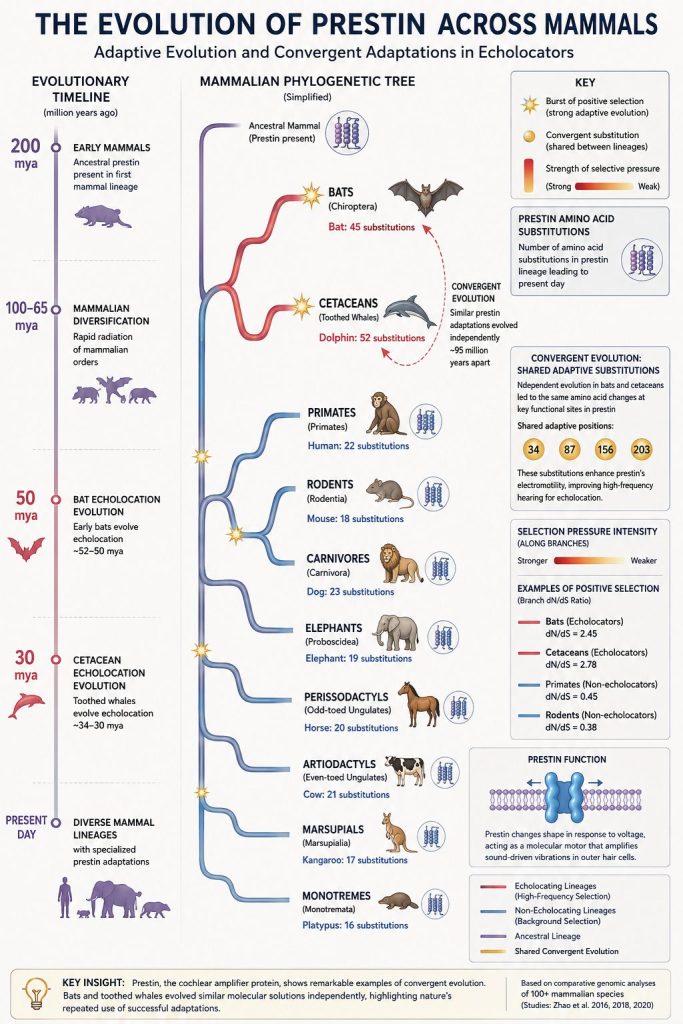
Mammals didn’t appear suddenly. They emerged gradually from reptile-like ancestors across hundreds of millions of years.
Around 320 million years ago, the first synapsid mammal-like reptiles with intermediate features began evolving. True mammals appeared roughly 200 million years ago, during the early Mesozoic Era, living alongside early dinosaurs. These small, mostly nocturnal creatures occupied ecological niches the dinosaurs weren’t using.
Then, 66 million years ago, an asteroid changed everything. The mass extinction that killed the dinosaurs opened vast ecological space. Mammals, which had spent 130 million years surviving in the margins, suddenly faced a world with no dinosaur competition. What followed was one of the most explosive diversification events in evolutionary history the Cenozoic Era, sometimes called the “Age of Mammals.”
The important insight here is that mammals didn’t beat dinosaurs. They outlasted them. Their eventual dominance depended entirely on a cosmic accident. That contingency is part of what makes mammalian evolution so compelling.
Why Mammals Are So Successful
Mammals represent only about 0.4% of vertebrate species — birds actually outnumber them — yet they dominate most terrestrial ecosystems. Several factors explain this:
Milk feeding allows investment in fewer, more capable offspring that are more likely to survive.
Relative brain size is larger in mammals on average than in other vertebrates, enabling learning, problem-solving, and behavioral flexibility.
Extended parental care means young mammals learn survival skills from experienced adults a huge shortcut compared to purely instinct-driven behavior.
Warm-bloodedness enables activity at night, in cold conditions, and at sustained intensity.
Tooth specialization lets different species exploit radically different food sources, from bark to krill.
Body plan diversity wings, flippers, grasping hands, hooves means mammals have successfully invaded almost every ecological niche on Earth.
No single factor explains mammalian success. It’s the combination.
The Major Types of Mammals
Mammals divide into three major groups based on how they reproduce. These aren’t just taxonomic categories they reflect genuinely different evolutionary strategies.
Monotremes: The Egg-Laying Mammals
Monotremes are the oldest mammalian lineage and the most biologically unusual. They retain egg-laying reproduction from their reptilian ancestors while still producing milk — the key mammalian innovation.
Only five species survive today, all in Australia and nearby regions:
- Platypus the mammal that looks assembled from spare parts. Duck bill, beaver tail, egg-laying, venomous hind spurs (males), and milk secreted through skin patches rather than nipples. It’s almost implausible as a real animal.
- Four echidna species spiny, ant-eating, slow-moving, and remarkably long-lived for their size.
Monotremes matter because they show us what early mammal-like animals might have looked like. They’re windows into evolutionary history that happened to survive into the modern world.
Marsupials: The Pouch-Bearing Mammals
Marsupials give birth after extremely short pregnancies typically 10 to 15 days producing tiny, essentially embryonic young that crawl into the mother’s pouch and continue developing there, attached to a nipple.
A newborn kangaroo, for instance, is about the size of a jellybean, blind, and mostly unformed. It navigates to the pouch instinctively and nurses for months before it’s ready to venture out.
Common marsupials include kangaroos, koalas, wombats, possums, gliders, and Tasmanian devils. They’re concentrated in Australia and South America.
The reason marsupials dominate Australia is evolutionary accident: when placental mammals hadn’t yet reached that continent, marsupials diversified to fill every available ecological role. Australia ended up with koalas (arboreal leaf-eaters) instead of monkeys, and Tasmanian devils (carnivores) instead of wild dogs. Same roles, different animals.
One common mix-up: opossums (found in the Americas) are not the same as Australian possums. They evolved separately on different continents and happen to occupy similar niches a classic case of convergent evolution.
Placental Mammals: The Dominant Group
Placental mammals the group that includes humans, dogs, cats, whales, bats, and roughly 5,200 other species develop their young inside the uterus for extended periods. A specialized organ called the placenta connects fetal and maternal blood supplies, enabling the exchange of oxygen, nutrients, and waste. The offspring is born considerably more developed than a marsupial newborn.
This group contains remarkable diversity:
Primates (400 species): Grasping hands, forward-facing eyes, large brains. Includes humans, apes, monkeys, and lemurs. Most live in tropical forests and show complex social behavior.
Carnivores (290 species): Sharp teeth and claws built for hunting. Ranges from weasels to lions and, surprisingly, whales. Cetaceans evolved from land-dwelling carnivores.
Artiodactyls / even-toed ungulates (240 species): Deer, cattle, camels, pigs, and also whales and dolphins (yes they’re artiodactyls). Mostly herbivorous, though some are opportunistic omnivores.
Rodents (~2,200 species): Constantly growing incisors and enormous diversity. They account for roughly 40% of all mammal species.
Bats (~1,400 species): The only truly flying mammals, comprising about 20% of all mammal species. Bats range from tiny insect-eaters to large fruit bats with four-foot wingspans.
Cetaceans (~90 species): Whales, dolphins, and porpoises. Fully marine, evolved from land mammals, closest living relatives are hippopotamuses.
Elephants (3 species): Largest land animals. Long-lived, emotionally complex, with exceptional memory and social intelligence.
Lagomorphs (~92 species): Rabbits, hares, and pikas. Frequently mistaken for rodents but evolutionarily distinct — they have two pairs of upper incisors; rodents have one.
Insectivores (~450 species): Shrews, hedgehogs, moles, and tenrecs. Ancient, small, mostly nocturnal.
This is what’s remarkable about placental mammals: one reproductive strategy — long pregnancy with placental support — has produced animals as different as a shrew and a sperm whale.
How Mammal Hearing Works
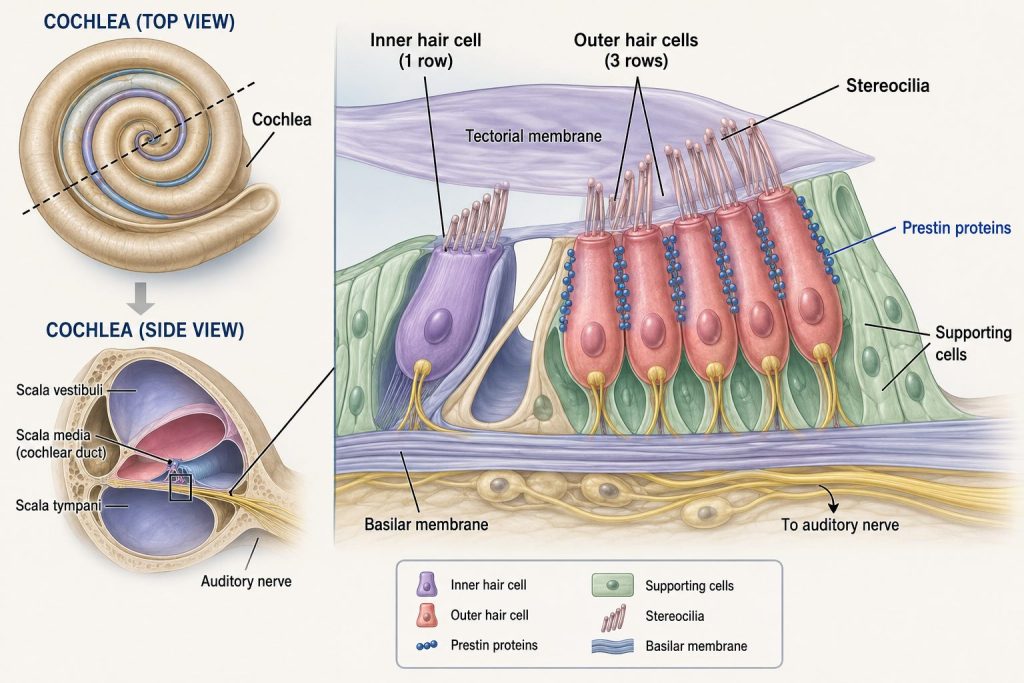
One of the great mammalian achievements is hearing. The three-bone middle ear that distinguishes mammals from all other vertebrates is also the foundation for some of the most sophisticated hearing in the animal kingdom.
The Basic Architecture
All mammalian ears share the same structure. The external ear funnels sound into the ear canal. In many carnivores dogs and cats especially the external ear can rotate independently, giving them the ability to pinpoint a sound’s location with impressive precision.
The middle ear contains the malleus, incus, and stapes. These tiny bones act as mechanical levers, amplifying vibrations from the eardrum. The inner ear’s cochlea then converts those mechanical vibrations into electrical signals that travel to the brain via the auditory nerve.
The three-bone system is a precision amplifier. It’s a key reason mammals can hear softer sounds and a broader range of frequencies than most other animals.
Hearing Ranges Across Species
Different mammals hear different frequencies, and those ranges map almost perfectly onto their ecological needs:
- Humans: 20 Hz – 20 kHz (best sensitivity around 3–4 kHz, the range of human speech)
- Dogs: 40 Hz – 60 kHz (upper-frequency sensitivity helps them detect prey vocalizations)
- Cats: 55 Hz – 77 kHz (even better than dogs at ultrasound useful for detecting rodent squeaks)
- Bats: 9 Hz – 200 kHz (extreme ultrasonic range, essential for echolocation)
- Dolphins: 40 Hz – 130 kHz (underwater communication and hunting)
- Elephants: 14 Hz – 12 kHz (exceptional low-frequency hearing for long-distance calls through the ground)
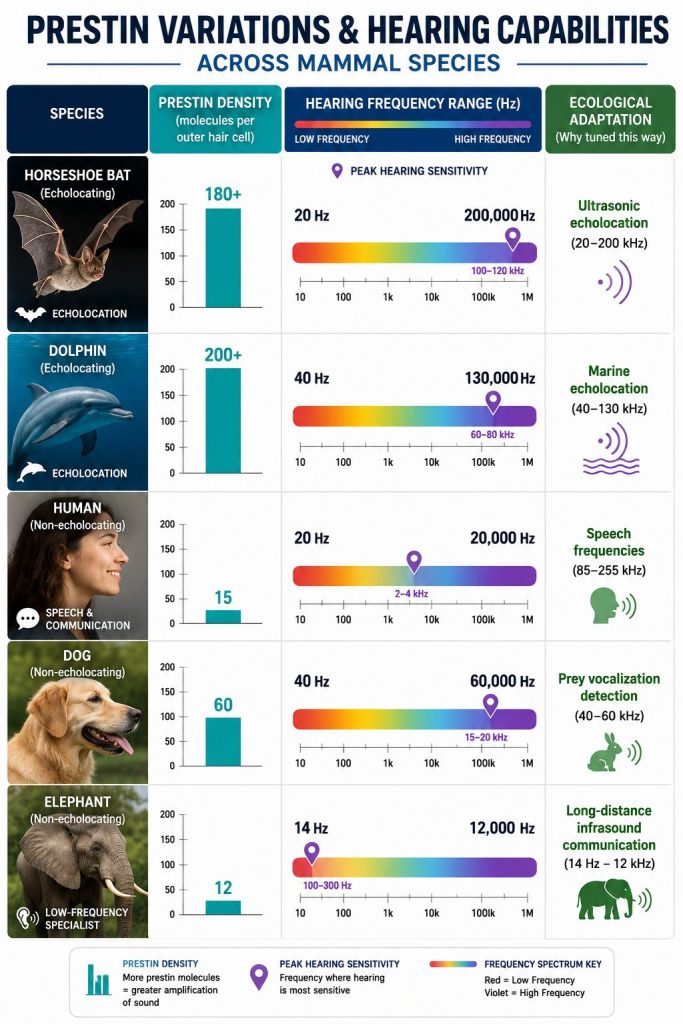
What this tells you is that your dog isn’t hearing “everything” it’s hearing things you can’t, specifically the high-frequency sounds that matter for its ecology. Evolution tuned each species’ hearing to the frequencies most critical for survival.
Echolocation: Using Sound as a Hunting Tool
Some mammals don’t just passively receive sounds they actively emit them and interpret the echoes. This biological sonar, called echolocation, is one of the most sophisticated sensory systems in nature.
The animal emits an ultrasonic call, then analyzes the returning echo: how long it took to return (distance), how loud it came back (size and density of the object), and any frequency shift caused by relative motion (the Doppler effect). From these cues, the animal constructs a detailed acoustic picture of its environment in real time.
Bats are the undisputed masters. Insectivorous bats can emit over 200 echolocation calls per second during a hunt, updating their acoustic image of a flying insect fast enough to intercept it mid-flight. Fishing bats can detect ripples on a water surface the size of a human hair. Different bat species use different call structures and frequencies optimized for their specific prey and habitat.
Dolphins and toothed whales are sophisticated aquatic echolocators. Dolphins can detect objects smaller than a grain of sand from over 100 meters away. Sperm whales hunt giant squid in absolute darkness at depths sunlight never reaches. Beaked whales dive deeper than almost any other animal to pursue deep-sea prey using echolocation.
Shrews use a cruder form of echolocation to navigate dark burrows and locate prey underground.
Some blind humans have learned to echolocate by making clicking sounds with their tongues and interpreting the returning echoes — navigating rooms, avoiding obstacles, even riding bicycles. But this is learned skill, not innate biology. Humans lack the neural hardware bats and dolphins evolved specifically for this purpose.
Hearing Underwater vs. on Land
Water and air conduct sound completely differently — water is denser and transmits sound roughly four times faster. Aquatic mammals had to evolve entirely different hearing architectures.
Terrestrial mammals use air-filled middle ear chambers as amplification spaces. Toothed whales have lost a functional eardrum almost entirely, instead conducting underwater sound through specialized fat-filled channels in their lower jaw directly to the inner ear. Dolphins effectively “hear” with their jaws.
That the same basic three-bone mammalian ear structure was modified so dramatically to function in a completely different medium is one of the cleaner illustrations of evolutionary flexibility.
What Do Mammals Eat?
Dietary diversity is one of the defining mammalian strengths. Different mammals have evolved to exploit virtually every food source available on Earth.
Herbivores
Herbivorous mammals have specialized digestive systems and teeth designed for processing plant material, which is nutrient-poor and difficult to break down.
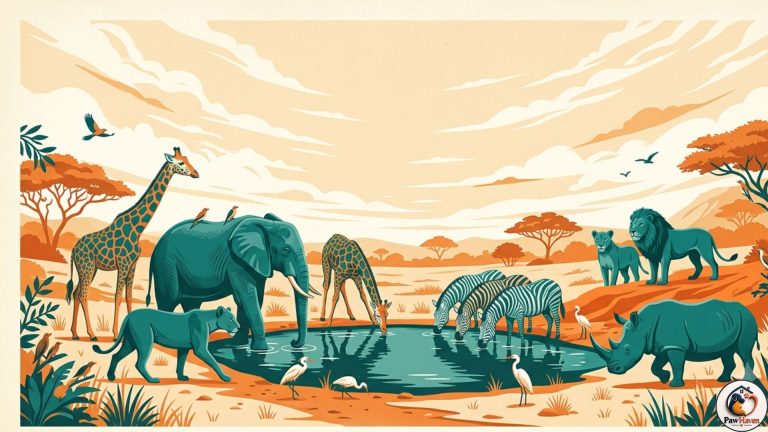
Elephants eat up to 300 pounds of vegetation daily, stripping bark and digging for roots when other food is scarce. Horses and zebras have ridged molars built for grinding tough grasses. Giraffes browse leaves from the upper canopy, using their 18-inch tongues to strip foliage from thorny branches. Manatees and dugongs are fully aquatic herbivores, grazing sea grass beds in warm coastal waters.
Herbivory typically comes with adaptations like flat grinding molars, elongated digestive tracts with fermentation chambers (cattle have four stomach compartments for this purpose), and in some species, coprophagy — eating their own droppings to extract nutrients the first pass missed.
The largest land mammal (African elephant) and the largest animal ever to exist (blue whale, a filter feeder on tiny krill) are both herbivores. Plant-based diets are evidently capable of supporting enormous bodies.
Carnivores
Carnivorous mammals are built for locating, catching, and consuming animal prey. The specifics vary enormously.
Lions hunt cooperatively, using coordinated flanking maneuvers to cut off prey. Wolves divide hunting roles within a pack. Cheetahs rely on pure speed — up to 70 mph in short bursts — favoring a sprint-and-tackle strategy over endurance. Orcas use sophisticated coordinated tactics that vary by region and prey type: some specialize in herding fish, others in launching onto beaches to grab sea lions.
Carnivore anatomy tends toward sharp canine teeth, simplified digestive tracts (meat is easier to process than plant material), and highly developed sensory systems for detecting prey.
Cetaceans are a surprising entry in this category. Whales and dolphins evolved from land-dwelling carnivorous ancestors. Their closest living relatives are hippopotamuses — a fact that initially seems absurd but is well-supported by fossil and genetic evidence.
Omnivores
Many mammals eat opportunistically across food categories. Bears eat berries, roots, fish, insects, and occasionally hunt live prey. Raccoons will consume fruits, nuts, crustaceans, insects, and small mammals whatever the season and location offer. This flexibility is a large part of why raccoons have thrived in human-dominated landscapes where specialist animals struggle.
Humans are omnivores capable of surviving on an extraordinarily wide range of diets — one of the reasons we’ve managed to colonize every climate on Earth.
Insectivores
Some mammals have built their entire biology around eating insects, which are abundant, protein-rich, and small enough to require specialized anatomy to exploit efficiently.
Bats that eat insects can consume their own body weight in prey over a single night. Shrews have such high metabolic rates they must eat nearly continuously — going more than a few hours without food risks starvation. Pangolins have no teeth at all; they swallow insects whole after collecting them on a long, sticky tongue. Aardvarks use powerful claws to breach termite mounds that would otherwise be inaccessible.
Frugivores
Some mammals — particularly large bats and certain primates — specialize in fruit. Flying foxes, the largest bats, travel 40 or more miles nightly to find fruiting trees, making them critical pollinators and seed dispersers in tropical ecosystems. Many primate species time their movements around the fruiting seasons of specific trees, requiring a detailed spatial memory of their territory.
How Mammals Reproduce and Raise Their Young
Reproductive strategy is where the three mammal groups diverge most sharply — and it’s also where mammalian biology gets genuinely interesting.
Gestation: A Wide Spectrum
Gestation length correlates broadly with offspring maturity at birth:
- Marsupials give birth after 10–15 days, producing barely-formed young that complete development in the pouch
- Mice and rats gestate for 20–25 days, producing underdeveloped but more advanced young, often multiple litters per year
- Dogs and cats: 60–70 days, with litters of relatively developed pups or kittens
- Humans: roughly 280 days, producing a single infant that is still relatively helpless at birth
- Giraffes: 450 days, producing calves that can stand and walk within hours of birth
- African elephants: about 645 days — the longest gestation of any land mammal — producing highly mature calves
The tradeoff is clear. Longer pregnancies produce more capable young that require less intensive post-birth care. Shorter pregnancies demand more. Both strategies work — they’re just optimized for different ecological pressures.
Milk: The Mammalian Advantage
Milk composition is tailored to each species’ developmental needs, and the variation is striking.
Human milk runs around 4% fat and 4% protein — relatively dilute, reflecting a nursing period that lasts months to years and a baby that grows slowly. Whale milk is approximately 50% fat and 10% protein — extraordinarily rich, supporting rapid growth in calves that will be weaned in as little as six months. Seal milk reaches similar concentrations, sometimes richer, because seal pups in some species are weaned in just a few weeks and must rapidly accumulate the fat reserves they’ll need to survive independently.
The principle is consistent: faster weaning requires richer milk.
Parental Care Beyond Nursing
Lactation is just the beginning for many mammals. What happens afterward varies enormously.
Primate childhood is uniquely extended. Human children remain dependent for 15 to 20 years — an extreme even among primates — primarily because so much must be learned rather than instinctively known. Social structure, language, tool use, and ecological knowledge are all transmitted culturally.
Lionesses actively teach cubs hunting techniques through years of observation and guided practice. Orca mothers pass specific hunting strategies — which vary between populations — to their calves, a form of cultural transmission that has no analog in most animals.
Rodents, by contrast, are independent within weeks. Their strategy is quantity and speed, not extended investment.
Elephant family structure is built around lifetime bonds. Elderly matriarchs hold decades of ecological memory — knowing where water sources are during droughts, which plants to avoid, safe migration corridors. This knowledge is transmitted to younger family members, making the survival of experienced individuals valuable beyond their own reproduction.
Unusual Mammals and Unexpected Adaptations
Venomous Mammals
Most people assume venom is the territory of snakes and spiders. In fact, several mammals produce it.
Male platypuses have hollow spurs on their hind legs connected to venom glands. The venom is used in competition with other males during breeding season and causes severe, lasting pain in humans — not lethal, but not trivial either. Venomous shrews, including the Cuban solenodon, produce toxins in modified salivary glands powerful enough to subdue lizards and small mammals. The slow loris — one of the only venomous primates — produces a secretion from brachial glands that combines with saliva to create a toxic mixture applied to fur for defense.
Venomous mammals are rare because most evolved faster, smarter, or stronger alternatives to chemical defense. Venom is metabolically costly to produce and maintain.
Armored Mammals
Pangolins are the only mammals with true scales — overlapping plates of keratin, the same material as human fingernails — covering their entire dorsal surface. When threatened, they roll into a tight ball that most predators can’t penetrate. They have no teeth, eating ants by inserting an extraordinarily long tongue into colonies. Critically endangered due to poaching, they’re among the most trafficked wild mammals on Earth.
Armadillos have bony plates embedded in their skin and can curl defensively. Some species hold their breath and walk along riverbeds to cross water. Porcupines carry more than 30,000 quills — modified hairs with barbed tips that detach on contact and work progressively deeper into a predator’s skin. The common myth that porcupines can “shoot” their quills is false, but the quills detach so easily with contact that it doesn’t much matter.
Flying and Gliding Mammals
Bats are the only mammals capable of true powered flight. Their wings are formed by skin (the patagium) stretched between dramatically elongated finger bones — a completely novel solution to the problem of flight, distinct from the bird feather or the insect chitin wing.
Flying squirrels, flying lemurs, and colugos glide effectively but don’t achieve powered lift. They’re extending a descent, not truly flying. The distinction matters — bats have opened an ecological niche that no other mammal shares.
Aquatic Mammals
Mammals have independently evolved aquatic lifestyles multiple times, producing radically different body forms from the same ancestral blueprint.
Cetaceans went furthest. Whales and dolphins have flippers where forelimbs were, a horizontal tail fluke for propulsion, nostrils relocated to the top of the skull as a blowhole, and no functional hind limbs. They give birth and nurse in open water. The transformation from a land mammal to a blue whale took roughly 15 million years of evolution.
Manatees and dugongs are herbivorous marine mammals distantly related to elephants — a surprising connection confirmed by fossil and genetic evidence. Pinnipeds (seals, sea lions, walruses) remain partly terrestrial, breeding on land but hunting at sea. Sea otters are semi-aquatic and ecologically critical: their predation on sea urchins prevents overgrazing of kelp forests that support entire marine ecosystems.
Unique and Surprising Mammal Abilities
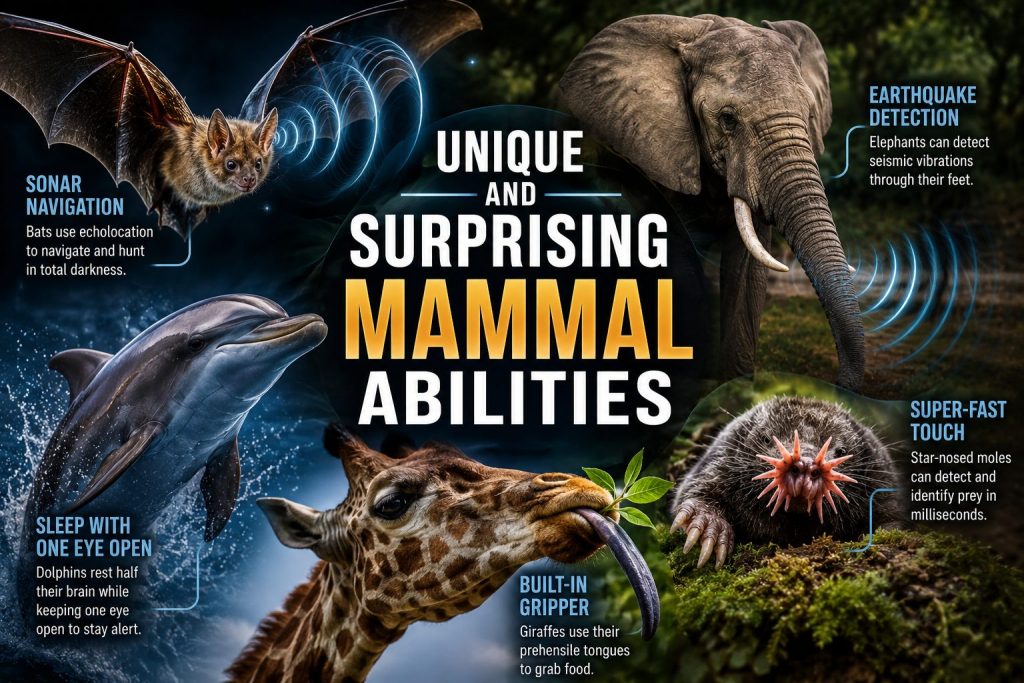
Echolocation for navigation — Some blind humans have learned to echolocate using tongue clicks. It’s a trained skill, not biology, but it demonstrates the underlying neurological capacity.
Desert water independence — Kangaroo rats never drink water. They produce it metabolically from the dry seeds they eat, and their kidneys are so efficient they lose almost none of it. Camels don’t store water in their humps (that’s fat, for energy); instead, they tolerate extreme dehydration and recover rapidly when water is available.
Extreme diving — Sperm whales dive past 7,000 feet hunting giant squid in complete darkness. Weddell seals maintain breathing holes through Antarctic sea ice and dive to 2,000+ feet. These animals manage pressure changes that would kill a human in seconds.
Eusociality — Naked mole rats are the only known eusocial mammal, organized into colonies similar to ant or bee colonies. A single breeding female (the queen) produces all offspring; workers and soldiers are non-reproducing individuals that maintain tunnels, gather food, and defend the colony. They live over 40 years — extraordinary for a rodent — and show remarkable resistance to cancer and to pain caused by certain stimuli.
Infrasound communication — Elephants communicate through low-frequency rumbles partly below the threshold of human hearing, transmitted through both air and ground. These calls can travel several miles, allowing herds to coordinate movements over large distances.
The Size Range Within Mammals
The Smallest
Kitti’s hog-nosed bat — the bumblebee bat — is the world’s smallest mammal by some measures. It measures 1.3 to 1.6 inches long and weighs less than a penny. Found in a handful of limestone cave systems in Thailand, it’s critically endangered with a population estimated in the low hundreds.
Etruscan shrews and pygmy shrews are similarly tiny — under two inches, weighing 1 to 3 grams — but with metabolic rates so extreme that they must eat every few hours to survive. A shrew that can’t find food for half a day is in serious trouble.
The Largest
The largest animal ever to exist — not just today, but in the entire 3.5-billion-year history of life on Earth — is alive right now. Blue whales reach 100 feet in length and 200 tons. They feed almost entirely on krill, filtering enormous volumes of water through baleen plates. The scale is difficult to absorb: the largest animal that ever lived eats some of the smallest animals in the ocean.
African elephants are the largest land mammals, reaching 14 feet at the shoulder and weighing up to 14 tons. Giraffes, at 18 feet, are the tallest. Hippos, deceptively heavy at up to 4 tons, can run 30 mph on land despite their bulk.
Why Size Diversity Matters
The range within a single animal class — from a penny-weight bat to a 200-ton whale — reflects the breadth of ecological niches mammals have conquered. Smaller animals can exploit abundant small food sources (insects, seeds) and fit into microhabitats unavailable to large animals. Larger animals are better at maintaining body temperature, traveling long distances, and processing large volumes of low-quality food.
Metabolic scaling follows this pattern too. Shrews must eat every few hours or starve. Elephants can go days between meals. Both are mammals; both strategies work.
Mammal Intelligence and Social Life
Social Organization
Mammal social structures span from fully solitary to extraordinarily cooperative.
Most cat species live alone except during mating. Bears and rhinoceroses maintain largely solitary territories. At the other end, elephants form multigenerational herds of 20 to 100+ individuals with matriarchal leadership; wildebeest migrate in columns of over a million animals; bat colonies can pack 100,000+ individuals into a single cave.
Naked mole rats represent the extreme. Their eusocial colonies — the only such structure known in mammals — function more like a superorganism than a group of individuals, with labor divided between reproductive and non-reproductive castes.
Intelligence and Learning
The great apes, cetaceans, and elephants show a cluster of cognitive abilities that, not long ago, many scientists assumed were uniquely human: recognizing themselves in mirrors, using and modifying tools, teaching behaviors to younger individuals, apparent grieving for the dead, and coordinated social behaviors that qualify as culture.
Chimpanzees engage in inter-group conflict with apparent strategic elements. Orca populations maintain distinct hunting traditions that don’t appear to be genetically determined — they’re learned and transmitted culturally. Elephant matriarchs remember the locations of water sources across drought cycles spanning decades, knowledge that becomes critical when younger animals have no frame of reference for extreme conditions.
Play behavior, nearly universal among juvenile mammals, appears to serve multiple functions: developing motor skills, practicing social interactions, and establishing relationships that matter in adult life. Otters are the textbook example — they’ve become famous for what looks like recreational sliding down riverbanks — but play is documented across the mammalian spectrum.
Frequently Asked Questions About Mammals
Are humans mammals?
Yes, unambiguously. Humans are primates in the class Mammalia. We have hair, mammary glands, three middle ear bones, differentiated teeth, warm-blooded metabolism, and placental development. Our closest living relatives are chimpanzees and bonobos, with whom we share roughly 98–99% of our DNA.
Are bats the only flying mammals?
Yes. Bats are the only mammals with true powered flight — they generate lift actively through wing strokes. Flying squirrels, colugos, and similar animals glide using extended skin membranes, but they can’t generate lift independently. They’re extending a controlled fall, not truly flying. Bats’ unique flight ability is part of why they’ve diversified into about 1,400 species, roughly 20% of all mammals.
Are whales fish or mammals?
Whales are mammals. Completely. They live in water, which is the source of confusion, but they breathe air through blowholes, nurse calves with milk, give birth to live young, and have the three-bone mammalian middle ear. They evolved from land-dwelling mammals about 50 million years ago, and their closest living relatives are hippopotamuses — confirmed by both fossil anatomy and genetic analysis. The ocean lifestyle is an adaptation; the mammalian biology remained.
Can mammals be cold-blooded?
No. Endothermy — generating internal heat to maintain a constant body temperature — is a defining mammalian characteristic. Every mammal maintains an elevated, stable body temperature regardless of its environment. This distinguishes them from reptiles, fish, and amphibians, which regulate temperature behaviorally by moving between warmer and cooler environments.
How many species of mammals exist?
Approximately 6,400 described species, organized into about 27 orders. This figure continues to grow — new mammal species are described regularly, particularly in tropical regions and the deep ocean. Rodents account for roughly 40% of known mammal species. Bats make up another 20%. The remaining 40% includes everything else: primates, carnivores, ungulates, marsupials, cetaceans, and more.
What’s the difference between marsupials and placental mammals?
Marsupials give birth after very short pregnancies (10–15 days) to underdeveloped young that continue growing in a pouch. Placental mammals carry fetuses through extended pregnancies, with a placenta facilitating nutrient and oxygen exchange, producing more developed young at birth. Both strategies have proven effective — marsupials dominate Australia, placental mammals dominate most other landmasses. Humans are placental; kangaroos and koalas are marsupials.
Are some mammals venomous?
Yes, though it’s uncommon. Male platypuses have venomous hind spurs. Several shrew species produce venom in modified salivary glands. The slow loris is one of the only venomous primates, combining a brachial gland secretion with saliva to create a defensive toxin. Venom is rare in mammals largely because most evolved faster or more intelligent alternatives to chemical defense — venom is metabolically costly to produce.
Why are mammals going extinct?
The primary driver is human activity. Habitat destruction — deforestation, wetland draining, urban expansion — eliminates the territory many species need to survive. Poaching for fur, bushmeat, and traditional medicine has pushed multiple species to the edge. Climate change disrupts the seasonal timing of food availability, breeding cycles, and migration patterns. Invasive species introduced by humans compete with or predate native mammals. Marine mammals face additional pressures from pollution, boat strikes, and entanglement in fishing gear.
Historical extinctions include the woolly mammoth (a combination of climate change and human hunting), the Tasmanian tiger (deliberate extermination by settlers), and the Steller’s sea cow (hunted to extinction within 27 years of European discovery). Modern extinction rates are accelerating.
The Remarkable Scope of Mammalian Life
From the bumblebee bat, light enough to sit on a fingertip, to the blue whale, the largest organism in Earth’s history — from echolocating bats navigating in complete darkness to elephants communicating across miles through ground vibrations — what are mammals if not a demonstration of what evolution can do with a few shared characteristics and hundreds of millions of years?
The five defining traits — milk production, hair, the three-bone ear, specialized teeth, and warm-blooded metabolism — are constants. Everything else is variation. And the variation is extraordinary: 6,400 species, every continent and ocean, body sizes spanning five orders of magnitude, diets ranging from krill to eucalyptus leaves to giant squid, social structures from completely solitary to million-strong herds.
If you own a dog or cat, you’re sharing your home with an animal shaped by the same evolutionary forces that produced elephants and whales. Understanding that connection — and the biology beneath it — changes how you see your pet, and arguably how you see yourself.