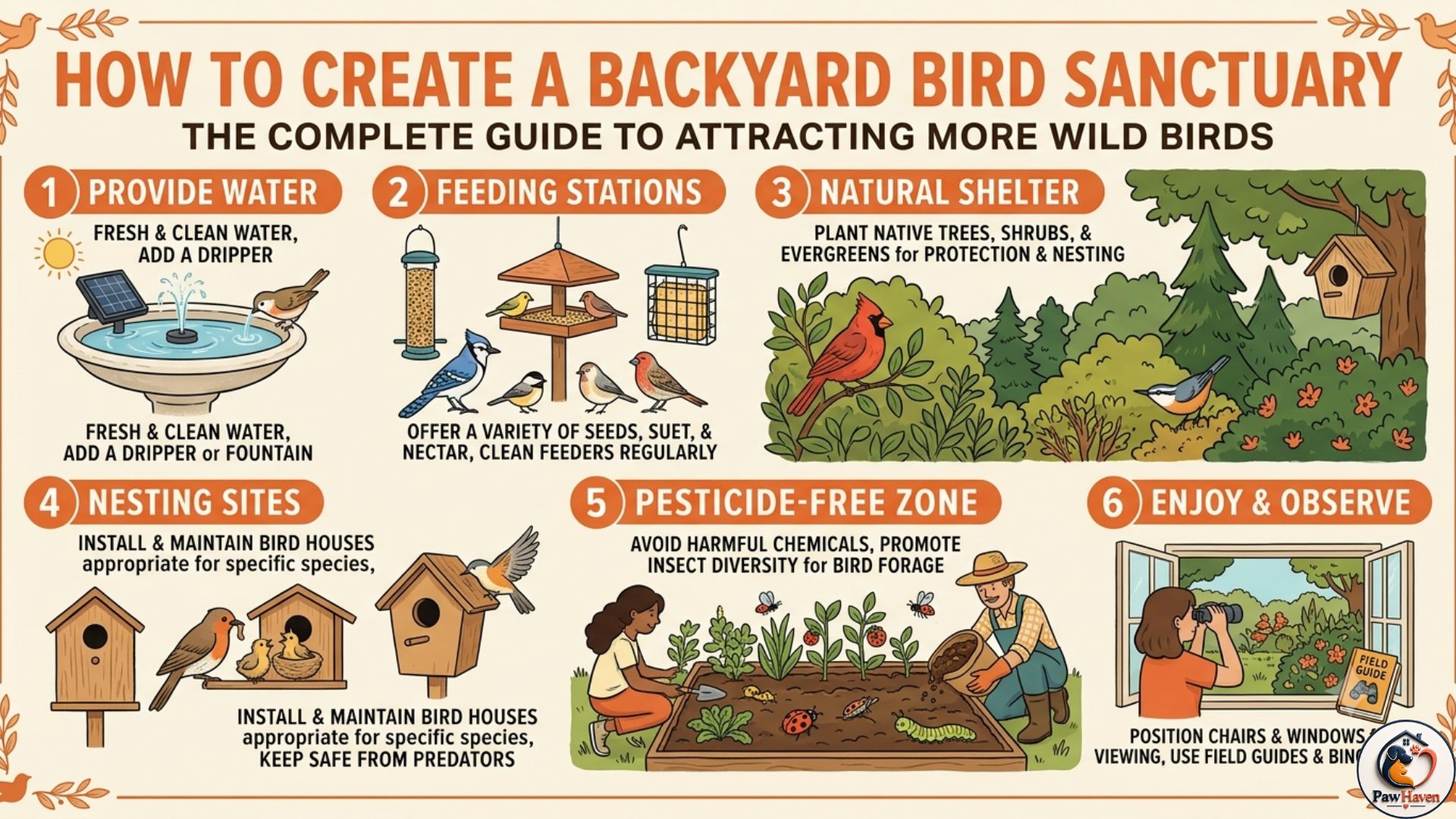
How to Create a Backyard Bird Sanctuary
Ever put out a feeder, get a birdhouse up, and find that few birds visit? You’re not alone. It is often thought that only food invites backyard birds; however, birds are quite particular about where they like to stay.
It’s more than seed to make a prosperous bird sanctuary. It needs to be fed, watered, and sheltered, and the habitat needs to be natural for local species. In short, it’s possible to have a vibrant and well-populated yard year-round, with songbirds, pollinators, and other interesting wildlife.
Quick Answer
Four essentials are necessary to attract backyard birds: food, fresh water, cover, and safe nesting places. A wildlife friendly environment includes native plants, clean bird feeders, birdbaths and predator protection that will enhance bird visits and year-round bird residency.
What makes a backyard a favorite place for birds?
Birds are judging your property just as people are judging a neighborhood. They seek resources, safety and comfort.
The 4 elements every bird requires are essential
All backyard habitats have the following components:
- Food sources
- Fresh water
- Protective cover and shelter
- Safe nesting sites
Birds seldom are regular visitors without all four elements.
Knowing where and how birds like to spend their time
Each species requires something different. American robins will like open lawns where they can forage, while chickadees and wrens may like dense native shrubs and tree cavities.
The single mistake I’ve seen homeowners make to make backyard birdwatching more successful is attempting to feed all species from a single feeder. Birds will naturally flock to habitats that suit their feeding and nesting patterns.
Some backyards don’t attract birds at times
Several things may deter feathered visitors:
- The absence of native vegetation
- Excessive nighttime lighting
- Poor feeder placement
- Limited sheltering vegetation
- Regularly disturbed by animals
Bird activity is influenced by a variety of factors that are common in the environment
Bird populations are impacted by weather, migration patterns, breeding seasons, and local habitat diversity. Small yards can serve as temporary wildlife refuges for wildlife, especially migrating birds, that are in need of rest and nourishment during migration.
Next, let’s examine how to create a space that birds will want to utilize.
Design a “Bird Friendly Backyard Habitat” with a little planning
The first step to a welcoming environment is thinking like a bird.
Selecting the optimal site for bird activity
Locate feeds and water sources within proximity of natural cover, but far from places where predators may ambush birds.
Typically, a 10-15 ft distance from shrubs is sufficient.
Use the principles of layering in vegetation to create natural shelter.
Layered landscaping is beneficial for bird friendly landscapes
Include:
- Ground cover vegetation
- Native grasses
- Flowering shrubs
- Native trees
This method produces a habitat mosaic, which attracts numerous species of birds in the area.
Management of safe flight paths and resting areas
Clear paths must be provided between feeding and shelter areas for the birds.
Try to keep open flight corridors free of unnecessary decorations or obstacles.
Native plants are a critical element in supporting local bird species
Native plant gardens have a much greater wildlife value than exotic landscaping options.
Consider:
| Plant Type | Benefit for Birds |
| Oak trees | Provides hundreds of species of insects with food |
| Berry bushes | Provides seasonal food |
| Native wildflowers | Pollinator and insect attractor |
| Native grasses | Offers nesting materials |
Native plants are the key to a healthy wildlife habitat.
Viewing from a bird’s perspective, how much space does your yard require?
Surprisingly little.
If you have a small patio, you can still support birds by using container-grown native flowering plants, a birdbath and strategically placing feeders.
With the basics of habitat out of the way, let’s turn to the subject of food.
Check out the food “hot spots” that bring the most backyard birds
Regular visitors are usually determined by the food source.
Understanding Different Bird Diets
Not all birds eat seeds.
The following are common backyard birds that depend on:
- Insect prey
- Nectar
- Berries
- Nuts
- Natural forage
Best Seeds for Songbirds
Black oil sunflower seed is still the best option.
It is easily accepted by many songbirds such as finches, cardinals, nuthatches and chickadees.
Fruits, Nuts, and Natural Food Sources
Berries shrubs are a valuable year round habitat resource.
Robins, waxwings and mockingbirds are some of the birds that like fruit.
Nectar Feeders for Hummingbirds
Make a simple nectar solution consisting of a 4:1 water-sugar mixture.
Avoid dyes.
Wildlife biologists say that artificial colouring is of no benefit and can cause unnecessary risks.
Seasonal Feeding Recommendations
Protein-rich foods are needed for nesting birds in the spring and summer.
There is a greater demand for high-energy seed sources in the fall and winter.
While there are plenty of foods that are good for wild birds, there are others that you should avoid giving to them.
Avoid:
- Bread
- Salty snacks
- Processed foods
- Moldy seed
- Sugary baked goods
Problems with the digestive system are often reported by wildlife rehabilitators associated with inappropriate feeding.
A healthy food source is just half the equation. Feeding stations must be dependable for birds as well.
The ideal bird feeder for one type of bird may be entirely different from another
The type of feed you offer will influence the kinds of birds that come to visit your yard.
Tube Feeders vs Hopper Feeders vs Platform Feeders
| Feeder Type | Best For |
| Tube feeder | Finches, chickadees |
| Hopper feeder | Cardinals, warblers and other songbirds |
| Platform feeder | Other species that feed on the ground |
So, which feeder is best for Cardinals?
Cardinals like feeders that have larger perches and are hopper feeders.
Which Feeder will attract Finches and Chickadees?
Tube feeders containing sunflower seed usually do well.
Never use a feeder that squirrels can reach
Squirrels are a problem for many homeowners.
Seed theft is less with weight activated feeders and baffled pole systems.
What else makes you more attractive to birds?
Position feeders:
- Near protective cover
- In a quiet area away from the street
- Located close to the views
- Beyond the distance that squirrels can jump
Follow this schedule for feeder maintenance and cleaning
Bird Baths and Dirty Feeders are not allowed.
Disease outbreaks frequently occur at unmaintained feeding areas.
The use of harmful pesticides and chemicals should be avoided.
Birds are indicators of good insect habitat.
Insect removal is a significant food source removal.
Outdoor Cats and Other Predators
Conservation groups estimate that globally, free roaming cats kill billions of birds each year.
It’s not just about caring for pets and wildlife; it’s about being a responsible pet owner.
The University of California’s Integrated Pest Management program identified these invasive plants as those that threaten to diminish wildlife diversity.
One of the first steps to supporting native ecosystems is the selection of local plants.
When you know who’s coming to your yard, birdwatching is even better.
How to Identify Common Backyard Birds
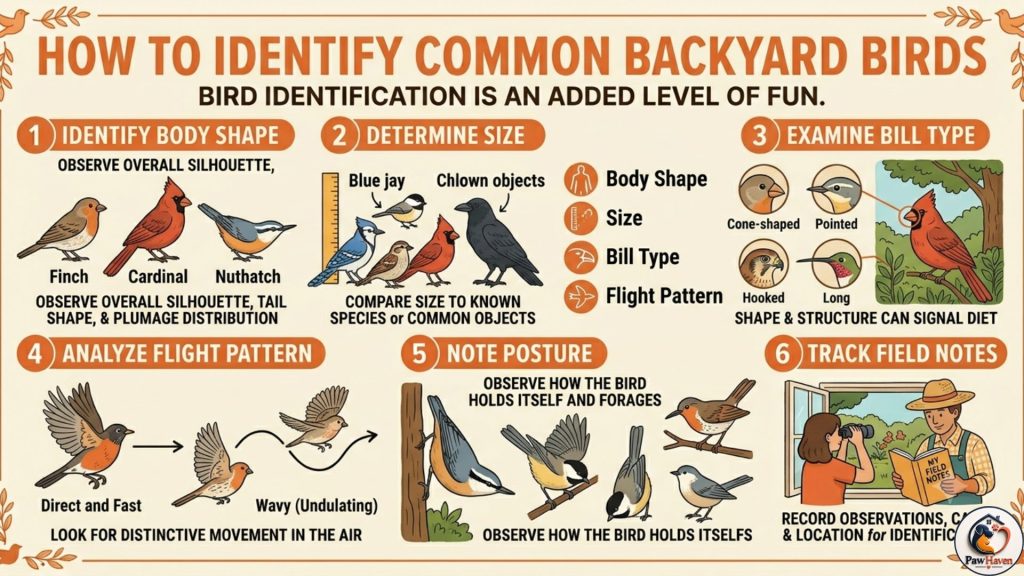
Bird identification is an added level of fun.
These are the key features to look for:
Observe:
- Body shape
- Size
- Bill type
- Flight pattern
Learn how to identify birds by color
Colour plays its part but can be deceptive.
Lighting, which can change a person’s appearance, is often used.
Determine bird size and shape by using the guide
A good birder will know a species before noticing color patterns.
Birds are identified by their song and call
Many species are first known by their sound and vocal calls before they are ever seen.
We suggest the following apps and field guides for birding
Merlin Bird ID and eBird are apps that have revolutionized Birdwatching.
Have a Backyard Bird Journal
Record:
- Species seen
- Seasonal activity
- Nesting behavior
- Migration timing
This can be of great value after a while.
The population of birds changes on a year-on-year basis, leading to the need for seasonal strategies.
Seasonal Backyard Birding Strategies
Birds’ needs change during the different seasons.
Spring Migration Opportunities
Migratory birds require rest stops and certain food availability.
Baiting and nesting support in summer
Monitor for heat waves and offer fresh water and shelter.
Fall Migration Preparation
Berry crops and seed producing plants are particularly valuable.
Birds will require extra help during the winter season
Fat foods are good for birds as a source of energy for helping to keep them warm.
A year-round bird attraction plan is in place
Habitats that are the most successful in the backyard are those that offer resources all year long.
Some bird enthusiasts go one step further.
If you have more time to spare, here are some advanced tips for creating a Backyard Birdwatcher’s Paradise
The small change makes for a big difference!
Building Multi Species Habitats
Integrate woodland habitat, meadow habitat and pollinator friendly habitat elements.
Establishing Pollinator Friendly Areas with Species that Attract Birds
Pollinator insects, including bees and beetles, contribute to healthy ecosystems, which benefit birds.
Small wildlife features can be safely added to the site
Frogs, damselflies, salamanders and birds that eat insects are attracted to wildlife ponds.
Use these photography tips to help backyard birders capture images of their feathered friends.
The early morning hours tend to be the best.
They monitor bird visits and bird population fluctuations.
Citizen science projects are used to track biodiversity conservation trends.
Participate in citizen science projects to contribute observations
Communities can help with conservation efforts, such as with bird conservation, using platforms such as eBird.
For the best bird feeder placement tips, take a look at our backyard bird feeder guide.
The following is a checklist for establishing a Backyard Bird Sanctuary
Essential Beginner Equipment
- Bird feeder
- Birdbath
- Native shrubs
- Field guide
This is a setup plan that will be budget-friendly.
Prioritize water and native plants.
Mid-Range Backyard Birding Setup
Provide several feeders and nest boxes.
Premium Birdwatching Habitat Setup
Include wildlife ponds, large plantings and habitat restoration features.
Monthly Maintenance Checklist
- Clean feeders
- Refresh water
- Inspect nesting boxes
- Monitor plant health
Having backyard birds can raise many questions.
Backyard birds can bring up many questions
When setting up a new feeder, how long does it take for birds to accept the food?
Most yards have birds visit within a few days to weeks at most sites, based on local bird populations.
What is the ideal bird seed to get a wide variety of birds?
The black oil sunflower seed is still widely favored.
Should bird feeders feed the birds all year round?
Yes. Stable food sources are available to support birds during the changing seasons.
How many times a week should bird feeders be cleaned?
A minimum of once every two weeks and on the occasion of mold growth.
Will the birds recognize the people who feed them?
Several bird species appear to have the ability to recognise individuals and to remember positive experiences, according to research.
Birds seem to have left my yard. Why?
This is often caused by dirty feeders, predators, habitat destruction, or seasonal migration.
Final Thoughts
Building a sanctuary for backyard birds isn’t a project for acres of land or for high dollar equipment. With a few strategically placed native plants, dependable water supplies, secure nesting sites, and smart habitat management, pretty much any outdoor area can be redeemed.
Be the first to make one improvement this week. Install a bird bath, plant a shrub from the native plant list or establish a small wildlife area. As you begin to add more plants, you will create a more diverse backyard with more wildlife, including common backyard birds, Florida backyard birds, backyard birds of Ohio, and many others, and add more beauty and life to your life just outside your window.
Empty feeders every 2 weeks and more frequently when wet.
The spread of disease among birds is greatly accelerated around unclean feeding stations.
Sometimes, fresh water is more desirable than food.
Do bird baths attract more birds?
Many birders don’t appreciate the significance of water.
The common saying, “water is more important than food,” is wrong.
Water is important for birds all year round.
Resident birds and migratory birds are attracted to fresh water.
Selecting the Best Bird Bath Design
Pick shallow designs that have textured surfaces.
Birds like a firm ground to stand on.
Moving Water vs Still Water
Consistently moving water will attract more species.
A basic dripper or fountain can double its activity twofold.
Here are some guidelines to help you place bird baths:
Locate places to place baths in proximity to protection but in plain sight of predators.
Birds require water in the winter
Birdbaths are kept clean by heated birdbaths when the weather is cold.
Takes measures to avoid mosquitoes and algae growth
Regular cleaning helps to avoid algae growth and mosquito breeding.
A clean birdbath is a wildlife-friendly and fun birdbath!
Birds can survive without water and food. Nesting opportunities keep them around.
What can you do to encourage birds to nest in your yard?
Occasional visitors become seasonal residents when they are provided with nesting habitat.
Birds favor natural nesting habitats
Birds naturally seek:
- Tree cavities
- Dense shrubs
- Brush piles
- Standing dead trees
Choosing the Right Birdhouse Size and Design
Nesting needs of species are important.
Did you know that a bluebird house is very different from a wren house?
Birdhouse Placement by Species
Do research on the target species before installing.
The size, height, and direction of the entrance hole all affect occupancy.
Provide nesting materials that you can
Offer:
- Small twigs
- Dry grass
- Pine needles
- Natural fibers
Avoid a synthetic string.
How to Protect Nesting Birds from Predators
Predator management includes:
- Baffles on poles
- Wildlife safe fencing
- Controlled pet access
Here are some do’s and don’ts to follow during nesting season:
Many guides forget about this one.
Do not open birdhouses at any time just to see how they are doing. Repeated disturbance can cause nest abandonment.
Protection of nests directly relates to another important subject.
What is the worst thing that can keep birds away?
Even the pretty habitats can fall apart due to a handful of avoidable mistakes.
Poor Feeder Placement
Open feeding stations are not preferred by birds.
Overly Open Landscapes
Diversity of habitats promotes confidence and security.
Don’t over-activity or make too much noise in the yard
Disturbances make birds less active.